
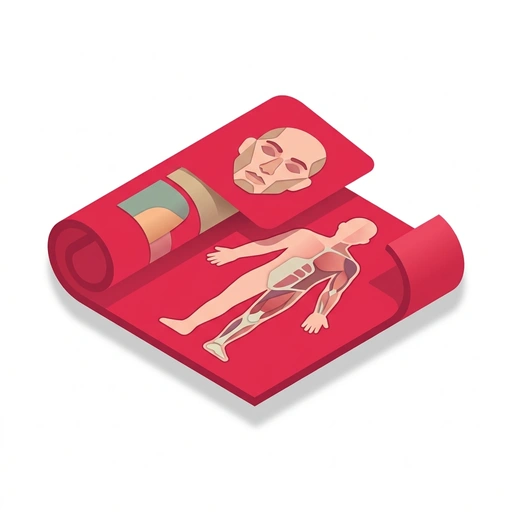
Anatomy of the Body and Face
Understand the human form by seeing the structural architecture beneath the skin. Learn how bones, muscle masses, and classic proportions govern the posture of the body and the features of the face.
Like Duolingo, but for Anatomy of the Body and Face. Tomo turns the whole topic into a game you play five minutes a day, until it actually sticks.
A short one: 12 levels across 2 sections, about 24 minutes end to end, roughly 5 days at five minutes a day. It moves through Mapping the Human Figure and Constructing the Head and Face. It starts from scratch.
Free forever · No credit card · iPhone & Android

Key ideas in Anatomy of the Body and Face
- An average adult human body stands around 7 to 8 heads tall
- A figure drawn at only 5 heads tall looks childlike, compressed, or cartoonish
- Checking overall head height before adding details catches major proportion mistakes early
- A line of action sweeps through the spine and supporting limb to define the primary movement of a figure
- Starting with muscle outlines and contours leads to stiff, disjointed figures
- When weight shifts to one leg, the pelvis rises on the weight-bearing side
- The rib cage tilts in the opposite direction of the pelvis to counterbalance the shift and keep the head over the feet
- Parallel tilts in the chest and hips make a resting figure look unnatural or like it is falling over
- Negative space refers to the enclosed background shapes framed between limbs and the torso
- Comparing the shape and size of empty gaps (like the triangle between an arm and the waist) reveals spacing and scale errors faster than looking at the limb itself
- Focusing purely on positive contours often blinds an artist to skewed proportions
- Hinge joints like elbows and knees allow movement primarily in one direction and cannot bend sideways
- Ball-and-socket joints like shoulders allow full rotational and multi-directional swing
- Drawing limbs bending where no joint exists produces a rubbery, structurally broken figure
- Certain bones sit immediately beneath the skin without a layer of muscle between them
- Points like the collarbones, elbow tips (olecranon), and front hip points stay in fixed positions regardless of weight gain or loss
You've tried the other tabs
Thirty open tabs. Four facts you actually kept.
You watched. You nodded. By Sunday it was gone.
One answer, then back to scrolling.
Eight weeks. You meant to finish. You didn't.
Tomo gives Anatomy of the Body and Face the Duolingo treatment: levels, streaks, and quick quizzes that test what you just learned. That game loop is what the tabs above never had, so it's the one you actually finish.
Here's what playing it feels like
A real question from this course. Take your best guess.
When charting an average adult figure, about how many heads tall should you make them?
Get it right to open this lesson and 11 more in the app.
Where Anatomy of the Body and Face takes you
- 1
Mapping the Human Figure
- Proportions, Posture, and Balance
- Bony Landmarks and Muscle Masses
- 2
Constructing the Head and Face
- The Architecture of the Head
- Facial Features as Three-Dimensional Forms
2 sections · 4 units · 12 levels. Built to play, not to enroll.
Tomo is in ChatGPT
Tomo is also a ChatGPT plugin: the same playable courses, built and played inside your chat.
Add Tomo to ChatGPT- What to ask
- “Make me a Tomo course on black holes.” “Turn this chat into a Tomo course.”
- What you get
- Quick questions with instant feedback, hearts and stars, ready to play in about a minute.
- Where it goes
- No sign-up to start. Connect your Tomo account and your streak carries on in the app.
You pick the voice
Anatomy of the Body and Face is taught in the Pirate style: arr, learning be an adventure!. Want a different feel? In the app you can spin up the same topic in any of Tomo's teaching styles. Same facts, totally different vibe.
More Arts on Tomo
Pencil Drawing: Form and Figure
Move beyond flat copying to construct realistic portraits, dynamic human figures, and believable drapery from observation and structural principles. Master graphite edge control, anatomical landmarks, and the mechanics of light to give every pencil mark three-dimensional volume.

Drawing Expressive Characters
Learn the foundational moves of character drawing, from proportioning faces and dynamic bodies to rendering hair, clothing, and vibrant marker finishes. Build real confidence on paper through simple construction techniques and develop your own visual style.
Drawing from Scratch
Learn to draw with confidence on paper or tablet. Build genuine skill step by step, from confident line work and 3D shading to drawing figures, fabric, and your own fashion sketches.
Sketching Anime Faces
Start sketching expressive anime characters from absolute scratch using simple geometric scaffolding. Learn how to place iconic facial features, shape dynamic hair clumps, and rotate the head into a believable three-quarter view.

Fixing Figure Drawing Flaws
Learn to diagnose why your figures look stiff, flat, or subtly off-kilter, and how to fix them with clear structural principles. Master targeted checks for anatomical landmarks, weight distribution, and volumetric form so your characters feel solid and alive.

Drawing and Painting Essentials
Learn to translate what you see onto paper and canvas with accuracy, depth, and confidence. Explore core observational drawing, shading, color mixing, and rendering across dry and wet mediums.
Start Anatomy of the Body and Face today.
Download Tomo, search Anatomy of the Body and Face, and play your first lesson in under a minute.