
Clinical Anatomy: The Body in Action
Master the structural logic of the human body through the lens of clinical practice. Learn to visualize internal systems and speak the precise language used by medical professionals to describe health and injury.
Like Duolingo, but for Clinical Anatomy: The Body in Action. Tomo turns the whole topic into a game you play five minutes a day, until it actually sticks.
265 levels across 11 sections, about 530 minutes end to end, roughly 106 days at five minutes a day. It moves through The Surface Map: Navigating the Body, The Framework: Clinical Bone and Joint Logic, Power and Motion: The Muscular System, The Pump and the Pipes: Cardiovascular Anatomy, The Breath of Life: Respiratory Structures, The Command Center: Nervous System Pathways, Fueling the Machine: The Digestive Tract, Filtration and Fluid Balance: The Renal System, The Chemical Messengers: Endocrine Glands, The Body's Shield: Integumentary Anatomy, and Clinical Integration: Putting it All Together. It assumes you already know the basics.
Free forever · No credit card · iPhone & Android
Key ideas in Clinical Anatomy: The Body in Action
- Anatomical position creates a universal reference point
- Left and right always refer to the patient's perspective
- Standard position differs from a relaxed, palms-in posture
- Palms must face forward to uncross the forearm bones
- Perspective shift in anatomical position
- Orientation of hands
- The sagittal plane slices down the middle vertically
- The frontal plane separates the belly from the back
- The perspective shift required for anatomical position
- The transverse plane is a horizontal cross-section
- Sagittal movement involves forward and backward motion
- The specific orientation of the hands in anatomical position
- The sagittal plane divides the body into left and right
- Mapping body planes to the sections they create
- Predicting movement within the sagittal plane
- Frontal plane motion involves side-to-side movement
You've tried the other tabs
Thirty open tabs. Four facts you actually kept.
You watched. You nodded. By Sunday it was gone.
One answer, then back to scrolling.
Eight weeks. You meant to finish. You didn't.
Tomo gives Clinical Anatomy: The Body in Action the Duolingo treatment: levels, streaks, and quick quizzes that test what you just learned. That game loop is what the tabs above never had, so it's the one you actually finish.
Here's what playing it feels like
A real question from this course. Take your best guess.
If a doctor says a patient has a scratch on their 'right arm,' which arm are they talking about?
Get it right to open this lesson and 264 more in the app.
Where Clinical Anatomy: The Body in Action takes you
- 1
The Surface Map: Navigating the Body
- Standard Positions and Planes of Movement
- Directional Terms: Mapping Relationships Between Organs
- Surface Landmarks: Finding Internal Structures from the Outside
- Body Cavities and the Membranes That Protect Them
- 2
The Framework: Clinical Bone and Joint Logic
- Bone Architecture and How Fractures Heal
- The Mechanics of Synovial Joints
- The Axial Skeleton: Protecting the Central Nervous System
- The Appendicular Skeleton: Lever Systems for Movement
- Common Joint Pathologies and Structural Wear
- Reading the Skeleton: Identifying Age and Stress Marks
- 3
Power and Motion: The Muscular System
- Muscle Architecture: How Fiber Direction Dictates Force
- Agonists and Antagonists: The Logic of Paired Movement
- Tendons and Ligaments: The Connective Tissue Bridge
- Muscle Compartments and Pressure Issues
- The Anatomy of a Strain vs. a Sprain
- 4
The Pump and the Pipes: Cardiovascular Anatomy
- Heart Chambers and the Flow of Deoxygenated Blood
- The Coronary Circuit: Feeding the Heart Muscle
- Arteries vs. Veins: Structural Differences for Different Pressures
- Major Pulse Points and Their Clinical Significance
- 5
The Breath of Life: Respiratory Structures
- The Upper Airway: Filtering and Warming Air
- The Bronchial Tree: Conducting Air to the Depths
- Alveolar Anatomy: Where Gas Exchange Happens
- The Diaphragm and the Mechanics of Pressure Changes
- Pleural Space: Why the Lungs Stick to the Ribs
- 6
The Command Center: Nervous System Pathways
- Gray Matter vs. White Matter: Processing vs. Transmission
- The Cranial Nerves: Direct Links to the Face and Organs
- Spinal Cord Segments and Reflex Arcs
- The Autonomic Division: Fight, Flight, and Digestion
- Dermatomes: Mapping Skin Sensitivity to Nerve Roots
- The Blood-Brain Barrier: Protecting the Control Center
- 7
Fueling the Machine: The Digestive Tract
- The Esophagus and the Mechanics of Swallowing
- Stomach Anatomy: Acid Management and Mixing
- The Small Intestine: Maximizing Surface Area for Absorption
- The Liver and Gallbladder: Chemical Processing Plants
- The Large Intestine: Water Recovery and Waste Management
- 8
Filtration and Fluid Balance: The Renal System
- Kidney Internal Structure: Cortex and Medulla
- The Nephron: The Microscopic Filter of the Blood
- Ureters and Bladder: The Storage and Exit Route
- Fluid Regulation and Blood Pressure Connections
- 9
The Chemical Messengers: Endocrine Glands
- The Master Gland: How the Brain Signals the Body
- Thyroid and Parathyroid: Metabolic Control
- The Adrenal Glands: Stress Response Anatomy
- The Pancreas: Balancing Blood Sugar Levels
- Hormone Transport: How Signals Reach Distant Targets
- 10
The Body's Shield: Integumentary Anatomy
- Epidermal Layers: The Constant Cycle of Renewal
- The Dermis: Where Sensation and Blood Reside
- Subcutaneous Fat: Insulation and Energy Storage
- Glands and Hair: Specialized Skin Structures
- 11
Clinical Integration: Putting it All Together
- Anatomical Variations: Why No Two Bodies are Identical
- Imaging the Body: X-Ray, CT, and MRI Logic
- Referred Pain: Why the Heart Hurts in the Arm
- The Aging Body: Structural Changes Over Time
- Medical Terminology: Decoding Complex Latin and Greek Roots
11 sections · 53 units · 265 levels. Built to play, not to enroll.
You pick the voice
Clinical Anatomy: The Body in Action is taught in the The Bestie style: your friend who just gets it. Want a different feel? In the app you can spin up the same topic in any of Tomo's teaching styles. Same facts, totally different vibe.
More Health on Tomo
The Human Body: Systems and Survival
A comprehensive journey through human anatomy and physiology, designed for the aspiring medical professional. Learn how the body maintains balance, responds to stress, and functions as a complex biological machine.
Human Movement and Vitality
Explore the intricate machinery of the human body, from the physics of a perfect squat to the cellular chemistry of the food you eat.
Clinical Anatomy and Physiology
Bridge foundational human biology and medical practice. Connect gross anatomical architecture and systemic physiology directly to bedside physical diagnosis and clinical signs.

Natural Health and Bio-Individual Healing
Move beyond basic wellness into the mechanics of cellular repair, hormonal signaling, and nervous system regulation to build a personalized healing protocol.
Anatomy for Pilates Instruction
Bridge the gap between textbook anatomy and the moving body. Learn to see beneath the skin to refine your cueing, correct compensations, and deepen your students' mind-body connection.
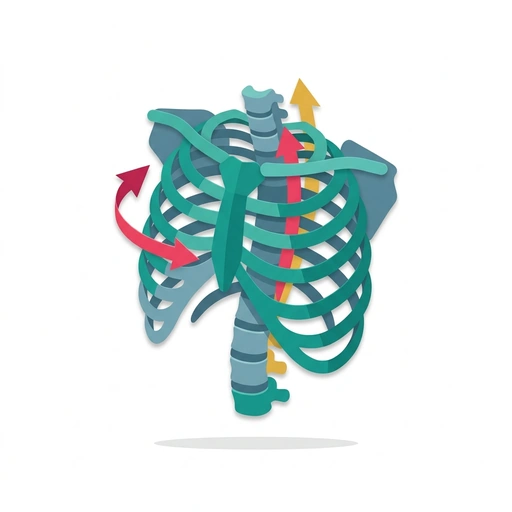
Pilates Anatomy in Motion
Look past generic cues and uncover the biomechanics behind every roll, reach, and teaser. Learn how deep stabilizers, myofascial slings, and joint mechanics work together to build effortless, injury-free movement.
Start Clinical Anatomy: The Body in Action today.
Download Tomo, search Clinical Anatomy: The Body in Action, and play your first lesson in under a minute.