
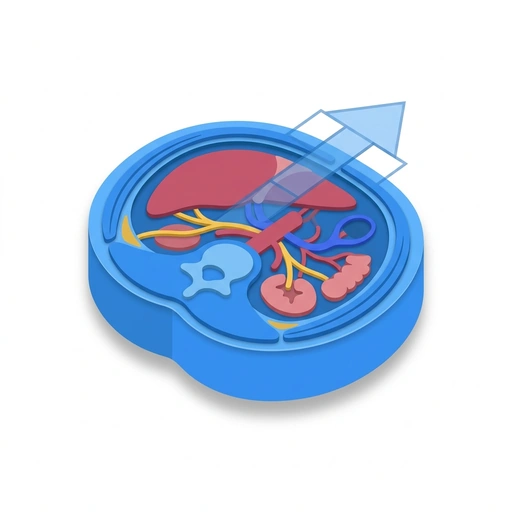
Clinical Anatomy: The Geometry of Access
Like Duolingo, but for Clinical Anatomy: The Geometry of Access. Tomo turns the whole topic into a game you play five minutes a day, until it actually sticks.
For the part of you with thirty open tabs that never became anything.
A short one: 12 levels across 2 sections, about 24 minutes end to end, roughly 5 days at five minutes a day. It moves through The Architecture of Space and Functional Dynamics.
Free forever · No credit card · iPhone & Android

Key ideas in Clinical Anatomy: The Geometry of Access
- Carotid triangle contents
- Surface landmarks and deep targets
- Hypoglossal nerve position
- Fixed coordinate systems
- Predictable planes and safe entry
- Surface projections
- Positioning shifts the relative distance between mobile structures and fixed bony landmarks
- Hyperextension or rotation can stretch a triangle's boundaries, potentially narrowing the 'safety window' by bringing deep nerves closer to the operative field
- Dynamic geometry means a triangle's area is not a constant value but a function of joint articulation
- The carotid triangle contains the bifurcation of the common carotid artery and the internal jugular vein
- Fascial planes create the tension required to hold neurovascular structures in their 'mapped' positions
- Loss of fascial integrity during dissection leads to 'anatomical drift' where structures move from their expected coordinates
- The 'walls' of a triangle are often functional (tension-based) rather than structural (bone or thick muscle)
- Mapping surface landmarks to deep, non-palpable surgical targets
- Dissection begins in low-stakes areas
- Patient positioning and surgical windows
You've tried the other tabs
Thirty open tabs. Four facts you actually kept.
You watched. You nodded. By Sunday it was gone.
One answer, then back to scrolling.
Eight weeks. You meant to finish. You didn't.
Tomo gives Clinical Anatomy: The Geometry of Access the Duolingo treatment: levels, streaks, and quick quizzes that test what you just learned. That game loop is what the tabs above never had, so it's the one you actually finish.
Here's what playing it feels like
A real question from this course. Take your best guess.
When a surgeon uses a surface landmark for a deep procedure, what is that landmark primarily providing?
Get it right to open this lesson and 11 more in the app.
Where Clinical Anatomy: The Geometry of Access takes you
Master the spatial relationships and hidden corridors of the human body. This course moves beyond basic identification to help you navigate the complex geometry used in surgical access and diagnostic reasoning.
- 1
The Architecture of Space
- Surgical Triangles and Safety Zones
- Fascial Planes as Clinical Highways
- 2
Functional Dynamics
- Neurovascular Bottlenecks
- The Logic of Anatomical Variation
2 sections · 4 units · 12 levels. Built to play, not to enroll.
You pick the voice
Clinical Anatomy: The Geometry of Access is taught in the The Bestie style: your friend who just gets it. Want a different feel? In the app you can spin up the same topic in any of Tomo's teaching styles. Same facts, totally different vibe.
More Science on Tomo

Gravity, Time, and the Void
Move beyond basic orbits to explore how gravity warps the very fabric of reality, from the life-cycles of planets to the time-bending heart of a black hole.

Gravity's Extremes: From Big Bang to Black Holes
Explore how the curvature of spacetime dictates the birth of the universe and the mysterious physics of its most dense objects.
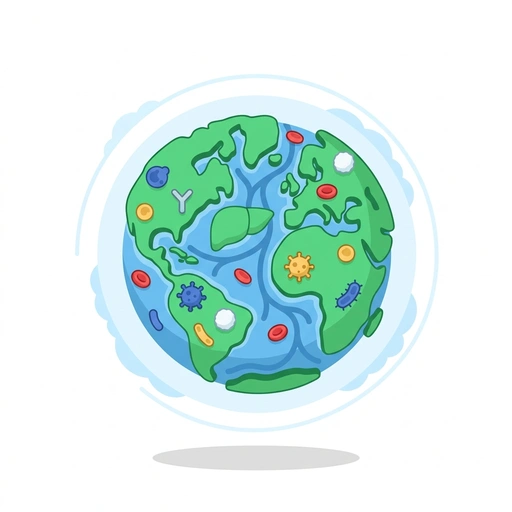
The Body as a Planet
Explore your anatomy as a vast, living ecosystem where cells are citizens, blood is a transit system, and light sets the planetary clock.
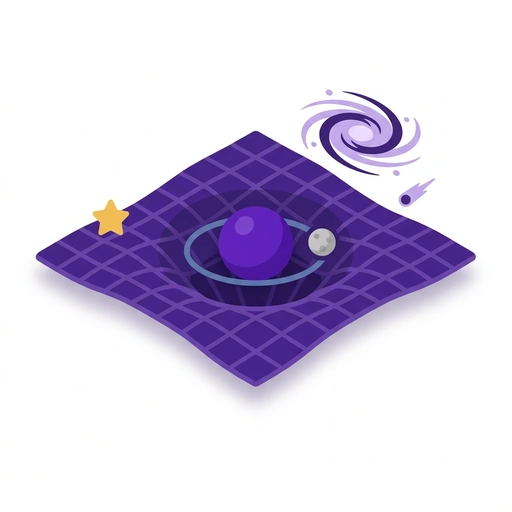
The Fabric of the Cosmos
Explore the extreme physics of the universe, from the warped space-time of black holes to the colossal structures of the cosmic web. This mastery course bridges the gap between basic astronomy and the complex relativistic mechanics that govern our reality.
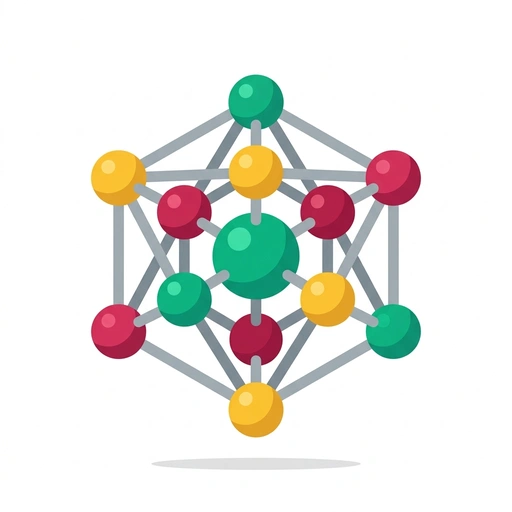
Molecular Architecture
Move beyond basic reactions to master the art of molecular design. Learn how to manipulate orbital symmetry, transition states, and non-covalent forces to engineer complex chemical outcomes.
Molecular Architecture: Advanced Synthesis
Move beyond basic reactions to master the strategic design of complex molecules. This course focuses on the high-level logic of retrosynthesis, stereochemical control, and the quantum mechanics that drive modern chemical innovation.
Start Clinical Anatomy: The Geometry of Access today.
Download Tomo, search Clinical Anatomy: The Geometry of Access, and play your first lesson in under a minute.