
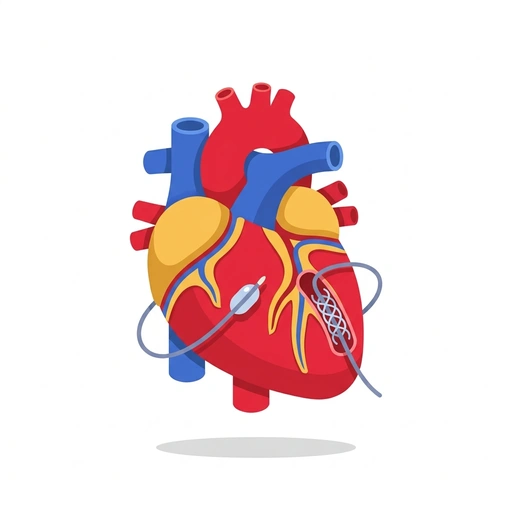
Clinical Cardiology and Procedures
Bridge the gap between cardiac physiology and clinical intervention. Learn how cardiologists decode diagnostic tests, make high-stakes procedural decisions in the cath lab, and deploy targeted therapies for structural and electrical heart disease.
Like Duolingo, but for Clinical Cardiology and Procedures. Tomo turns the whole topic into a game you play five minutes a day, until it actually sticks.
A short one: 12 levels across 2 sections, about 24 minutes end to end, roughly 5 days at five minutes a day. It moves through Ischemia and Cath Lab Interventions and Structural Repairs and Rhythm Management. It assumes you already know the basics.
Free forever · No credit card · iPhone & Android
Key ideas in Clinical Cardiology and Procedures
- ST-elevation mandates immediate catheterization lab activation for emergent reperfusion.
- Non-ST-elevation ACS requires clinical risk scoring and serial troponins rather than instant lab activation.
- Awaiting biomarker results before reperfusing a STEMI causes irreversible myocardial death.
- Anterior leads V1–V4 view the anterior wall perfused by the left anterior descending artery.
- Inferior leads II, III, and aVF map myocardial injury to the right coronary artery in most people.
- Lateral leads I, aVL, V5, and V6 reflect perfusion territory supplied by the left circumflex artery.
- Acute infarction requires demonstrating a dynamic rise or fall above reference limits over 1 to 3 hours.
- A static, non-changing elevated troponin indicates chronic myocardial injury rather than acute thrombosis.
- High-sensitivity troponin assays detect minute baseline elevations seen in chronic kidney or heart failure.
- Primary percutaneous coronary intervention guidelines establish a door-to-balloon target under 90 minutes.
- Myocardial necrosis accelerates drastically with each 30-minute delay after symptom onset.
- Ischemic myocardium salvage falls precipitously when coronary reperfusion exceeds the 90-minute mark.
- Dual antiplatelet therapy combines aspirin with a P2Y12 inhibitor to block platelet aggregation pathways.
- Parenteral anticoagulation with heparin inactivates thrombin to halt further clot formation.
- Antithrombotic therapy stabilizes the acute coronary lesion before mechanical wires cross the stenosis.
- Contrast fluoroscopy outlines the coronary lumen to reveal diameter narrowing.
You've tried the other tabs
Thirty open tabs. Four facts you actually kept.
You watched. You nodded. By Sunday it was gone.
One answer, then back to scrolling.
Eight weeks. You meant to finish. You didn't.
Tomo gives Clinical Cardiology and Procedures the Duolingo treatment: levels, streaks, and quick quizzes that test what you just learned. That game loop is what the tabs above never had, so it's the one you actually finish.
Here's what playing it feels like
A real question from this course. Take your best guess.
Picture a second patient with chest pain, but their ECG shows ST depression instead of elevation. What is your next move?
Get it right to open this lesson and 11 more in the app.
Where Clinical Cardiology and Procedures takes you
- 1
Ischemia and Cath Lab Interventions
- Triage and Acute Coronary Syndromes
- Percutaneous Coronary Intervention
- 2
Structural Repairs and Rhythm Management
- Structural Heart Disease and Valve Replacement
- Electrophysiology and Device Therapy
2 sections · 4 units · 12 levels. Built to play, not to enroll.
Tomo is in ChatGPT
Tomo is also a ChatGPT plugin: the same playable courses, built and played inside your chat.
Add Tomo to ChatGPT- What to ask
- “Make me a Tomo course on black holes.” “Turn this chat into a Tomo course.”
- What you get
- Quick questions with instant feedback, hearts and stars, ready to play in about a minute.
- Where it goes
- No sign-up to start. Connect your Tomo account and your streak carries on in the app.
You pick the voice
Clinical Cardiology and Procedures is taught in the Storyteller style: every lesson is a story. Want a different feel? In the app you can spin up the same topic in any of Tomo's teaching styles. Same facts, totally different vibe.
More Health on Tomo
Advanced Pathophysiology for Ontario PCPs
A mastery-level exploration of the physiological breakdowns in respiratory, cardiac, and neurological systems, tailored for the Ontario Primary Care Paramedic scope.
Pediatric Nursing Memory Hooks
Lock in high-yield pediatric nursing concepts, tricky medical terminology, and classic board exam patterns. Master developmental milestones, cardiac defects, and emergency triage with durable memory frameworks.
Clinical Nutrition and Dietetics
Step into the clinical mindset of a registered dietitian. Learn how to conduct nutrition assessments, prescribe medical nutrition therapies, manage complex feeding routes, and counsel patients effectively.
Clinical Medicine
Learn how clinicians think through complex symptoms, choose the right diagnostic tools, and deploy targeted treatments to manage acute disease.
Cracking the MRCS Exam
Understand the structure, clinical science, and OSCE strategies behind the Membership of the Royal Colleges of Surgeons examination. Master the high-yield anatomy, acute decision frameworks, and professional skills required to pass.
Medical Terminology: The Clinical Code
Crack the universal code behind complex medical words. Learn how prefixes, roots, and suffixes snap together so you can read health records, diagnoses, and clinical notes with confidence.
Start Clinical Cardiology and Procedures today.
Download Tomo, search Clinical Cardiology and Procedures, and play your first lesson in under a minute.