

Everyday Artificial Intelligence
Learn how modern AI models actually work and how to steer them effectively. Discover how to get reliable results, spot hallucinations, and pick the right tool for any task.
Like Duolingo, but for Everyday Artificial Intelligence. Tomo turns the whole topic into a game you play five minutes a day, until it actually sticks.
A short one: 11 levels across 2 sections, about 22 minutes end to end, roughly 4 days at five minutes a day. It moves through Steering the Machine and Under the Hood. It starts from scratch.
Free forever · No credit card · iPhone & Android

Key ideas in Everyday Artificial Intelligence
- AI models generate text by predicting what fits the scenario you set, not by running a keyword search
- Giving the AI a role and a specific situation grounds its tone and intent far better than scattered keywords
- AI models naturally tend toward polite, verbose explanations unless told where to stop
- Setting explicit limits on length (like bullet counts or word caps) and format forces the model to edit itself
- AI models mimic patterns in their input very strongly
- A single sample output shows the model rhythm, tone, and formatting all at once, avoiding misunderstandings from vague adjectives like 'punchy' or 'professional'
- AI models remember the conversation context, so you can steer and shape their text across turns
- Treating the initial response as a rough draft and steering it with follow-ups is much faster than repeatedly rewriting a single mega-prompt from scratch
- Language models predict which words sound plausible together rather than looking up verified facts
- An AI can generate completely fictional book titles, papers, or quotes while sounding calm and authoritative
- AI models hallucinate most often on obscure, niche topics, exact direct quotes, or hyper-specific data outside common training text
- Broad, famous, and heavily documented subjects are much safer from severe factual invention
- Pasting the reference material directly into the prompt grounds the AI's response in real text
- Constraining the AI to rely exclusively on provided text drastically reduces invented facts
- Polite requests or commands like 'be accurate' do not prevent an AI from hallucinating
- Prompting an AI to lay out its work step-by-step reveals the intermediate logic so users can spot faulty assumptions
You've tried the other tabs
Thirty open tabs. Four facts you actually kept.
You watched. You nodded. By Sunday it was gone.
One answer, then back to scrolling.
Eight weeks. You meant to finish. You didn't.
Tomo gives Everyday Artificial Intelligence the Duolingo treatment: levels, streaks, and quick quizzes that test what you just learned. That game loop is what the tabs above never had, so it's the one you actually finish.
Here's what playing it feels like
A real question from this course. Take your best guess.
You want an AI to decline an offer nicely. What kind of prompt works best?
Get it right to open this lesson and 10 more in the app.
How to learn Everyday Artificial Intelligence, step by step
Go in order. 11 short levels across 2 sections, about 22 minutes in all, five minutes a day.
- 1
Steering the Machine
- Directing the Model
- Catching Hallucinations and Errors
- 2
Under the Hood
- The Next-Word Prediction Engine
- Choosing and Bounding AI Tools
2 sections · 4 units · 11 levels. Built to play, not to enroll.
Questions about Everyday Artificial Intelligence
How do I learn Everyday Artificial Intelligence?
Go in order: start with Steering the Machine, then Under the Hood. On Tomo that's 11 short levels, about 22 minutes in all, played five minutes a day. Start free and play the first level in under a minute.
Is there a Duolingo-style app for Everyday Artificial Intelligence?
Yes. Tomo works like Duolingo: short daily lessons, streaks and quick quizzes. Everyday Artificial Intelligence is one of its free courses, and you can type any other topic to get a course of your own.
Is the Everyday Artificial Intelligence course free?
Yes. Everyday Artificial Intelligence is playable on Tomo's free plan, which doesn't expire. No credit card, no waitlist. Download the app and start your first lesson.
How long does it take to learn Everyday Artificial Intelligence?
11 levels across 2 sections, about 22 minutes of play in total. It's built for five minutes a day, so you finish it a little at a time instead of all at once.
Do I need any background to start Everyday Artificial Intelligence?
No. It's pitched at a beginner level, so it starts where you are and builds up. If you can tap a phone, you can start.
Tomo is in ChatGPT
Tomo is also a ChatGPT plugin: the same playable courses, built and played inside your chat.
Add Tomo to ChatGPT- What to ask
- “Make me a Tomo course on black holes.” “Turn this chat into a Tomo course.”
- What you get
- Quick questions with instant feedback, hearts and stars, ready to play in about a minute.
- Where it goes
- No sign-up to start. Connect your Tomo account and your streak carries on in the app.
You pick the voice
Everyday Artificial Intelligence is taught in the Explain Like I'm 5 style: no big words. promise.. Want a different feel? In the app you can spin up the same topic in any of Tomo's teaching styles. Same facts, totally different vibe.
More Technology on Tomo

How Artificial Intelligence Works
Go beyond the hype to understand how AI actually processes information, how to get the best results from it, and where its limits truly lie.

Working with Generative AI
Learn to steer generative AI models for writing, analysis, and creative problem-solving. Master clear prompting, catch convincing hallucinations, and understand how text prediction really works.
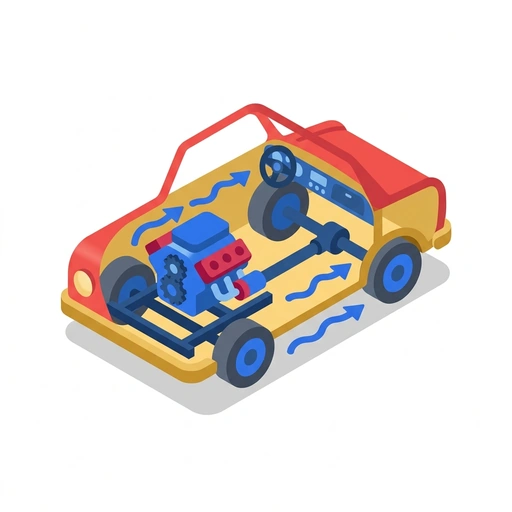
How Cars Work
Demystify what happens beneath the hood and behind the dashboard. Learn how engines, transmissions, and brakes operate, how to spot warning signs before they become costly breakdowns, and how to make confident decisions as an owner.

The Architecture of Intelligence
Go beneath the interface to explore the mathematical engines and data structures that allow machines to predict, reason, and generate. Learn how simple patterns scale into the complex behaviors of modern AI.

Everyday Car Mechanics
Demystify what happens under the hood. Learn to spot early warning signs, check vital fluids, and understand the core mechanical systems that keep your vehicle running safely.

Everyday Car Mechanics
Demystify what happens under your car's hood with practical, hands-on knowledge. Learn how to check vital fluids, diagnose weird noises, understand core engine systems, and deal honestly with mechanics.
Start Everyday Artificial Intelligence today.
Download Tomo, search Everyday Artificial Intelligence, and play your first lesson in under a minute.