
Everyday Geography and World History
Like Duolingo, but for Everyday Geography and World History. Tomo turns the whole topic into a game you play five minutes a day, until it actually sticks.
For the part of you with thirty open tabs that never became anything.
A short one: 12 levels across 2 sections, about 24 minutes end to end, roughly 5 days at five minutes a day. It moves through Mapping the Physical World and How We Got to the Modern World. It starts from scratch.
Free forever · No credit card · iPhone & Android
Key ideas in Everyday Geography and World History
- The equator splits north and south, causing opposite seasons (summer in December down south)
- The Prime Meridian splits east and west, establishing the reference point for global clock time
- Europe and Asia sit on the single, unbroken landmass of Eurasia
- The division between Europe and Asia was drawn along cultural and historical lines rather than physical plate boundaries
- Flattening a 3D globe onto a rectangular grid forces land near the poles to stretch dramatically
- Regions closest to the equator retain their true relative scale, while polar regions blow up in size
- Greenland is actually smaller than Australia despite looking vast on standard wall maps
- Latitude measures distance from the equator, directly dictating direct sunlight and warmth
- Quito sits right on the equator (tropical warmth), Rome in mid-latitudes (temperate), and Svalbard near the Arctic circle (polar cold)
- Oceans are constantly circulating heat around the globe rather than sitting as static basins
- Warm ocean currents (like the Gulf Stream) keep Western Europe far milder than Canadian regions at the exact same latitude
- Age of Sail trade ships relied on predictable ocean loops (gyres) to cross the Atlantic rather than sailing in straight lines
- Annual river flooding replenishes farmland with nutrient-rich topsoil (silt)
- Rivers provide a steady, predictable supply of water for crop irrigation
- Reliable surplus food production allowed people to settle permanently in large numbers
- Rugged mountain ranges and wide deserts posed massive logistical hurdles for ancient armies
You've tried the other tabs
Thirty open tabs. Four facts you actually kept.
You watched. You nodded. By Sunday it was gone.
One answer, then back to scrolling.
Eight weeks. You meant to finish. You didn't.
Tomo gives Everyday Geography and World History the Duolingo treatment: levels, streaks, and quick quizzes that test what you just learned. That game loop is what the tabs above never had, so it's the one you actually finish.
Here's what playing it feels like
A real question from this course. Take your best guess.
What is the Prime Meridian used for on a globe?
Get it right to open this lesson and 11 more in the app.
Where Everyday Geography and World History takes you
Fill the gaps in your mental map of the world. Grasp how continents, rivers, empires, and revolutions shaped the modern countries and borders we see on the news today.
- 1
Mapping the Physical World
- Reading the Globe
- Why People Live Where They Live
- 2
How We Got to the Modern World
- Milestones of Human Society
- How Borders Formed
2 sections · 4 units · 12 levels. Built to play, not to enroll.
You pick the voice
Everyday Geography and World History is taught in the Explain Like I'm 5 style: no big words. promise.. Want a different feel? In the app you can spin up the same topic in any of Tomo's teaching styles. Same facts, totally different vibe.
More History on Tomo
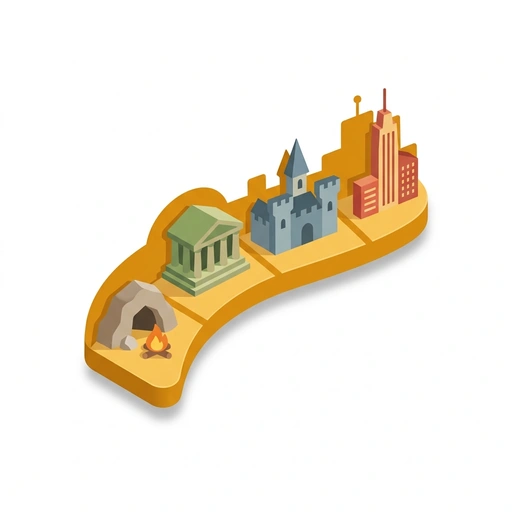
Eras That Shaped Human History
Trace how steam engines, ancient debates, trade caravans, and the first planted seeds built the modern world. Discover the defining eras that transformed human life without getting lost in dry dates. Walk away with a clear mental map of our shared journey.
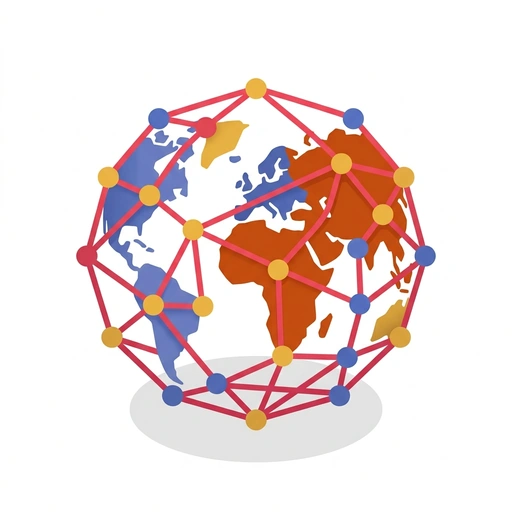
How Networks Shaped World History
Examine the ecological shocks, wind patterns, and resource flows that truly connected our planet. Move beyond names and dates to master the economic and geographic mechanisms that drove civilizations to converge and diverge.
The Historian's Lens
Move beyond memorizing dates and start questioning how the stories of our past are built. Learn to spot bias, compare conflicting accounts, and understand why the 'truth' of history changes over time.

Germany: Culture, History, and Language
Explore the heart of Europe by understanding the German mindset, the pivotal moments of its history, and the logic of its unique language.
How Maps Shape History
Discover how mountains, rivers, and deserts didn't just sit there—they decided where empires rose and how cultures met. See the world through the eyes of the people who had to cross it.
AP World History: The Modern Era
Travel through the last 800 years of human history to see how trade, empires, and revolutions connected the globe. Learn the major patterns that shaped our modern world from the Silk Road to the digital age.
Start Everyday Geography and World History today.
Download Tomo, search Everyday Geography and World History, and play your first lesson in under a minute.