
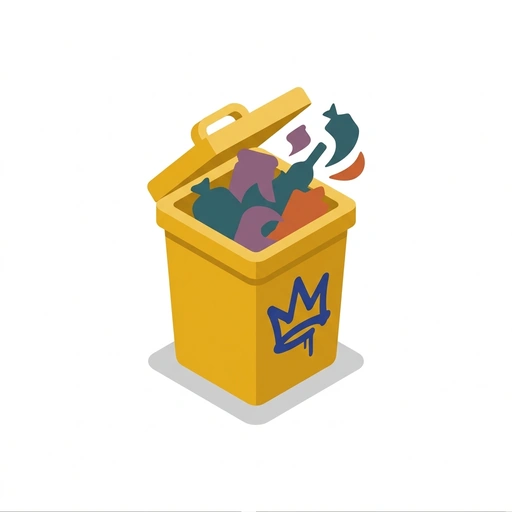
Gachiakuta: The Soul of Trash
Go beyond the surface of Kei Urana's masterpiece to analyze the intricate power systems of Vitality, the sociopolitical architecture of the Sphere, and the graffiti-inspired visual philosophy of the Abyss.
Like Duolingo, but for Gachiakuta: The Soul of Trash. Tomo turns the whole topic into a game you play five minutes a day, until it actually sticks.
18 levels across 3 sections, about 36 minutes end to end, roughly 7 days at five minutes a day. It moves through The Mechanics of Vitality, Sociopolitical Architecture, and Visual Language and Philosophy.
Free forever · No credit card · iPhone & Android

Key ideas in Gachiakuta: The Soul of Trash
- Vitality as resonance with history
- The human soul as a catalyst
- Depth of existence in objects
- Psychological obsession for Giver status
- Refusal to see objects as disposable
- Permanence of Giver resonance
- Vague intent leads to leaking Vitality
- History and soul resonance
- Singular purpose aligns soul and object
- Efficiency as energy conversion
- Supernatural ability anchored to atoms
- Psychological requirement for Giver status
- Maintenance as tactical necessity
- Manifestation limited by structural limits
- Physical degradation limits power
- Purpose clarity and efficiency
You've tried the other tabs
Thirty open tabs. Four facts you actually kept.
You watched. You nodded. By Sunday it was gone.
One answer, then back to scrolling.
Eight weeks. You meant to finish. You didn't.
Tomo gives Gachiakuta: The Soul of Trash the Duolingo treatment: levels, streaks, and quick quizzes that test what you just learned. That game loop is what the tabs above never had, so it's the one you actually finish.
Here's what playing it feels like
A real question from this course. Take your best guess.
What role does the human soul play in the activation of an object's latent power?
Get it right to open this lesson and 17 more in the app.
How to learn Gachiakuta: The Soul of Trash, step by step
Go in order. 18 short levels across 3 sections, about 36 minutes in all, five minutes a day.
- 1
The Mechanics of Vitality
- Mastering the Giver's Intent
- The Alchemy of Attachment
- 2
Sociopolitical Architecture
- Navigating the Sphere's Hypocrisy
- The Ecology of the Abyss
- 3
Visual Language and Philosophy
- Decoding the Graffiti Aesthetic
- The Ethics of Value
3 sections · 6 units · 18 levels. Built to play, not to enroll.
Questions about Gachiakuta: The Soul of Trash
How do I learn Gachiakuta: The Soul of Trash?
Go in order: start with The Mechanics of Vitality, then Sociopolitical Architecture, then Visual Language and Philosophy. On Tomo that's 18 short levels, about 36 minutes in all, played five minutes a day. Start free and play the first level in under a minute.
Is there a Duolingo-style app for Gachiakuta: The Soul of Trash?
Yes. Tomo works like Duolingo: short daily lessons, streaks and quick quizzes. Gachiakuta: The Soul of Trash is one of its free courses, and you can type any other topic to get a course of your own.
Is the Gachiakuta: The Soul of Trash course free?
Yes. Gachiakuta: The Soul of Trash is playable on Tomo's free plan, which doesn't expire. No credit card, no waitlist. Download the app and start your first lesson.
How long does it take to learn Gachiakuta: The Soul of Trash?
18 levels across 3 sections, about 36 minutes of play in total. It's built for five minutes a day, so you finish it a little at a time instead of all at once.
Do I need any background to start Gachiakuta: The Soul of Trash?
No. It's pitched at an advanced level, so it starts where you are and builds up. If you can tap a phone, you can start.
Tomo is in ChatGPT
Tomo is also a ChatGPT plugin: the same playable courses, built and played inside your chat.
Add Tomo to ChatGPT- What to ask
- “Make me a Tomo course on black holes.” “Turn this chat into a Tomo course.”
- What you get
- Quick questions with instant feedback, hearts and stars, ready to play in about a minute.
- Where it goes
- No sign-up to start. Connect your Tomo account and your streak carries on in the app.
You pick the voice
Gachiakuta: The Soul of Trash is taught in the Professor style: clear, structured, thorough. Want a different feel? In the app you can spin up the same topic in any of Tomo's teaching styles. Same facts, totally different vibe.
More Pop Culture on Tomo

The Swiftie Scholar: Master the Lore
Go beyond the radio hits to decode the intricate world of the Swiftie fandom. Master the art of lyrical analysis, track the evolution of the 'Eras' narrative, and learn how to spot the hidden clues that connect a decade of storytelling.

Magic in the Shadows: The Hidden Wizarding World
Go beyond the basics of Hogwarts to explore how magic functions in secret societies and the complex biology of the creatures that share our world. Master the nuances of non-verbal casting and the ethical dilemmas of magical governance.

K-pop: The Art of the Comeback
Go beyond the catchy hooks to understand how the industry builds global icons. Master the language of fandoms, the strategy of concept shifts, and the hidden layers of high-budget music videos.

K-Pop: From Fan to Stan
Ever wondered why K-pop is taking over the world? Learn how to spot your 'bias', master the fan chants, and understand the secret language of the global music phenomenon.

The World of K-Pop
Go beyond the catchy hooks to master the choreography, industry mechanics, and fan culture that turned a local music scene into a global phenomenon.

Internet Lore and Viral Culture
Decode the hidden grammar of modern memes, online folklore, and viral phenomena. Explore how digital subcultures invent aesthetics, shift language, and drive modern media.
Start Gachiakuta: The Soul of Trash today.
Download Tomo, search Gachiakuta: The Soul of Trash, and play your first lesson in under a minute.