
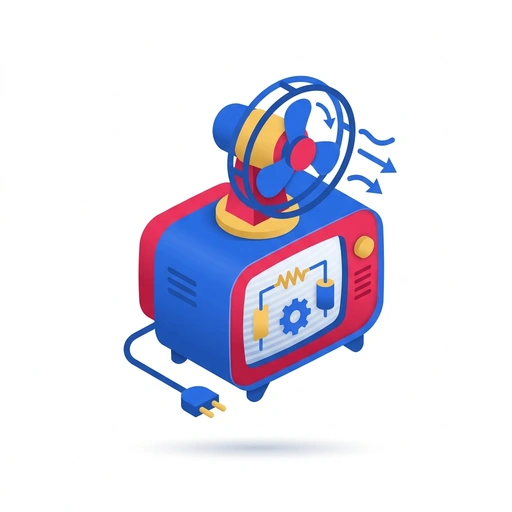
How Everyday Machines Work
Like Duolingo, but for How Everyday Machines Work. Tomo turns the whole topic into a game you play five minutes a day, until it actually sticks.
For the part of you with thirty open tabs that never became anything.
21 levels across 4 sections, about 42 minutes end to end, roughly 8 days at five minutes a day. It moves through Electromechanical Motion; Beams, Waves, and Displays; Thermal and Fluid Systems; and Control and Regulation. It assumes you already know the basics.
Free forever · No credit card · iPhone & Android

Key ideas in How Everyday Machines Work
- Tilted blades carve a low-pressure pocket in front and higher pressure behind.
- Higher ambient room pressure rushes into the forward low-pressure void.
- A flat zero-pitch blade only shears air sideways without driving it forward.
- Shading coils physically delay magnetic flux rise to fake rotational motion.
- Split-phase capacitors offset auxiliary winding current by ninety degrees.
- Induced rotor currents react against shifting stator flux to produce torque.
- Steep, curved blades yield high static pressure needed to overcome dense grilles.
- Shallow, flat blades maximize total free airflow volume (CFM) only in open air.
- Aggressive pitch angles generate trailing vortex turbulence that hums loudly.
- A worm gear on the rotor shaft drops high RPM down to a low-turn gear wheel.
- An off-center eccentric pin rotates around the slow gear's face.
- A rigid linkage arm pulls and pushes the fan chassis against a fixed pivot.
- Fluid friction creates a zero-velocity air boundary layer directly on the blade.
- Microscopic dust settles into this stationary pocket sheltered from passing wind.
- Electrostatic attraction locks dust particles against the plastic blade surface.
- Pushing fan speed buttons routes AC current through different coil taps in the stator.
You've tried the other tabs
Thirty open tabs. Four facts you actually kept.
You watched. You nodded. By Sunday it was gone.
One answer, then back to scrolling.
Eight weeks. You meant to finish. You didn't.
Tomo gives How Everyday Machines Work the Duolingo treatment: levels, streaks, and quick quizzes that test what you just learned. That game loop is what the tabs above never had, so it's the one you actually finish.
Here's what playing it feels like
A real question from this course. Take your best guess.
Once spinning blades create that low-pressure pocket in front, what actually creates the breeze you feel?
Get it right to open this lesson and 20 more in the app.
Where How Everyday Machines Work takes you
Uncover the mechanical and electrical principles powering the machines in your living room. From CRT televisions to electric fans and cooling systems, learn how engineers turn physics into functional household hardware.
- 1
Electromechanical Motion
- Aerodynamics and Motor Drive of Electric Fans
- Speed Regulation and Mechanical Transmission
- 2
Beams, Waves, and Displays
- Cathode Ray Tubes and Electron Beam Steering
- Signal Demodulation and Transduction
- 3
Thermal and Fluid Systems
- Vapor-Compression Refrigeration and Heat Pumps
- Fluid Pressure, Pumping, and Hydraulic Routing
- 4
Control and Regulation
- Mechanical Feedback and Appliance Regulation
4 sections · 7 units · 21 levels. Built to play, not to enroll.
You pick the voice
How Everyday Machines Work is taught in the The Bestie style: your friend who just gets it. Want a different feel? In the app you can spin up the same topic in any of Tomo's teaching styles. Same facts, totally different vibe.
More Technology on Tomo

Advanced Automotive Diagnostics
Move beyond code-reading into deep system diagnostics. Master lab scopes, CAN-bus physical layer analysis, in-cylinder pressure profiling, and high-voltage electrified powertrain troubleshooting.

Everyday Car Mechanics
Demystify what happens under the hood. Learn to spot early warning signs, check vital fluids, and understand the core mechanical systems that keep your vehicle running safely.

Embedded Systems: Code Meets Hardware
Bridge the gap between pure software and physical circuits. Learn how to write non-blocking firmware, interface digital sensors over standard buses, safely drive high-power loads, and diagnose hardware bugs.

How Robots Work
Discover how machines sense the physical world, make real-time decisions, and move with precision. Learn the core principles behind autonomous navigation, mechanical manipulation, and feedback control.

90s Impala Security Systems
Master the quirks of the 1990s Chevrolet Impala SS security system. Learn to diagnose the notorious VATS lockout and implement permanent reliability fixes.
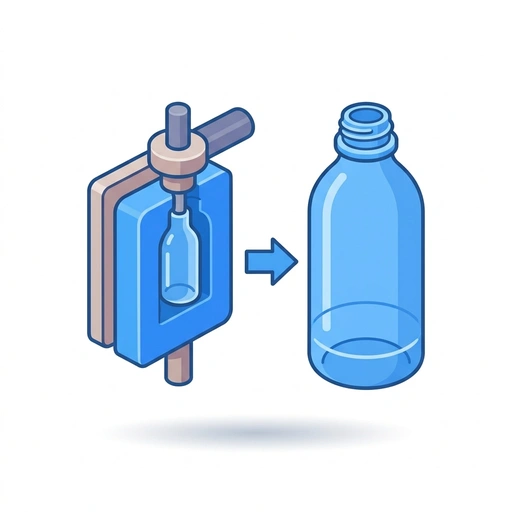
2-Step ISBM Optimization
Master the nuances of two-stage injection stretch blow molding, focusing on preform thermal profiling and molecular orientation for high-performance packaging.
Start How Everyday Machines Work today.
Download Tomo, search How Everyday Machines Work, and play your first lesson in under a minute.