
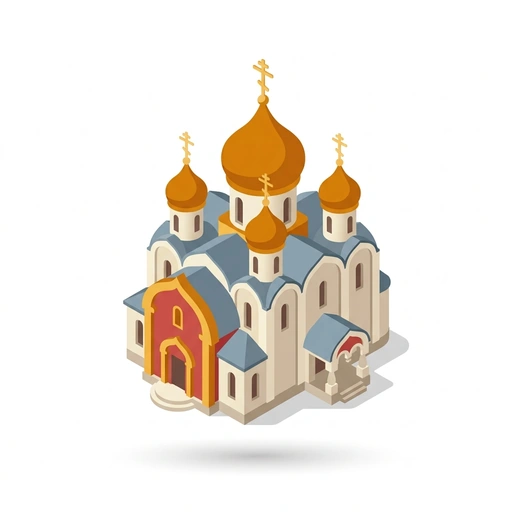
Inside the Orthodox Church
Discover the living traditions, timeless worship, and theological heart of Eastern Orthodoxy. Learn what happens inside an Orthodox temple, how ancient spiritual rhythms shape daily life, and why this ancient branch of Christianity remains distinct.
Like Duolingo, but for Inside the Orthodox Church. Tomo turns the whole topic into a game you play five minutes a day, until it actually sticks.
25 levels across 4 sections, about 50 minutes end to end, roughly 10 days at five minutes a day. It moves through Stepping into the Temple; Daily Life and Spiritual Rhythm; Core Beliefs and Worldview; and Organization, History, and Identity. It starts from scratch.
Free forever · No credit card · iPhone & Android

Key ideas in Inside the Orthodox Church
- Orthodox worship uses physical elements like incense, chanting, icons, and physical touch to draw all five senses into prayer
- The architecture and sensory cues are meant to make the temple feel like earth meeting heaven
- Orthodox temples are traditionally built so the congregation and priest face east during worship
- The eastward orientation connects physically to the rising sun as an image of Christ's resurrection and second coming
- The iconostasis marks a boundary between earth and heaven, but its purpose is connection rather than secrecy
- The icons of Christ, Mary, and the saints on the screen visually link the sanctuary to the worshippers in the nave
- Orthodox Christians distinguish between veneration (honor shown to Christ and the saints through images) and adoration (worship, which is reserved for God alone)
- Physical acts like lighting candles, bowing, and kissing an icon pass the honor directly to the person depicted, not the physical materials
- Standing is the traditional Orthodox liturgical posture symbolizing active attentiveness, readiness, and reverence before God
- Pews are traditionally omitted to allow worshippers to stand and move freely during prayers, prostrations, and processions
- Sitting is allowed for those who are elderly, ill, or tired, and is not considered a sin
- Orthodox worship views the Divine Liturgy as stepping outside linear time into heaven's eternal worship
- The service is not treated as a theatrical reenactment or symbolic drama of past events
- Icons, incense, and hymns are intended to reveal the presence of the heavenly court joining the earthly congregation
- Traditional Orthodox worship forbids musical instruments like organs, pianos, or guitars
- The human voice alone is considered the only natural, living instrument worthy of offering direct praise
You've tried the other tabs
Thirty open tabs. Four facts you actually kept.
You watched. You nodded. By Sunday it was gone.
One answer, then back to scrolling.
Eight weeks. You meant to finish. You didn't.
Tomo gives Inside the Orthodox Church the Duolingo treatment: levels, streaks, and quick quizzes that test what you just learned. That game loop is what the tabs above never had, so it's the one you actually finish.
Here's what playing it feels like
A real question from this course. Take your best guess.
Picture walking into an Orthodox temple. How is the space meant to feel to someone stepping inside?
Get it right to open this lesson and 24 more in the app.
How to learn Inside the Orthodox Church, step by step
Go in order. 25 short levels across 4 sections, about 50 minutes in all, five minutes a day.
- 1
Stepping into the Temple
- Navigating the Orthodox Space
- Experiencing the Divine Liturgy
- 2
Daily Life and Spiritual Rhythm
- The Rhythm of Fasting and Prayer
- The Communion of Saints
- 3
Core Beliefs and Worldview
- Salvation as Healing and Transformation
- Scripture and Living Tradition
- 4
Organization, History, and Identity
- How the Church Governs Itself
- The Great Schism and Modern Continuity
4 sections · 8 units · 25 levels. Built to play, not to enroll.
Questions about Inside the Orthodox Church
How do I learn Inside the Orthodox Church?
Go in order: start with Stepping into the Temple, then Daily Life and Spiritual Rhythm, then Core Beliefs and Worldview, then Organization, History, and Identity. On Tomo that's 25 short levels, about 50 minutes in all, played five minutes a day. Start free and play the first level in under a minute.
Is there a Duolingo-style app for Inside the Orthodox Church?
Yes. Tomo works like Duolingo: short daily lessons, streaks and quick quizzes. Inside the Orthodox Church is one of its free courses, and you can type any other topic to get a course of your own.
Is the Inside the Orthodox Church course free?
Yes. Inside the Orthodox Church is playable on Tomo's free plan, which doesn't expire. No credit card, no waitlist. Download the app and start your first lesson.
How long does it take to learn Inside the Orthodox Church?
25 levels across 4 sections, about 50 minutes of play in total. It's built for five minutes a day, so you finish it a little at a time instead of all at once.
Do I need any background to start Inside the Orthodox Church?
No. It's pitched at a beginner level, so it starts where you are and builds up. If you can tap a phone, you can start.
Tomo is in ChatGPT
Tomo is also a ChatGPT plugin: the same playable courses, built and played inside your chat.
Add Tomo to ChatGPT- What to ask
- “Make me a Tomo course on black holes.” “Turn this chat into a Tomo course.”
- What you get
- Quick questions with instant feedback, hearts and stars, ready to play in about a minute.
- Where it goes
- No sign-up to start. Connect your Tomo account and your streak carries on in the app.
You pick the voice
Inside the Orthodox Church is taught in the Storyteller style: every lesson is a story. Want a different feel? In the app you can spin up the same topic in any of Tomo's teaching styles. Same facts, totally different vibe.
More Philosophy on Tomo

Living with the Quran
Build a compassionate, everyday relationship with Allah and scripture. Learn to reflect on verses deeply, anchor your day with small acts of devotion, and navigate life's real hardships with quiet faith.

A Faith That Evolves
Explore a way of being Christian that values doubt, social justice, and an open heart. Discover how ancient traditions are being reimagined for the modern world.

Philosophy for Everyday Life
Learn to cut through bad arguments, resolve tough moral dilemmas, and build mental resilience using philosophy's most practical tools.
Hermeticism and the Islamic Tradition
Explore the ancient wisdom of Hermes Trismegistus through the lens of Islamic theology, uncovering the deep historical and philosophical links between the Emerald Tablet and the House of Wisdom.
Stoic Philosophy for Everyday Life
Discover how ancient Stoic philosophy offers practical tools for emotional resilience, clear judgment, and purposeful living. Learn to separate what you control from what you cannot, reframe setbacks into strength, and build an unshakeable moral compass. Transform everyday stress into clarity through timeless principles practiced by emperors and thinkers alike.

The Modern Satanist's Handbook
Look past the movies to discover what Satanists actually believe and do. From personal freedom to ancient myths, explore how these diverse groups use the figure of the Rebel to define their own lives.
Start Inside the Orthodox Church today.
Download Tomo, search Inside the Orthodox Church, and play your first lesson in under a minute.