

Justice as a Spiritual Practice
Like Duolingo, but for Justice as a Spiritual Practice. Tomo turns the whole topic into a game you play five minutes a day, until it actually sticks.
For the part of you with thirty open tabs that never became anything.
A short one: 8 levels across 2 sections, about 16 minutes end to end, roughly 3 days at five minutes a day. It moves through The Heart of the Neighbor and The Practice of Transformation. It starts from scratch.
Free forever · No credit card · iPhone & Android

Key ideas in Justice as a Spiritual Practice
- Social justice is rooted in the spiritual conviction that every person is sacred by nature
- Inherent worth is non-negotiable and independent of social status or productivity
- Deep listening requires setting aside one's own agenda to fully witness another's reality
- Being truly heard is a primary way that dignity is restored to marginalized individuals
- The spiritual basis of justice as inherent worth rather than earned status
- Applying deep listening as a tool for restoring dignity
- The spiritual concept of a neighbor is defined by the reach of your choices and consumption
- Distance does not dissolve the moral connection between people in a global community
- A healthy community is measured by the participation of its most vulnerable or invisible members
- Using the 'who is missing' diagnostic to assess community health
- Interpersonal kindness does not automatically correct biased institutional policies
- Charity provides immediate relief for individual suffering
- The spiritual definition of a neighbor based on impact rather than proximity
- Systemic injustice can persist even when the individuals within the system are 'nice'
- Differentiating between the roles of charity and justice
- Justice requires changing the rules of the community, not just the attitude of the individual
You've tried the other tabs
Thirty open tabs. Four facts you actually kept.
You watched. You nodded. By Sunday it was gone.
One answer, then back to scrolling.
Eight weeks. You meant to finish. You didn't.
Tomo gives Justice as a Spiritual Practice the Duolingo treatment: levels, streaks, and quick quizzes that test what you just learned. That game loop is what the tabs above never had, so it's the one you actually finish.
Here's what playing it feels like
A real question from this course. Take your best guess.
In a community practicing justice, what determines a person's right to be treated with dignity?
Get it right to open this lesson and 7 more in the app.
Where Justice as a Spiritual Practice takes you
Move beyond simple kindness to discover how creating a fair world is a profound spiritual commitment. Learn to bridge the gap between inner transformation and public action.
- 1
The Heart of the Neighbor
- Seeing the Sacred in Others
- Moving Beyond Individual Goodness
- 2
The Practice of Transformation
- The Inner Tools of Public Action
2 sections · 3 units · 8 levels. Built to play, not to enroll.
You pick the voice
Justice as a Spiritual Practice is taught in the Explain Like I'm 5 style: no big words. promise.. Want a different feel? In the app you can spin up the same topic in any of Tomo's teaching styles. Same facts, totally different vibe.
More Philosophy on Tomo

Stoic Practice: Beyond the Basics
Move beyond simple resilience and explore the sophisticated psychological and logical framework of the ancient Stoa. Master the nuances of role ethics, the physics of the Logos, and the rigorous discipline of assent.

Justice: The Art of Fairness
Move beyond simple 'right and wrong' to explore how we balance competing claims of merit, need, and historical repair.
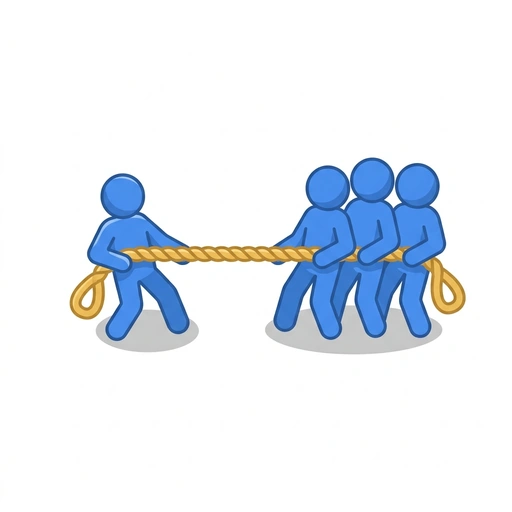
The Tug-of-War: Individual vs. Society
Understand the hidden forces that shape our laws and lifestyles. Learn to decode political systems and see how every headline is a battle between personal freedom and the common good.

Yin Yang: The Art of Dynamic Balance
Go beyond the symbol to master the ancient logic of change, energy, and harmony in your daily life and relationships.

What Makes an Action Good?
Explore the foundations of ethics and learn how to navigate everyday moral choices with clarity and confidence.

The Wisdom of James
Move beyond the 'faith vs. works' debate to explore the Book of James as a sophisticated manual for the 'perfected' life, bridging Jewish wisdom literature and Christian ethics.
Start Justice as a Spiritual Practice today.
Download Tomo, search Justice as a Spiritual Practice, and play your first lesson in under a minute.