

Latte Art: The Physics of the Pour
Transform your morning rush into a gallery of foam. Master the fluid dynamics of microfoam and the precise hand movements required to pour hearts, tulips, and rosettas in a professional setting.
Like Duolingo, but for Latte Art: The Physics of the Pour. Tomo turns the whole topic into a game you play five minutes a day, until it actually sticks.
A short one: 12 levels across 2 sections, about 24 minutes end to end, roughly 5 days at five minutes a day. It moves through The Foundation of Flow and The Core Designs. It assumes you already know the basics.
Free forever · No credit card · iPhone & Android

Key ideas in Latte Art: The Physics of the Pour
- Stretching happens first by keeping the tip near the surface to pull in air
- Ideal texture resembles wet gloss paint with a reflective sheen
- Rolling follows stretching to break large bubbles into a silky microfoam
- Visible bubbles indicate the air wasn't integrated properly during the roll
- The correct sequence of the steaming process to achieve microfoam
- Identifying the visual indicator of perfect milk texture
- Milk proteins begin to break down and lose elasticity above 65°C
- Stopping at 60-65°C keeps the texture fluid enough for intricate patterns
- Tapping the pitcher physically breaks any large 'macro-bubbles' on top
- Swirling creates a homogenous mixture so the foam doesn't separate from the milk
- Matching grooming techniques to their specific textural purpose
- Narrower cups provide less surface area for the foam to spread out
- Understanding the relationship between temperature and milk elasticity
- Steaming slightly thinner milk prevents the foam from 'piling up' in tight spaces
- Adjusting steaming technique for different vessel shapes
- High pours use gravity to pierce the crema and sink the milk
You've tried the other tabs
Thirty open tabs. Four facts you actually kept.
You watched. You nodded. By Sunday it was gone.
One answer, then back to scrolling.
Eight weeks. You meant to finish. You didn't.
Tomo gives Latte Art: The Physics of the Pour the Duolingo treatment: levels, streaks, and quick quizzes that test what you just learned. That game loop is what the tabs above never had, so it's the one you actually finish.
Here's what playing it feels like
A real question from this course. Take your best guess.
What should your finished milk look like if it's ready for a masterpiece?
Get it right to open this lesson and 11 more in the app.
How to learn Latte Art: The Physics of the Pour, step by step
Go in order. 12 short levels across 2 sections, about 24 minutes in all, five minutes a day.
- 1
The Foundation of Flow
- Perfecting the 'Wet Paint' Texture
- The Mechanics of the Canvas
- 2
The Core Designs
- The Heart and the Tulip
- The Rosetta Pendulum
2 sections · 4 units · 12 levels. Built to play, not to enroll.
Questions about Latte Art: The Physics of the Pour
How do I learn Latte Art: The Physics of the Pour?
Go in order: start with The Foundation of Flow, then The Core Designs. On Tomo that's 12 short levels, about 24 minutes in all, played five minutes a day. Start free and play the first level in under a minute.
Is there a Duolingo-style app for Latte Art: The Physics of the Pour?
Yes. Tomo works like Duolingo: short daily lessons, streaks and quick quizzes. Latte Art: The Physics of the Pour is one of its free courses, and you can type any other topic to get a course of your own.
Is the Latte Art: The Physics of the Pour course free?
Yes. Latte Art: The Physics of the Pour is playable on Tomo's free plan, which doesn't expire. No credit card, no waitlist. Download the app and start your first lesson.
How long does it take to learn Latte Art: The Physics of the Pour?
12 levels across 2 sections, about 24 minutes of play in total. It's built for five minutes a day, so you finish it a little at a time instead of all at once.
Do I need any background to start Latte Art: The Physics of the Pour?
No. It's pitched at an intermediate level, so it starts where you are and builds up. If you can tap a phone, you can start.
Tomo is in ChatGPT
Tomo is also a ChatGPT plugin: the same playable courses, built and played inside your chat.
Add Tomo to ChatGPT- What to ask
- “Make me a Tomo course on black holes.” “Turn this chat into a Tomo course.”
- What you get
- Quick questions with instant feedback, hearts and stars, ready to play in about a minute.
- Where it goes
- No sign-up to start. Connect your Tomo account and your streak carries on in the app.
You pick the voice
Latte Art: The Physics of the Pour is taught in the Explain Like I'm 5 style: no big words. promise.. Want a different feel? In the app you can spin up the same topic in any of Tomo's teaching styles. Same facts, totally different vibe.
More Food & Drink on Tomo

Latte Art: From Foam to Flourish
Master the physics of microfoam and the fluid dynamics of pouring to turn every paper cup into a canvas.

Latte Art at Home
Transform your morning coffee into a masterpiece. Learn the physics of milk foam and the muscle memory required to pour hearts, tulips, and rosettas with confidence.
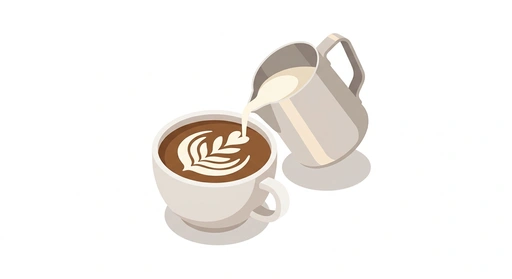
Pouring Your First Latte Art
Transform your morning coffee into a masterpiece by mastering the physics of microfoam and the fluid dynamics of the pour.

Pouring Latte Art
Transform everyday milk into silky microfoam and master the fluid dynamics of classic coffee designs. Learn how pitcher height, tilt, and wrist rhythm come together to pour crisp hearts, tulips, and rosettas.

Latte Art at Home
Turn your morning espresso into a café-quality canvas using simple physics and hand control. Learn to texture glossy microfoam, master pour height, and reliably pour hearts and layered tulips.
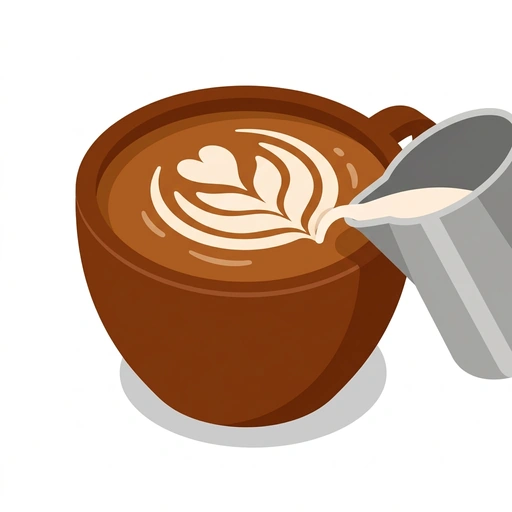
Latte Art Mechanics
Transform milk steaming and pouring from guesswork into precise fluid dynamics. Learn to craft silky microfoam, control your canvas, and execute crisp free-pour patterns with confidence.
Start Latte Art: The Physics of the Pour today.
Download Tomo, search Latte Art: The Physics of the Pour, and play your first lesson in under a minute.