
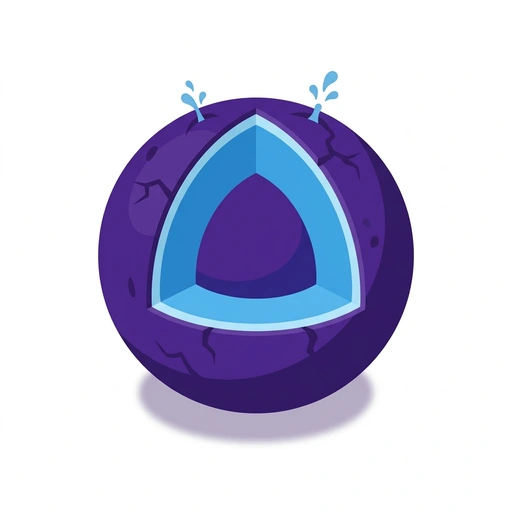
Ocean Worlds: Life on Saturn's Moons
Explore the icy frontiers of Enceladus and Titan to uncover the chemical secrets of subsurface oceans and the potential for extraterrestrial life.
Like Duolingo, but for Ocean Worlds: Life on Saturn's Moons. Tomo turns the whole topic into a game you play five minutes a day, until it actually sticks.
87 levels across 8 sections, about 174 minutes end to end, roughly 35 days at five minutes a day. It moves through The Search for Wet Worlds, Enceladus: The Active Ocean, Titan: The Prebiotic Laboratory, The Mechanics of Subsurface Oceans, Energy and Metabolism, Tools of the Trade, The Limits of Life, and Reaching the Outer Moons. It assumes you already know the basics.
Free forever · No credit card · iPhone & Android
Key ideas in Ocean Worlds: Life on Saturn's Moons
- Habitability can exist wherever energy and liquid water meet
- Icy crusts act as insulation for liquid oceans beneath
- Surface temperature is irrelevant to subsurface liquid stability
- Tidal forces from gas giants create friction and heat
- Radioactive decay provides a steady internal heat source
- Chemical gradients at vents provide energy without light
- The shift from surface-centric to subsurface-centric habitability models
- Identifying internal heating mechanisms that replace solar energy
- The Frost Line marks where water transitions to solid ice
- Volatile compounds like methane only freeze in the outer cold
- Inner planets are stripped of light gases by solar heat
- The distribution of chemical materials based on the 'Frost Line'
- Gas giants create massive magnetospheres that shield moons
- Magnetospheres deflect high-energy charged particles
- Radiation protection is vital for preserving organic molecules
- The role of planetary magnetospheres in protecting moons
You've tried the other tabs
Thirty open tabs. Four facts you actually kept.
You watched. You nodded. By Sunday it was gone.
One answer, then back to scrolling.
Eight weeks. You meant to finish. You didn't.
Tomo gives Ocean Worlds: Life on Saturn's Moons the Duolingo treatment: levels, streaks, and quick quizzes that test what you just learned. That game loop is what the tabs above never had, so it's the one you actually finish.
Here's what playing it feels like
A real question from this course. Take your best guess.
If a moon's surface is a frozen wasteland at -200°C, what does that tell us about the water deep underground?
Get it right to open this lesson and 86 more in the app.
Where Ocean Worlds: Life on Saturn's Moons takes you
- 1
The Search for Wet Worlds
- Beyond the Goldilocks Zone
- The Case for Icy Moons
- 2
Enceladus: The Active Ocean
- Plumes and Hydrothermal Vents
- Sampling the Spray
- Gravity and Tidal Heating
- 3
Titan: The Prebiotic Laboratory
- Methane Cycles and Hydrocarbon Lakes
- The Tholin Haze
- Exotic Chemistry: Life without Water?
- 4
The Mechanics of Subsurface Oceans
- The Shell-Ocean-Core Sandwich
- Salinity and Conductivity
- Convection Currents in Ice
- 5
Energy and Metabolism
- Redox Gradients as Biological Fuel
- Radiolysis: Energy from Radiation
- Serpentinization and Hydrogen
- 6
Tools of the Trade
- Mass Spectrometry in Deep Space
- Radar Mapping through Clouds
- Gravity Science and Moment of Inertia
- 7
The Limits of Life
- Extremophiles as Earthly Proxies
- Biosignatures vs. Abiotic Mimics
- 8
Reaching the Outer Moons
- The Dragonfly Mission Architecture
- Planetary Protection Protocols
- The Future of Sub-Ice Exploration
8 sections · 22 units · 87 levels. Built to play, not to enroll.
You pick the voice
Ocean Worlds: Life on Saturn's Moons is taught in the The Professor style: clear, structured, thorough. Want a different feel? In the app you can spin up the same topic in any of Tomo's teaching styles. Same facts, totally different vibe.
More Science on Tomo
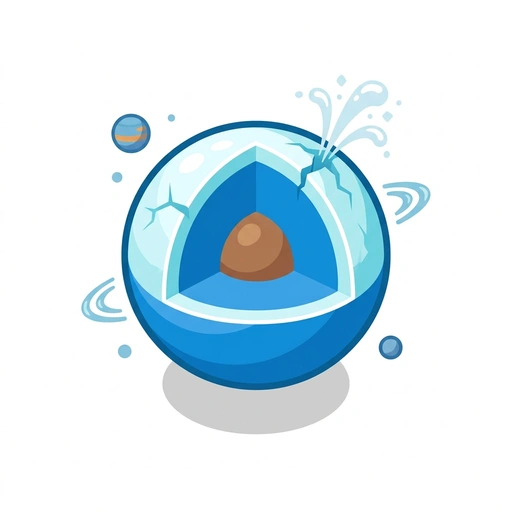
Ocean Worlds of the Solar System
Journey beyond Earth to discover the hidden, liquid-water oceans locked beneath the icy shells of moons and dwarf planets. Explore the chemistry, gravity, and extreme environments that make these distant worlds the best places to search for alien life.
The Cosmos and Beyond
Go beyond the basics of the solar system to master the mechanics of orbital motion, stellar evolution, and the deep-space structures that define our universe.
Exoplanets and the Search for Life
An exhaustive exploration of planetary systems beyond our own, from the subsurface oceans of icy moons to the detection of biosignatures in the deep cosmos.

The Night Sky and Beyond
Journey from your backyard to the edge of the observable universe. Learn to navigate the constellations, understand the lives of stars, and explore the mysteries of black holes and dark energy.
Astronomy: Beyond the Telescope
Master the intersection of celestial science, orbital defense, and the cultural mysteries of the cosmos. From the strategic mission of the Space Force to the search for extraterrestrial life and ancient theological views, this course covers the universe's most provocative questions.
Earth's Waters: Types and Systems
Explore the vast spectrum of terrestrial and planetary waters, from crystal mountain headwaters and deep artesian aquifers to oceanic pycnoclines and subglacial brines. Learn to classify, diagnose, and predict the behavior of Earth's distinct hydrological reservoirs.
Start Ocean Worlds: Life on Saturn's Moons today.
Download Tomo, search Ocean Worlds: Life on Saturn's Moons, and play your first lesson in under a minute.