

Penguin Ecology and Adaptation
Look past the waddling exterior to discover how penguins master extreme marine environments. Explore underwater flight dynamics, deep-diving physiology, complex colony communication, and evolutionary trade-offs.
Like Duolingo, but for Penguin Ecology and Adaptation. Tomo turns the whole topic into a game you play five minutes a day, until it actually sticks.
24 levels across 4 sections, about 48 minutes end to end, roughly 10 days at five minutes a day. It moves through The Marine Aviator in Motion; Surviving Cold, Salt, and Pressure; Colony Dynamics and Breeding Strategies; and Evolution and Oceanic Shifts. It assumes you already know the basics.
Free forever · No credit card · iPhone & Android
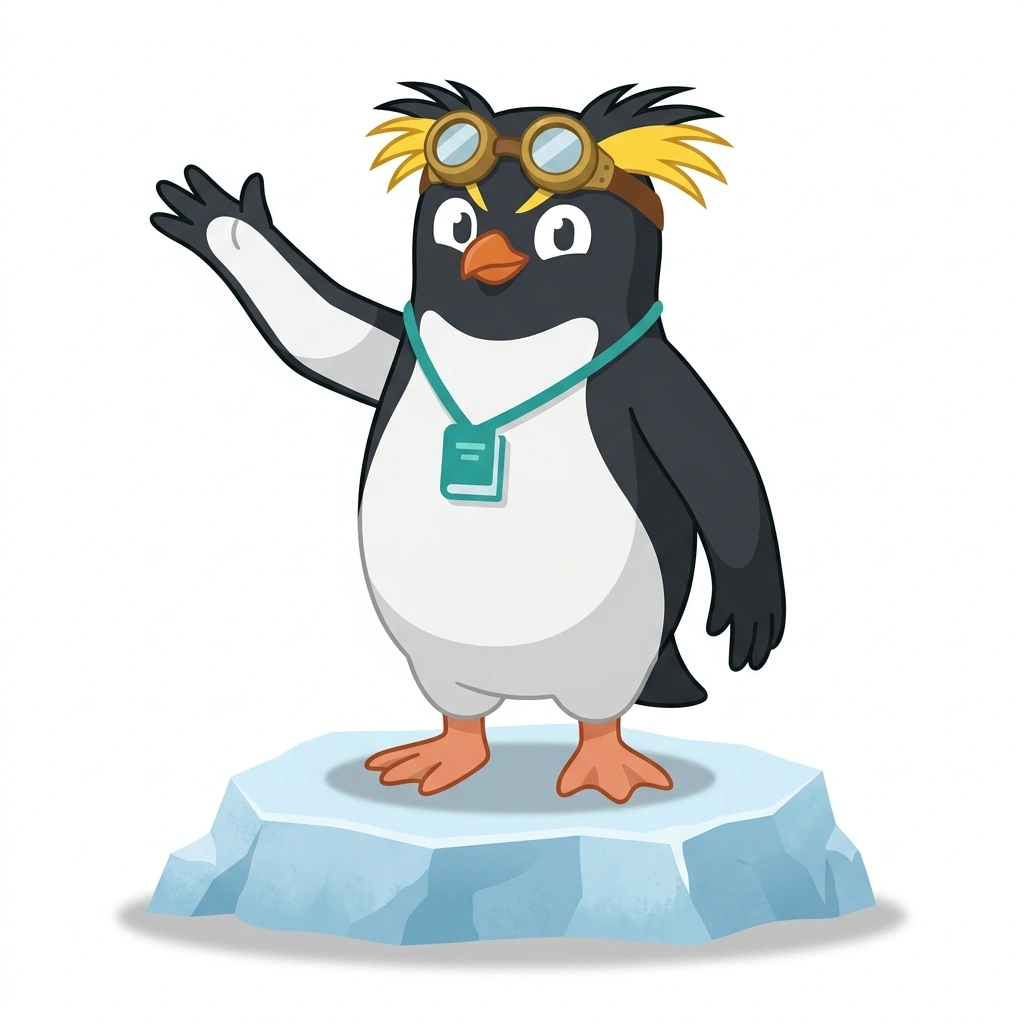
Key ideas in Penguin Ecology and Adaptation
- Aptenodytes have long, slender bills suited for seizing deep-sea squid and fish
- Pygoscelis bills are deep and stout, built to strain and grasp swarms of krill
- Spheniscus bills feature sharp, hooked tips designed to capture swift schooling fish
- Spheniscus live in temperate upwelling zones where equatorial sun causes lethal overheating
- Underground burrows shield adults and eggs from extreme daytime solar radiation
- Burrow microclimates remain consistently cooler than exposed surface ground
- Eudyptes crests function as aggressive visual signals in dense, competitive nesting colonies
- Bright plumes provide social display value rather than underwater visual camouflage
- Crested penguins travel far offshore into pelagic waters to hunt patchily distributed prey
- Stiff tail feathers act as a mobile hydrodynamic rudder for tight underwater steering
- The tail forms a rigid third contact point creating a stable tripod stance on rocky shores
- A propped tripod posture keeps delicate brood patches lifted above freezing mud and meltwater
- Eudyptes feed primarily in upper epipelagic waters down to roughly 100 meters
- Pygoscelis species typically forage in mid-depths targeting krill layers around 150 meters
- Aptenodytes possess massive oxygen stores allowing mesopelagic dives exceeding 500 meters
- Penguin flippers generate active thrust on both downstroke and upstroke
You've tried the other tabs
Thirty open tabs. Four facts you actually kept.
You watched. You nodded. By Sunday it was gone.
One answer, then back to scrolling.
Eight weeks. You meant to finish. You didn't.
Tomo gives Penguin Ecology and Adaptation the Duolingo treatment: levels, streaks, and quick quizzes that test what you just learned. That game loop is what the tabs above never had, so it's the one you actually finish.
Here's what playing it feels like
A real question from this course. Take your best guess.
What kind of beak helps Pygoscelis penguins feed on swarming krill?
Get it right to open this lesson and 23 more in the app.
Where Penguin Ecology and Adaptation takes you
- 1
The Marine Aviator in Motion
- Reading Genera and Ecological Niches
- Hydrodynamics and Underwater Flight
- 2
Surviving Cold, Salt, and Pressure
- Deep Diving and Oxygen Management
- Thermal Balance and Osmoregulation
- 3
Colony Dynamics and Breeding Strategies
- Colony Acoustics and Social Systems
- Energetic Trade-offs in Reproduction
- 4
Evolution and Oceanic Shifts
- Evolutionary Origins and the Loss of Flight
- Foraging Ecology and Modern Pressures
4 sections · 8 units · 24 levels. Built to play, not to enroll.
You pick the voice
Penguin Ecology and Adaptation is taught in the The Pirate style: arr, learning be an adventure!. Want a different feel? In the app you can spin up the same topic in any of Tomo's teaching styles. Same facts, totally different vibe.
More Nature on Tomo
The Purpose of Tails
Explore the diverse evolutionary functions of the mammalian tail, from high-speed rudders and social signaling to biological scarves and energy storage.
Giant Tortoises: Island Giants
Go beyond the basics of longevity to explore the complex biology, ecological impact, and evolutionary strategies of the world's largest land-dwelling reptiles.

The World of Bears
Go beyond the basics of grizzlies and polars to explore the complex biology, evolutionary history, and survival strategies of the world's eight extant bear species.
Life Beneath the Surface
Discover the hidden neighborhoods of ponds, lakes, and rivers. Learn to read the water and understand the delicate balance that keeps aquatic worlds thriving.
The Truth About the Blobfish
Discover why the 'world's ugliest animal' is actually a masterpiece of deep-sea engineering. Learn how it survives extreme pressure and why it looks so different when it comes to the surface.

Secrets of the Deep Blue
Ever wondered why the ocean is full of glowing creatures and giant travelers? Dive in to see how life survives in the world's biggest playground and learn to spot the hidden connections beneath the waves.
Start Penguin Ecology and Adaptation today.
Download Tomo, search Penguin Ecology and Adaptation, and play your first lesson in under a minute.