
Phycology: The World of Algae
Explore the diverse and powerful kingdom of algae, from backyard pond scum and coastal seaweeds to microscopic engines of global oxygen. Learn how to identify common groups, understand their critical environmental roles, and see how they shape our food and future technologies.
Like Duolingo, but for Phycology: The World of Algae. Tomo turns the whole topic into a game you play five minutes a day, until it actually sticks.
21 levels across 4 sections, about 42 minutes end to end, roughly 8 days at five minutes a day. It moves through Observing Algae in Nature, The Ecological Engine, Algae in Human Hands, and The Evolutionary Puzzle. It starts from scratch.
Free forever · No credit card · iPhone & Android
Key ideas in Phycology: The World of Algae
- Land plants need roots, veins, and stems to draw water up from the soil and distribute it through dry air
- Submerged algae absorb water, dissolved gases, and minerals directly through virtually all of their external surface cells
- Because aquatic algae are bathed in liquid, they have no need for internal vascular plumbing
- Giant kelp is a macroalga that relies on flexible tissues, not rigid woody support
- Small, gas-filled bladders along the kelp float its fronds toward sunlight at the ocean surface
- Water's natural buoyancy supports the alga's weight instead of a stiff trunk
- Single-celled microalgae like Chlamydomonas are microscopic drifters invisible to the naked eye individually
- Medium macroalgae like sea lettuce form multi-cellular leafy sheets a few inches to a foot across
- Giant kelp can grow into towering marine seaweeds spanning well over one hundred feet
- Certain microalgae live entirely on land rather than in ponds or oceans
- Terrestrial algae survive dry periods by going dormant, then revive when wetted by morning dew, fog, or rain
- Common sightings include thin green powdery stains on tree bark, stone walkways, and bricks
- Land plants inherited their characteristic green pigments directly from green algal ancestors
- All land plants descended from ancient freshwater green algae that adapted to living above water
- While land plants evolved complex tissues to handle dry land, their underlying photosynthetic machinery remains shared with green algae
- Seaweeds are categorized into three major groups: green, brown, and red
You've tried the other tabs
Thirty open tabs. Four facts you actually kept.
You watched. You nodded. By Sunday it was gone.
One answer, then back to scrolling.
Eight weeks. You meant to finish. You didn't.
Tomo gives Phycology: The World of Algae the Duolingo treatment: levels, streaks, and quick quizzes that test what you just learned. That game loop is what the tabs above never had, so it's the one you actually finish.
Here's what playing it feels like
A real question from this course. Take your best guess.
How do submerged algae take in water, minerals, and gases?
Get it right to open this lesson and 20 more in the app.
How to learn Phycology: The World of Algae, step by step
Go in order. 21 short levels across 4 sections, about 42 minutes in all, five minutes a day.
- 1
Observing Algae in Nature
- Telling Algae from True Plants
- Decoding Seaweeds on the Shore
- 2
The Ecological Engine
- Phytoplankton and the Global Oxygen Cycle
- When Algae Turn Dangerous: Blooms and Toxins
- 3
Algae in Human Hands
- Seaweeds in Food and Household Goods
- Biotechnology and Carbon Solutions
- 4
The Evolutionary Puzzle
- Why Algae Defy Simple Classification
4 sections · 7 units · 21 levels. Built to play, not to enroll.
Questions about Phycology: The World of Algae
How do I learn Phycology: The World of Algae?
Go in order: start with Observing Algae in Nature, then The Ecological Engine, then Algae in Human Hands, then The Evolutionary Puzzle. On Tomo that's 21 short levels, about 42 minutes in all, played five minutes a day. Start free and play the first level in under a minute.
Is there a Duolingo-style app for Phycology: The World of Algae?
Yes. Tomo works like Duolingo: short daily lessons, streaks and quick quizzes. Phycology: The World of Algae is one of its free courses, and you can type any other topic to get a course of your own.
Is the Phycology: The World of Algae course free?
Yes. Phycology: The World of Algae is playable on Tomo's free plan, which doesn't expire. No credit card, no waitlist. Download the app and start your first lesson.
How long does it take to learn Phycology: The World of Algae?
21 levels across 4 sections, about 42 minutes of play in total. It's built for five minutes a day, so you finish it a little at a time instead of all at once.
Do I need any background to start Phycology: The World of Algae?
No. It's pitched at a beginner level, so it starts where you are and builds up. If you can tap a phone, you can start.
Tomo is in ChatGPT
Tomo is also a ChatGPT plugin: the same playable courses, built and played inside your chat.
Add Tomo to ChatGPT- What to ask
- “Make me a Tomo course on black holes.” “Turn this chat into a Tomo course.”
- What you get
- Quick questions with instant feedback, hearts and stars, ready to play in about a minute.
- Where it goes
- No sign-up to start. Connect your Tomo account and your streak carries on in the app.
You pick the voice
Phycology: The World of Algae is taught in the Bestie style: your friend who just gets it. Want a different feel? In the app you can spin up the same topic in any of Tomo's teaching styles. Same facts, totally different vibe.
More Science on Tomo
The Hidden World of Algae
Unlock the fascinating science of seaweeds, scums, and microscopic phytoplankton. Learn how to identify common coastal and freshwater algae, spot them in everyday foods, and understand how they produce every second breath we take.
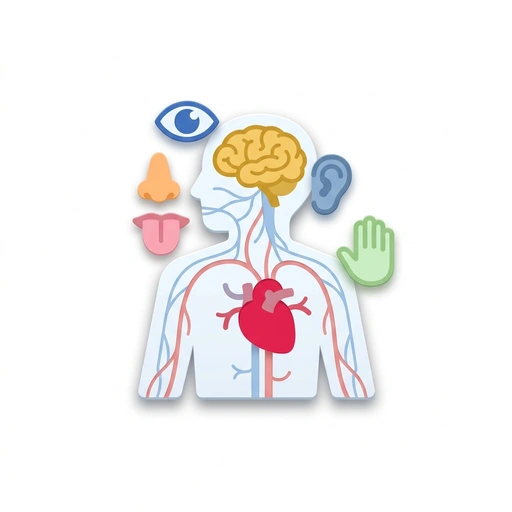
How the Human Body Works
Discover how your senses, muscles, brain, and heart collaborate as an extraordinary living machine. Learn how your body translates the world outside into thought, movement, and life on the inside.
Organic Chemistry in Everyday Life
Demystify the carbon-based world around you. Learn how to draw and interpret chemical formulas, spot key molecular structures, and understand the everyday chemistry behind food, medicines, and plastics.

Life and the Living Universe
Explore how our planet breathes, how animals thrive, and how the laws of life on Earth connect us to the vast mysteries of deep space.
The Living World Around You
Stop seeing just plants and animals and start seeing the invisible systems that keep life moving. Learn how your body works, how nature stays in balance, and the secrets hidden in your DNA.
Environmental Science: Our Changing Planet
Explore how Earth's natural systems function and how human activity reshapes our world. From biodiversity to renewable energy, learn to analyze the complex interactions that sustain life.
Start Phycology: The World of Algae today.
Download Tomo, search Phycology: The World of Algae, and play your first lesson in under a minute.