
Reading the Tape for Low-Voltage Installs
Crack the code of tape measure lines, master field fraction math, and lay out low-voltage brackets and cable runs with professional accuracy.
Like Duolingo, but for Reading the Tape for Low-Voltage Installs. Tomo turns the whole topic into a game you play five minutes a day, until it actually sticks.
A short one: 9 levels across 2 sections, about 18 minutes end to end, roughly 4 days at five minutes a day. It moves through Read the Blade and Do the Math and Layout and Mark for Real Installs. It starts from scratch.
Free forever · No credit card · iPhone & Android

Key ideas in Reading the Tape for Low-Voltage Installs
- Line height decreases as the denominator gets bigger (1/2 is tallest, 1/16 is shortest)
- Every repeated height across an inch shares the same denominator
- Reading the height first tells you which fraction family you are looking at
- 4 1/2 is equal to 4 8/16
- Stepping back exactly one shortest tick mark from the 1/2-inch line lands on 7/16
- Benchmark jumping is faster and less error-prone than counting up 7 marks from 4 inches
- The hook is designed to slide by exactly its own metal thickness
- Pulling against an outside stud edge slides the hook out so zero starts on the inside face
- Associating line height on a tape measure blade with the fractional fraction it represents
- Pushing against an inside corner slides the hook in so zero starts on the outside face
- Using known benchmarks like the half-inch mark to find sixteenth measurements quickly
- Tape measures mark both running total inches (14) and feet plus extra inches (1 foot 2 inches)
- Calling out '14 inches' means 1 foot 2 inches, not 1 foot 4 inches (which is 16 inches)
- A pencil lead has thickness, making it unclear whether the true mark is on the left, center, or right of a single slash
- The sharp point of a 'V' points precisely at the measured tick mark
- A crow's foot remains exact and easy to find even on rough wood framing
You've tried the other tabs
Thirty open tabs. Four facts you actually kept.
You watched. You nodded. By Sunday it was gone.
One answer, then back to scrolling.
Eight weeks. You meant to finish. You didn't.
Tomo gives Reading the Tape for Low-Voltage Installs the Duolingo treatment: levels, streaks, and quick quizzes that test what you just learned. That game loop is what the tabs above never had, so it's the one you actually finish.
Here's what playing it feels like
A real question from this course. Take your best guess.
What is true about tick marks that have the exact same height inside an inch?
Get it right to open this lesson and 8 more in the app.
Where Reading the Tape for Low-Voltage Installs takes you
- 1
Read the Blade and Do the Math
- Decoding the Blade's Tick Marks
- Job-Site Fraction Math on the Tape
- 2
Layout and Mark for Real Installs
- Laying Out Low-Voltage Boxes and Drops
2 sections · 3 units · 9 levels. Built to play, not to enroll.
You pick the voice
Reading the Tape for Low-Voltage Installs is taught in the Explain Like I'm 5 style: no big words. promise.. Want a different feel? In the app you can spin up the same topic in any of Tomo's teaching styles. Same facts, totally different vibe.
More Technology on Tomo
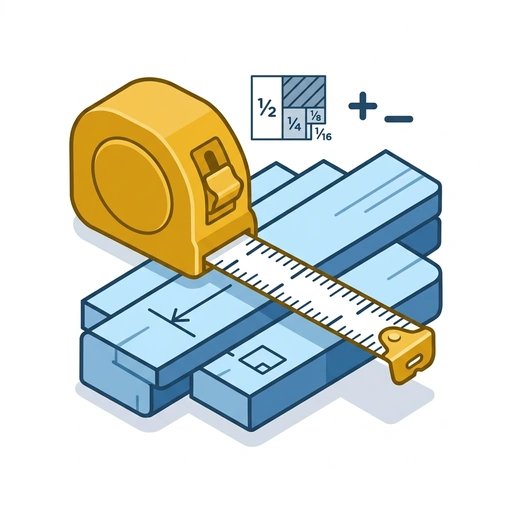
Reading the Tape Measure
Learn to read every tick mark on a tape measure instantly without slow counting. Master sixteenth-inch fractions, mental tape math, real lumber dimensions, and professional framing layouts.
Tape Measure Precision
Move beyond slow tick-counting and eliminate measuring errors. Learn to read blade graduations at a glance, exploit built-in tape mechanics, and decode trade layout markings.
Reading the Tape Measure
Unlock the visual code behind the tick marks to read measurements instantly. Master fractions, hidden tape features, and zero-error layout techniques.
Using a Tape Measure Accurately
Unlock the hidden engineering built into your tape measure. Learn to read sub-inch marks instantly, measure awkward spaces solo, and avoid the common errors that ruin cuts.
Reading a Tape Measure
Unlock the secret language of tick marks, line heights, and hidden tool features. Gain the confidence to measure furniture, rooms, and materials with pin-point accuracy on the first try.

Tape Measure Fluency
Stop counting tiny tick marks and start reading, calling, and laying out dimensions like a seasoned jobsite pro. Learn real trade callouts, hook mechanics, stud markings, and precision layout habits.
Start Reading the Tape for Low-Voltage Installs today.
Download Tomo, search Reading the Tape for Low-Voltage Installs, and play your first lesson in under a minute.