
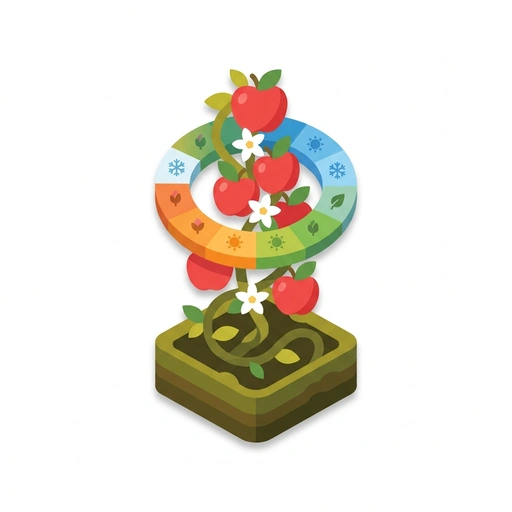
The Fruit Calendar
Learn to eat with the rhythm of the year by discovering when fruits reach their peak flavor and how they grow.
Like Duolingo, but for The Fruit Calendar. Tomo turns the whole topic into a game you play five minutes a day, until it actually sticks.
A short one: 12 levels across 2 sections, about 24 minutes end to end, roughly 5 days at five minutes a day. It moves through The Warm Weather Rush and The Harvest and the Wait. It starts from scratch.
Free forever · No credit card · iPhone & Android

Key ideas in The Fruit Calendar
- Strawberries are the earliest major fruit crop available
- Spring fruits grow quickly to use the first consistent sunlight
- Strawberries respond to soil temperature warming up
- Smaller size allows the plant to finish ripening before the weather shifts
- Increased daylight hours trigger the ripening process in early spring
- Large fruits require a much longer, hotter growing season to develop
- Why spring fruits are generally smaller than late-summer fruits
- Strawberry ripening triggers
- Rhubarb is botanically a vegetable but used as a fruit
- Sunlight converts acids into sugars as fruit hangs on the branch
- Rhubarb prefers cool, wet conditions over dry summer heat
- Early season fruits have less time in intense sun, resulting in higher acidity
- Only the stalks of the rhubarb plant are edible
- Tartness is a hallmark of early-harvested spring crops
- Rhubarb characteristics
- Sunlight and acidity
You've tried the other tabs
Thirty open tabs. Four facts you actually kept.
You watched. You nodded. By Sunday it was gone.
One answer, then back to scrolling.
Eight weeks. You meant to finish. You didn't.
Tomo gives The Fruit Calendar the Duolingo treatment: levels, streaks, and quick quizzes that test what you just learned. That game loop is what the tabs above never had, so it's the one you actually finish.
Here's what playing it feels like
A real question from this course. Take your best guess.
Why do spring fruits like berries grow at such a fast pace compared to others?
Get it right to open this lesson and 11 more in the app.
Where The Fruit Calendar takes you
- 1
The Warm Weather Rush
- Spring's First Sweets
- The High Heat of Summer
- 2
The Harvest and the Wait
- Autumn's Crisp Bounty
- Winter's Bright Spots
2 sections · 4 units · 12 levels. Built to play, not to enroll.
You pick the voice
The Fruit Calendar is taught in the The Bestie style: your friend who just gets it. Want a different feel? In the app you can spin up the same topic in any of Tomo's teaching styles. Same facts, totally different vibe.
More Nature on Tomo
Gardening in Longmont
Learn how to grow abundant food and flowers along the Colorado Front Range. Master unpredictable frost dates, heavy clay soil, summer hail, and intense high-altitude sun.
Norway Spruce: From Sapling to Giant
Master the art of cultivating the iconic Norway Spruce. From selecting the perfect site to managing decades of growth, learn the professional techniques to ensure your sapling thrives into a majestic forest anchor.

Marmot Biology
Discover the fascinating lives of nature's mountain engineers. From the famous 'whistle' to the secrets of extreme hibernation, learn how these giant squirrels survive the world's harshest peaks.

Your Guide to Living Off the Grid
Learn how to break free from the city and build a self-sufficient life. We will cover everything from catching your own power to growing your own dinner.
Philly Wilds: Identifying Your Local Neighbors
Transform your local walks from a blur of green and gray into a vibrant map of living neighbors. Learn to spot the specific birds, trees, and critters that call the Delaware Valley home.
The Golden Season: Autumn's Yellow
Discover why the world turns gold every year. Learn to identify the trees that produce the brightest yellows, understand the science of the glow, and capture the perfect autumn light.
Start The Fruit Calendar today.
Download Tomo, search The Fruit Calendar, and play your first lesson in under a minute.