
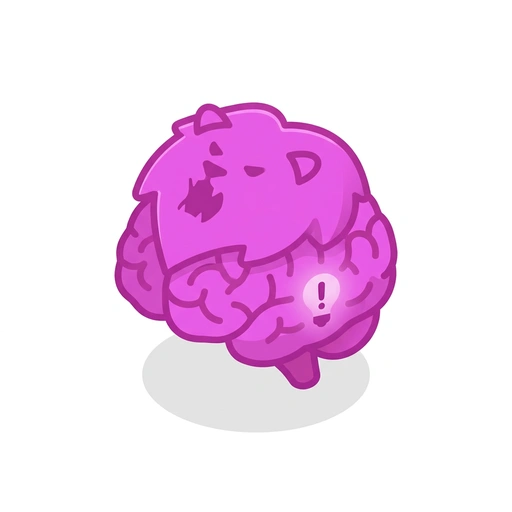
The Science of Stress: Survival in the Modern World
Explore the biological machinery that keeps you alive under pressure. Learn how your brain and body coordinate the 'fight or flight' response and why modern life can sometimes keep that switch stuck in the 'on' position.
Like Duolingo, but for The Science of Stress: Survival in the Modern World. Tomo turns the whole topic into a game you play five minutes a day, until it actually sticks.
A short one: 26 levels across 3 sections, about 52 minutes end to end, roughly 10 days at five minutes a day. It moves through The Biological Alarm System, The Toll of Chronic Activation, and Rewiring the Response. It assumes you already know the basics.
Free forever · No credit card · iPhone & Android

Key ideas in The Science of Stress: Survival in the Modern World
- Sensory data hits the thalamus first
- The amygdala is optimized for survival speed rather than detailed analysis
- A 'false positive' is evolutionarily safer than a 'false negative'
- The 'low road' sends signals directly from the thalamus to the amygdala
- The amygdala receives sensory input before the rational brain (cortex) processes it
- Why the amygdala prioritizes speed over accuracy in threat detection
- Amygdala activation is a pre-conscious process
- The sequence of the 'low road' neural pathway for rapid threat response
- The pre-conscious nature of amygdala activation
- The hypothalamus initiates the cascade by releasing CRH
- ACTH is the intermediary hormone released by the pituitary gland
- Cortisol is the final systemic hormone released by the adrenal cortex
- The hypothalamus acts as the control center for homeostasis
- The pituitary gland translates neural signals into endocrine signals
- The sequential hormonal chain of command in the HPA axis
- The specific roles of the glands within the HPA communication chain
You've tried the other tabs
Thirty open tabs. Four facts you actually kept.
You watched. You nodded. By Sunday it was gone.
One answer, then back to scrolling.
Eight weeks. You meant to finish. You didn't.
Tomo gives The Science of Stress: Survival in the Modern World the Duolingo treatment: levels, streaks, and quick quizzes that test what you just learned. That game loop is what the tabs above never had, so it's the one you actually finish.
Here's what playing it feels like
A real question from this course. Take your best guess.
When you see or hear something, which brain structure serves as the primary gateway where that information is first processed?
Get it right to open this lesson and 25 more in the app.
How to learn The Science of Stress: Survival in the Modern World, step by step
Go in order. 26 short levels across 3 sections, about 52 minutes in all, five minutes a day.
- 1
The Biological Alarm System
- The Amygdala: Your Internal Smoke Detector
- The HPA Axis and the Hormonal Cascade
- Adrenaline vs. Cortisol: Roles and Timing
- The Autonomic Tug-of-War
- 2
The Toll of Chronic Activation
- Neuroplasticity and the Shrinking Hippocampus
- Inflammation and the Immune System
- The Cardiovascular Cost of High Pressure
- Telomeres and Cellular Aging
- Sleep Disruption and the Glymphatic System
- Metabolic Shifts and Insulin Resistance
- 3
Rewiring the Response
- Vagus Nerve Stimulation and the Relaxation Response
- The Prefrontal Cortex: Top-Down Regulation
- Hormetic Stress: The Benefits of Brief Intensity
3 sections · 13 units · 26 levels. Built to play, not to enroll.
Questions about The Science of Stress: Survival in the Modern World
How do I learn The Science of Stress: Survival in the Modern World?
Go in order: start with The Biological Alarm System, then The Toll of Chronic Activation, then Rewiring the Response. On Tomo that's 26 short levels, about 52 minutes in all, played five minutes a day. Start free and play the first level in under a minute.
Is there a Duolingo-style app for The Science of Stress: Survival in the Modern World?
Yes. Tomo works like Duolingo: short daily lessons, streaks and quick quizzes. The Science of Stress: Survival in the Modern World is one of its free courses, and you can type any other topic to get a course of your own.
Is The Science of Stress: Survival in the Modern World free?
Yes. The Science of Stress: Survival in the Modern World is playable on Tomo's free plan, which doesn't expire. No credit card, no waitlist. Download the app and start your first lesson.
How long does it take to learn The Science of Stress: Survival in the Modern World?
26 levels across 3 sections, about 52 minutes of play in total. It's built for five minutes a day, so you finish it a little at a time instead of all at once.
Do I need any background to start The Science of Stress: Survival in the Modern World?
No. It's pitched at an intermediate level, so it starts where you are and builds up. If you can tap a phone, you can start.
Tomo is in ChatGPT
Tomo is also a ChatGPT plugin: the same playable courses, built and played inside your chat.
Add Tomo to ChatGPT- What to ask
- “Make me a Tomo course on black holes.” “Turn this chat into a Tomo course.”
- What you get
- Quick questions with instant feedback, hearts and stars, ready to play in about a minute.
- Where it goes
- No sign-up to start. Connect your Tomo account and your streak carries on in the app.
You pick the voice
The Science of Stress: Survival in the Modern World is taught in the Professor style: clear, structured, thorough. Want a different feel? In the app you can spin up the same topic in any of Tomo's teaching styles. Same facts, totally different vibe.
More Health on Tomo

Natural Health and Bio-Individual Healing
Move beyond basic wellness into the mechanics of cellular repair, hormonal signaling, and nervous system regulation to build a personalized healing protocol.
Working with Your Hormones
Learn how your daily hormones govern energy, appetite, and mood, and discover practical levers to stabilize your system. Move past generic wellness advice to actively read your physiological signals and support long-term equilibrium.

Everyday Health Foundations
Build an intuitive toolkit for everyday vitality. Learn how light, nutrition, functional movement, and stress regulation work together to keep your energy steady.
Intermittent Fasting Mastery
Master the art of metabolic flexibility and cellular rejuvenation. Learn to manipulate feeding windows and hormonal responses to optimize your body's performance and longevity.

Mastering Your Monthly Rhythm
Move beyond basic tracking to align your lifestyle with your biology. Learn to optimize your workouts, nutrition, and productivity by working with your body's natural hormonal shifts.
How Human Diseases Work
Explore how the human body breaks down across major medical specialties, from heart attacks and strokes to auto-immunity and cancer. Learn the biological mechanisms behind common symptoms and how modern medicine diagnoses and fights back.
Start The Science of Stress: Survival in the Modern World today.
Download Tomo, search The Science of Stress: Survival in the Modern World, and play your first lesson in under a minute.