
Understanding Your Car
Learn to read what your car is telling you through sounds, vibrations, and handling quirks. This practical guide helps you make smarter driving decisions, spot mechanical problems early, and understand how key automotive systems work together.
Like Duolingo, but for Understanding Your Car. Tomo turns the whole topic into a game you play five minutes a day, until it actually sticks.
A short one: 12 levels across 2 sections, about 24 minutes end to end, roughly 5 days at five minutes a day. It moves through Feeling the Road and Diagnosing Symptoms and Evaluating Powertrains and Critical Maintenance. It assumes you already know the basics.
Free forever · No credit card · iPhone & Android
Key ideas in Understanding Your Car
- A tire has a finite friction circle that must be shared between cornering and braking forces.
- Devoting 100% of available tire grip to braking leaves zero grip remaining for lateral steering.
- To steer around an obstacle, a driver must ease off braking force to free up cornering grip.
- Accelerating transfers car weight rearward, compressing rear springs and lifting the front nose.
- Lighter vertical load on the front tires reduces their peak lateral cornering grip.
- Reduced front tire contact pressure makes the car resist turning, widening the corner line.
- Understeer occurs when front tires lose traction, causing the car to push straight off line.
- Oversteer happens when rear tires slide first, causing the vehicle's rear end to swing out.
- Correcting understeer requires easing off throttle and unbinding steering to restore bite.
- Correcting oversteer requires countersteering into the slide to catch the rotating rear.
- Abrupt pedal inputs cause rapid weight transfers that shock tire contact patches past grip limits.
- Hydroplaning lifts tire rubber entirely off pavement onto a pressurized wedge of trapped water.
- Braking or steering while floating causes sudden skidding or rollover when tires touch ground.
- Smoothly easing off the accelerator allows the car to slow down until tread channels clear water.
- A spring-steel wear tab touches the spinning rotor to squeak when pad friction material runs thin.
- A metallic grind means pad friction material is gone and the steel backing plate is gouging the rotor.
You've tried the other tabs
Thirty open tabs. Four facts you actually kept.
You watched. You nodded. By Sunday it was gone.
One answer, then back to scrolling.
Eight weeks. You meant to finish. You didn't.
Tomo gives Understanding Your Car the Duolingo treatment: levels, streaks, and quick quizzes that test what you just learned. That game loop is what the tabs above never had, so it's the one you actually finish.
Here's what playing it feels like
A real question from this course. Take your best guess.
If you use 100% of your tires' available grip to brake in a straight line, how much grip is left for turning?
Get it right to open this lesson and 11 more in the app.
How to learn Understanding Your Car, step by step
Go in order. 12 short levels across 2 sections, about 24 minutes in all, five minutes a day.
- 1
Feeling the Road and Diagnosing Symptoms
- Balancing Weight and Tire Grip
- Diagnosing Problems by Sound and Vibration
- 2
Evaluating Powertrains and Critical Maintenance
- Choosing and Managing Drivetrains
- Tracking Hidden Wear and Vital Fluids
2 sections · 4 units · 12 levels. Built to play, not to enroll.
Questions about Understanding Your Car
How do I learn Understanding Your Car?
Go in order: start with Feeling the Road and Diagnosing Symptoms, then Evaluating Powertrains and Critical Maintenance. On Tomo that's 12 short levels, about 24 minutes in all, played five minutes a day. Start free and play the first level in under a minute.
Is there a Duolingo-style app for Understanding Your Car?
Yes. Tomo works like Duolingo: short daily lessons, streaks and quick quizzes. Understanding Your Car is one of its free courses, and you can type any other topic to get a course of your own.
Is the Understanding Your Car course free?
Yes. Understanding Your Car is playable on Tomo's free plan, which doesn't expire. No credit card, no waitlist. Download the app and start your first lesson.
How long does it take to learn Understanding Your Car?
12 levels across 2 sections, about 24 minutes of play in total. It's built for five minutes a day, so you finish it a little at a time instead of all at once.
Do I need any background to start Understanding Your Car?
No. It's pitched at an intermediate level, so it starts where you are and builds up. If you can tap a phone, you can start.
Tomo is in ChatGPT
Tomo is also a ChatGPT plugin: the same playable courses, built and played inside your chat.
Add Tomo to ChatGPT- What to ask
- “Make me a Tomo course on black holes.” “Turn this chat into a Tomo course.”
- What you get
- Quick questions with instant feedback, hearts and stars, ready to play in about a minute.
- Where it goes
- No sign-up to start. Connect your Tomo account and your streak carries on in the app.
You pick the voice
Understanding Your Car is taught in the Bestie style: your friend who just gets it. Want a different feel? In the app you can spin up the same topic in any of Tomo's teaching styles. Same facts, totally different vibe.
More Technology on Tomo
Everyday Car Mechanics
Demystify what happens under your car's hood with practical, hands-on knowledge. Learn how to check vital fluids, diagnose weird noises, understand core engine systems, and deal honestly with mechanics.
Car Repair Fundamentals
Learn to troubleshoot automotive issues before turning a single bolt. Master sensory triage, fluid health, braking hydraulics, and the core rules of engine combustion.
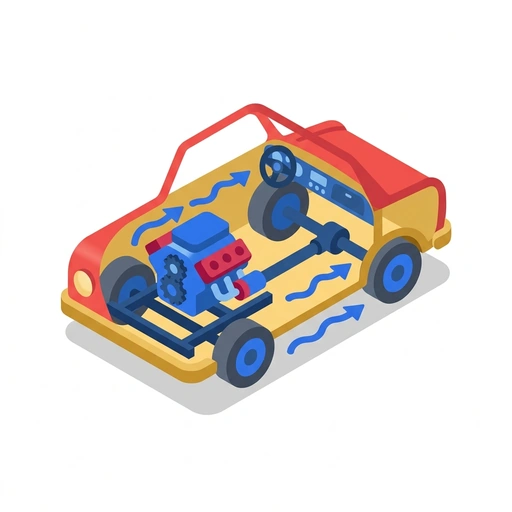
How Cars Work
Demystify what happens beneath the hood and behind the dashboard. Learn how engines, transmissions, and brakes operate, how to spot warning signs before they become costly breakdowns, and how to make confident decisions as an owner.
Car Engines and Diesel Power
Start from zero and discover how internal combustion engines actually turn fuel into movement. Learn the physics behind heavy diesel machinery and build the foundational diagnostic mindset of a professional mechanic.
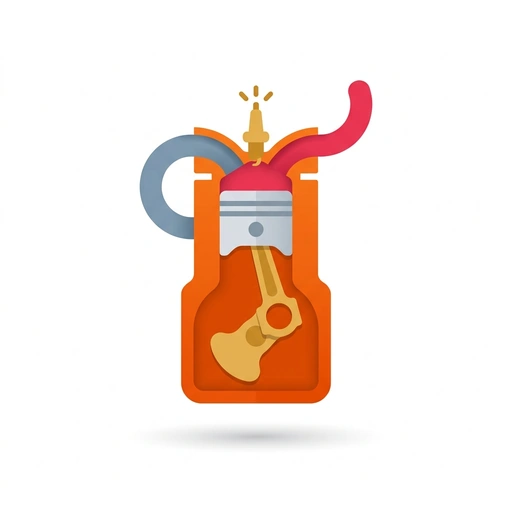
Internal Combustion Engine Dynamics
Move beyond the basic four-stroke cycle to understand how airflow, fuel chemistry, and timing dictate engine performance. Learn to diagnose combustion behavior and evaluate how modern mechanical systems balance power and efficiency.
Everyday Car Mechanics
Demystify what happens under the hood. Learn to spot early warning signs, check vital fluids, and understand the core mechanical systems that keep your vehicle running safely.
Start Understanding Your Car today.
Download Tomo, search Understanding Your Car, and play your first lesson in under a minute.