
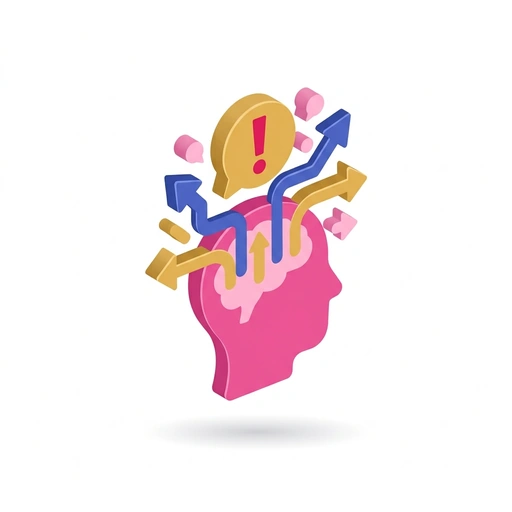
Why People React
Ever wonder why a simple comment triggers defensiveness, or why sensible people freeze in a crowd? Human behavior rarely follows pure logic—it runs on fast emotional shortcuts and ancient threat alarms. Learn to recognize the hidden psychology behind everyday reactions so you can navigate conflict, persuasion, and social pressure with clarity.
Like Duolingo, but for Why People React. Tomo turns the whole topic into a game you play five minutes a day, until it actually sticks.
A short one: 11 levels across 2 sections, about 22 minutes end to end, roughly 4 days at five minutes a day. It moves through Decoding Knee-Jerk Reactions and Navigating Social and Defensive Pressures. It starts from scratch.
Free forever · No credit card · iPhone & Android

Key ideas in Why People React
- The brain's threat circuitry does not clearly separate social danger from physical danger
- Public criticism or humiliation registers as a threat to belonging, setting off an involuntary survival response
- Heart rate, muscle tension, and stress hormones spike during heated social conflict just like in physical emergencies
- Fight appears in conversation as aggression, sarcasm, yelling, or counter-attacking
- Flight appears as dodging, deflecting, making sudden excuses, or walking away
- Freeze appears as emotional numbness, blank stares, going silent, or inability to think
- When someone's nervous system senses a threat, survival circuits take over and suppress calm, logical evaluation
- Piling on logical proof while someone is defensive feels like trying to defeat them, intensifying the perceived attack
- People cannot process objective facts fairly until their nervous system feels fundamentally safe again
- Validating feelings or offering an exit lowers the perceived threat to a person's dignity and control
- Directly pointing out their faulty logic or telling someone to calm down reinforces the feeling of being trapped and criticized
- De-escalation requires making the environment safe first, before attempting any problem-solving
- When we make a mistake, we are keenly aware of the stressful situation or outside obstacles that forced our hand
- When someone else makes the same mistake, we rarely consider their hidden context and jump to assuming it reflects poor character or bad habits
- The mind relies on mental shortcuts to form quick evaluations of strangers without spending minutes analyzing them
- A single obvious, positive or polished trait frequently causes people to project an entire set of unrelated good qualities onto someone
You've tried the other tabs
Thirty open tabs. Four facts you actually kept.
You watched. You nodded. By Sunday it was gone.
One answer, then back to scrolling.
Eight weeks. You meant to finish. You didn't.
Tomo gives Why People React the Duolingo treatment: levels, streaks, and quick quizzes that test what you just learned. That game loop is what the tabs above never had, so it's the one you actually finish.
Here's what playing it feels like
A real question from this course. Take your best guess.
Why does getting called out in front of others feel so intense?
Get it right to open this lesson and 10 more in the app.
How to learn Why People React, step by step
Go in order. 11 short levels across 2 sections, about 22 minutes in all, five minutes a day.
- 1
Decoding Knee-Jerk Reactions
- Spotting the Defense Alarm
- Seeing Through Snap Judgments
- 2
Navigating Social and Defensive Pressures
- Reading the Power of the Group
- Navigating the Double-Down
2 sections · 4 units · 11 levels. Built to play, not to enroll.
Questions about Why People React
How do I learn Why People React?
Go in order: start with Decoding Knee-Jerk Reactions, then Navigating Social and Defensive Pressures. On Tomo that's 11 short levels, about 22 minutes in all, played five minutes a day. Start free and play the first level in under a minute.
Is there a Duolingo-style app for Why People React?
Yes. Tomo works like Duolingo: short daily lessons, streaks and quick quizzes. Why People React is one of its free courses, and you can type any other topic to get a course of your own.
Is the Why People React course free?
Yes. Why People React is playable on Tomo's free plan, which doesn't expire. No credit card, no waitlist. Download the app and start your first lesson.
How long does it take to learn Why People React?
11 levels across 2 sections, about 22 minutes of play in total. It's built for five minutes a day, so you finish it a little at a time instead of all at once.
Do I need any background to start Why People React?
No. It's pitched at a beginner level, so it starts where you are and builds up. If you can tap a phone, you can start.
Tomo is in ChatGPT
Tomo is also a ChatGPT plugin: the same playable courses, built and played inside your chat.
Add Tomo to ChatGPT- What to ask
- “Make me a Tomo course on black holes.” “Turn this chat into a Tomo course.”
- What you get
- Quick questions with instant feedback, hearts and stars, ready to play in about a minute.
- Where it goes
- No sign-up to start. Connect your Tomo account and your streak carries on in the app.
You pick the voice
Why People React is taught in the Bestie style: your friend who just gets it. Want a different feel? In the app you can spin up the same topic in any of Tomo's teaching styles. Same facts, totally different vibe.
More Psychology on Tomo

Everyday Psychology
Discover why you make irrational choices, misremember yesterday's events, and copy the crowd. Learn the core principles behind daily human behavior through relatable, real-world examples.
Everyday Human Psychology
Discover why you make impulse choices, follow the crowd, and misread other people. Unpack the cognitive shortcuts and social instincts that silently govern daily life.
Everyday Psychology: How Your Mind Works
Discover the hidden mental shortcuts, emotional signals, and social reflexes that shape your daily life. Learn to read your own mind and respond with greater clarity and calm.
Psychology for Everyday Life
Understand the hidden behavioral patterns that shape your choices, routines, and relationships. Learn to spot mental shortcuts, build lasting habits, and handle social friction with practical psychological insights.

Why People Do What They Do
Uncover the invisible instincts driving everyday human behavior. Learn why people react defensively, how social context dictates choices, and how to read the real motives behind daily interactions.
Everyday Psychology
Make sense of why people think, react, and decide the way they do. Learn to spot mental shortcuts, understand emotional wiring, and see through invisible social pressures in everyday life.
Start Why People React today.
Download Tomo, search Why People React, and play your first lesson in under a minute.