
Civil Engineering: How Buildings Stand
Discover how real structures carry weight, resist forces, and stay standing. Learn to calculate loads, select materials, read structural blueprints, and avoid catastrophic failures.
Like Duolingo, but for Civil Engineering: How Buildings Stand. Tomo turns the whole topic into a game you play five minutes a day, until it actually sticks.
25 levels across 4 sections, about 50 minutes end to end, roughly 10 days at five minutes a day. It moves through Tracing the Flow of Force; Foundations and Construction Materials; Loads, Stresses, and Sizing; and Plans, Models, and Site Realities. It starts from scratch.
Free forever · No credit card · iPhone & Android

Key ideas in Civil Engineering: How Buildings Stand
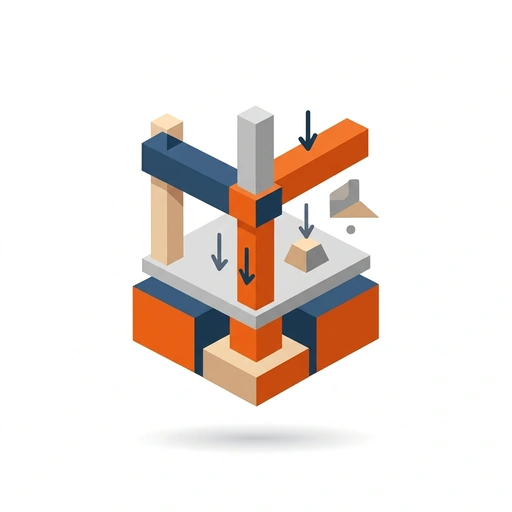
- A floor slab collects surface weight and transfers it horizontally to supporting beams
- Beams deliver weight into vertical columns, which channel it down to footings spreading the load into the soil
- Gravity loads must travel in an unbroken vertical chain from high elements down to the ground
- Dead load includes all fixed, permanent parts of the structure itself like slabs, walls, and framing
- Live load includes temporary, movable, or transient weight such as occupants, furniture, and vehicles
- Engineers must account for both when calculating total gravity force
- Wind and earthquakes push buildings sideways, creating lateral loads that cause rectangular frames to rack or twist
- Diagonal bracing, solid shear walls, or rigid moment connections convert sideways pushes into tension and compression forces
- Vertical gravity columns alone cannot prevent sideways racking without lateral bracing systems
- Every upper floor and roof load relies on a continuous vertical path directly down into a foundation
- Removing a load-bearing column interrupts the load path, forcing beams to carry unexpected point loads that can cause rapid structural failure
- Interrupting a load path requires installing a substantial new transfer beam or column to redirect forces safely to the ground
- Tributary area is the specific patch of floor extending halfway to every adjacent support that a column is responsible for carrying
- An interior column gathers load from halfway to its neighbors in all four directions, giving it the largest tributary area
- Perimeter and corner columns collect load from only two or three directions, carrying significantly smaller tributary areas
- Floor slabs act as continuous flat surfaces collecting dispersed live loads like people and furniture
You've tried the other tabs
Thirty open tabs. Four facts you actually kept.
You watched. You nodded. By Sunday it was gone.
One answer, then back to scrolling.
Eight weeks. You meant to finish. You didn't.
Tomo gives Civil Engineering: How Buildings Stand the Duolingo treatment: levels, streaks, and quick quizzes that test what you just learned. That game loop is what the tabs above never had, so it's the one you actually finish.
Here's what playing it feels like
A real question from this course. Take your best guess.
What structural part takes weight from beams and channels it down to wide footings in the ground?
Get it right to open this lesson and 24 more in the app.
Where Civil Engineering: How Buildings Stand takes you
- 1
Tracing the Flow of Force
- How Weight Moves Through a Building
- Slabs, Beams, and Columns in Action
- 2
Foundations and Construction Materials
- Foundations and Earth Support
- Concrete and Structural Steel
- 3
Loads, Stresses, and Sizing
- Equilibrium, Stress, and Sizing Columns
- Shear Forces and Bending Moments
- 4
Plans, Models, and Site Realities
- Reading Plans and Digital Models
- Field Construction and Failure Modes
4 sections · 8 units · 25 levels. Built to play, not to enroll.
Tomo is in ChatGPT
Tomo is also a ChatGPT plugin: the same playable courses, built and played inside your chat.
Add Tomo to ChatGPT- What to ask
- “Make me a Tomo course on black holes.” “Turn this chat into a Tomo course.”
- What you get
- Quick questions with instant feedback, hearts and stars, ready to play in about a minute.
- Where it goes
- No sign-up to start. Connect your Tomo account and your streak carries on in the app.
You pick the voice
Civil Engineering: How Buildings Stand is taught in the Professor style: clear, structured, thorough. Want a different feel? In the app you can spin up the same topic in any of Tomo's teaching styles. Same facts, totally different vibe.
More Science on Tomo
Solid Mechanics and Material Strength
Master the behavior of solid objects under load, from internal stress analysis to complex failure theories and structural stability.

The Thin Line: Moon, Earth, and Vacuum
Explore the physics of the boundaries where light meets shadow and atmosphere meets the void. Learn to read the Moon's geometry and understand the invisible pressure forces that define the edge of our world.
Applied Human Anatomy
Bridge the gap between textbook organ lists and real human function. Learn how fascial planes, neurovascular pathways, and visceral architecture shape the living body.

Algae: Structure and Survival
Explore the fascinating biology of seaweeds and microalgae. Learn essential phycological terms and discover how these photosynthetic wonders harness light, manage nutrients, and reshape aquatic ecosystems.
Organic Chemistry in Everyday Life
Demystify the carbon-based world around you. Learn how to draw and interpret chemical formulas, spot key molecular structures, and understand the everyday chemistry behind food, medicines, and plastics.
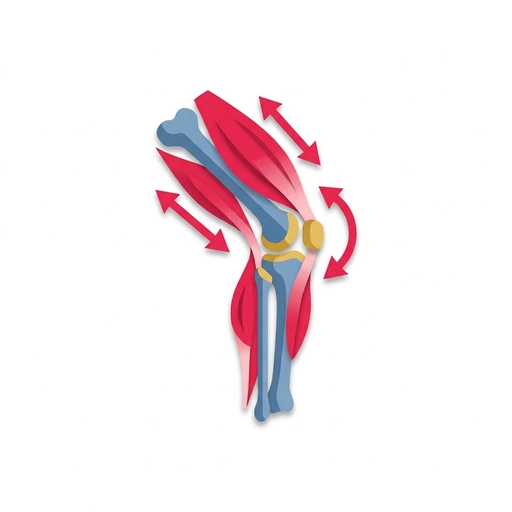
Musculoskeletal Biomechanics
Examine how the human body turns tissue into mechanical power. Learn how bones, joints, and muscles operate as living lever systems, generate force across variable joint angles, and physically adapt to mechanical load.
Start Civil Engineering: How Buildings Stand today.
Download Tomo, search Civil Engineering: How Buildings Stand, and play your first lesson in under a minute.