

Dynamic Pelvic Stability in Pilates
Like Duolingo, but for Dynamic Pelvic Stability in Pilates. Tomo turns the whole topic into a game you play five minutes a day, until it actually sticks.
For the part of you with thirty open tabs that never became anything.
A short one: 12 levels across 2 sections, about 24 minutes end to end, roughly 5 days at five minutes a day. It moves through Decoupling the Pelvis from the Limbs and Holding the Line Under Asymmetric Load. It assumes you already know the basics.
Free forever · No credit card · iPhone & Android

Key ideas in Dynamic Pelvic Stability in Pilates
- In supine Pilates, neutral requires ASIS hip points and pubic bone to share a level horizontal plane.
- Smashing the lumbar spine flat against the mat is an imprint or posterior tilt, not true neutral.
- Functional neutral preserves a small natural lumbar curve to cushion spinal loading.
- Gripping the superficial hip flexors (psoas and rectus femoris) mimics abdominal control.
- Overactive hip flexors pull the pelvis into an uncontrolled anterior tilt as leg leverage increases.
- Softening hip creases and engaging the deep core maintains true lumbo-pelvic stability under load.
- Co-activating the pelvic floor and transversus abdominis cinches the waist like a supportive corset.
- Clenching the superficial glutes or tucking the pelvis disrupts the neutral pelvic floor basin.
- Drawing the lower abdominal wall inward and upward creates stability without external bracing.
- Imprint acts as a deliberate mechanical safeguard when open-chain leg levers exceed abdominal strength.
- An imprint uses a slight posterior pelvic tilt to shorten the rectus abdominis and protect the lumbar spine.
- Maintaining neutral with heavy extended leg levers causes spinal hyperextension if core control fails.
- Pilates lateral thoracic breathing directs air into the back and sides of the ribcage.
- Lateral expansion preserves intra-abdominal pressure without bearing down on the pelvic floor.
- Inhaling purely into the belly loses abdominal connection, while chest breathing flares ribs and arches the back.
- True dissociation isolates femoral head rotation inside a motionless acetabulum.
You've tried the other tabs
Thirty open tabs. Four facts you actually kept.
You watched. You nodded. By Sunday it was gone.
One answer, then back to scrolling.
Eight weeks. You meant to finish. You didn't.
Tomo gives Dynamic Pelvic Stability in Pilates the Duolingo treatment: levels, streaks, and quick quizzes that test what you just learned. That game loop is what the tabs above never had, so it's the one you actually finish.
Here's what playing it feels like
A real question from this course. Take your best guess.
Imagine you press your lower back firmly down until there is zero space against the mat. What position have you created?
Get it right to open this lesson and 11 more in the app.
Where Dynamic Pelvic Stability in Pilates takes you
Move beyond rigid gripping and learn dynamic pelvic control. Master hip dissociation, counteract rotational forces, and maintain a functional anchor across demanding intermediate Pilates sequences.
- 1
Decoupling the Pelvis from the Limbs
- Calibrating Functional Neutral Under Load
- Femur Dissociation in the Sagittal Plane
- 2
Holding the Line Under Asymmetric Load
- Resisting Unilateral Tilt and Rotation
- Pelvic Trajectory in Dynamic Articulation
2 sections · 4 units · 12 levels. Built to play, not to enroll.
You pick the voice
Dynamic Pelvic Stability in Pilates is taught in the The Storyteller style: every lesson is a story. Want a different feel? In the app you can spin up the same topic in any of Tomo's teaching styles. Same facts, totally different vibe.
More Health on Tomo
Reformer Pilates Anatomy and Alignment
Learn the essential biomechanics, cueing principles, and joint safety rules needed for Reformer Pilates. Master pelvic alignment, core activation, and exercise modifications for special populations.
Pilates Anatomy in Action
Understand the real muscles and mechanics behind classic Pilates cues. Learn how your core, spine, and breath interact so every mat exercise feels lighter, safer, and far more effective.
Pilates Anatomy in Motion
Look past generic cues and uncover the biomechanics behind every roll, reach, and teaser. Learn how deep stabilizers, myofascial slings, and joint mechanics work together to build effortless, injury-free movement.
Pilates Anatomy: Movement from Within
Discover how your muscles and bones work together to create the strength, length, and control that define the Pilates method.
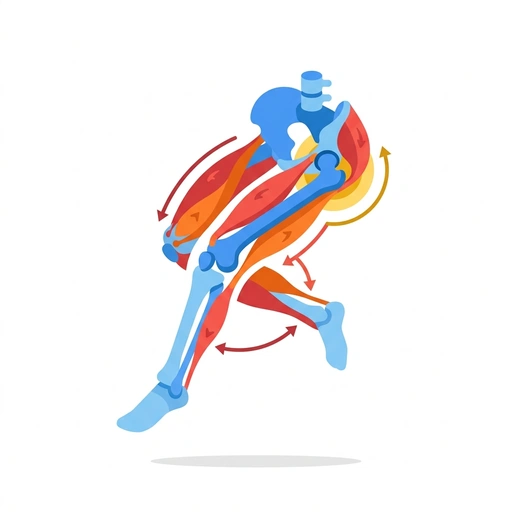
Anatomy for Pilates Professionals
Bridge the gap between textbook anatomy and the moving body. Master the musculoskeletal relationships that drive core stability, spinal articulation, and efficient movement patterns in your clients.
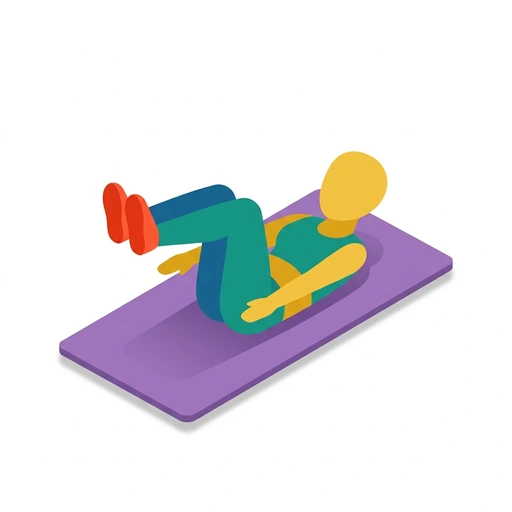
Pilates Mat Fundamentals
Learn the foundational mechanics of mat Pilates to build deep core strength, improve posture, and move with control. Master breath, pelvic alignment, and classic movements step by step.
Start Dynamic Pelvic Stability in Pilates today.
Download Tomo, search Dynamic Pelvic Stability in Pilates, and play your first lesson in under a minute.