
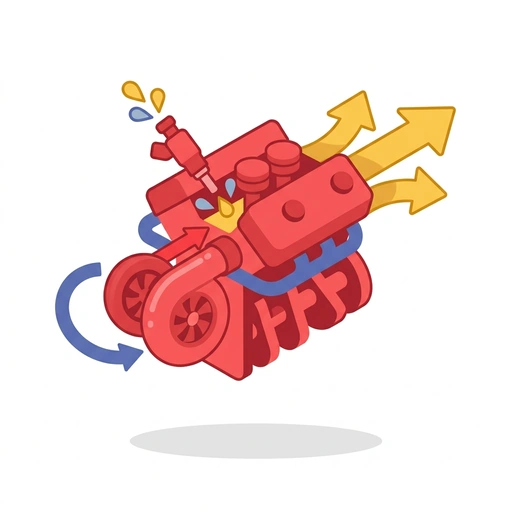
How Car Engines and Turbos Work
Discover how tiny drops of gasoline create explosive forward motion. Trace the path from piston stroke to crankshaft spin, then see how a turbocharger harvests exhaust to unlock effortless speed.
Like Duolingo, but for How Car Engines and Turbos Work. Tomo turns the whole topic into a game you play five minutes a day, until it actually sticks.
A short one: 12 levels across 2 sections, about 24 minutes end to end, roughly 5 days at five minutes a day. It moves through Making Motion from Combustion and Multiplying Power with Forced Air. It starts from scratch.
Free forever · No credit card · iPhone & Android

Key ideas in How Car Engines and Turbos Work
- Car engines operate essentially as air pumps that suck in air and blow out waste
- Power comes from thousands of tiny, trapped explosions pushing pistons, not a continuous open burn
- The intake stroke draws in an airy mist of fuel and oxygen
- Squeezing the air-fuel vapor into a small pocket makes the eventual explosion far more violent and powerful
- Only the power stroke actually creates forward motion; the other three strokes consume momentum
- A spark plug lights the compressed vapor at the peak of the squeeze to blast the piston downward
- Intake, compression, and exhaust are prep and cleanup steps
- The engine must draw in fresh air-fuel mixture before it can compress it
- Combustion happens after compression, driving the piston down
- Spent burnt gas must be pushed out before new air can enter
- Since each cylinder only generates power on one out of four strokes, firing together would leave long gaps with no power
- Staggering the firing order ensures at least one cylinder is actively delivering a power pulse at any moment, creating smooth motion
- Pistons only move straight up and down inside their cylinders
- The connecting rod connects the piston to an offset point on the crankshaft to force circular motion
- Bicycle pedaling mirrors how an engine turns vertical pushes into round-and-round motion
- Each cylinder produces individual pulses of downward force
You've tried the other tabs
Thirty open tabs. Four facts you actually kept.
You watched. You nodded. By Sunday it was gone.
One answer, then back to scrolling.
Eight weeks. You meant to finish. You didn't.
Tomo gives How Car Engines and Turbos Work the Duolingo treatment: levels, streaks, and quick quizzes that test what you just learned. That game loop is what the tabs above never had, so it's the one you actually finish.
Here's what playing it feels like
A real question from this course. Take your best guess.
How does a car engine actually make its pushing power?
Get it right to open this lesson and 11 more in the app.
Where How Car Engines and Turbos Work takes you
- 1
Making Motion from Combustion
- The Four-Stroke Cycle
- Converting Explosions into Rotation
- 2
Multiplying Power with Forced Air
- How Turbos Force More Power
- Handling Boost and Turbo Lag
2 sections · 4 units · 12 levels. Built to play, not to enroll.
You pick the voice
How Car Engines and Turbos Work is taught in the Explain Like I'm 5 style: no big words. promise.. Want a different feel? In the app you can spin up the same topic in any of Tomo's teaching styles. Same facts, totally different vibe.
More Technology on Tomo
Turbos, Superchargers, and Boost
Understand the mechanics, fluid dynamics, and thermodynamics of forced induction. Learn how compressors, intercoolers, and wastegates manipulate air density and exhaust gas energy to produce reliable engine power.
Car Mechanics and Performance Tuning
Unpack the mechanical systems that turn fuel into fast, controlled lap times. Learn how airflow dynamics, ECU calibration, torque multiplication, and suspension geometry work together as an integrated performance machine.
High-Performance Car Mechanics
Examine the advanced engineering that governs vehicle dynamics, forced induction, and powertrain control. Learn how acoustic resonance, transient boost, differential ramps, and thermal limits dictate real-world mechanical performance.
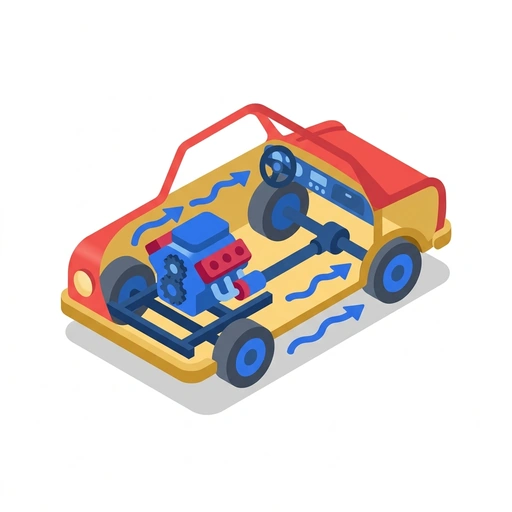
How Cars Work
Demystify what happens beneath the hood and behind the dashboard. Learn how engines, transmissions, and brakes operate, how to spot warning signs before they become costly breakdowns, and how to make confident decisions as an owner.
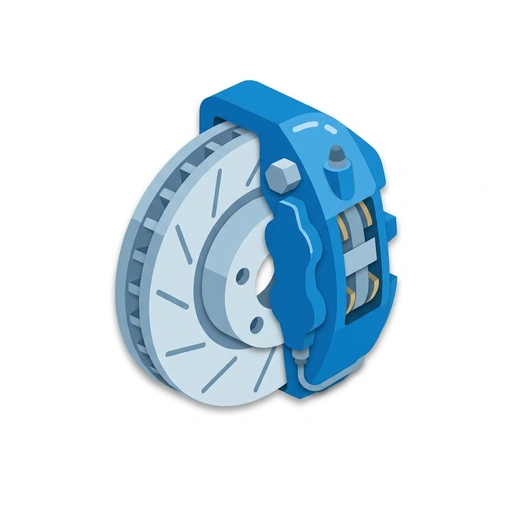
Car Repair Fundamentals
Learn to troubleshoot automotive issues before turning a single bolt. Master sensory triage, fluid health, braking hydraulics, and the core rules of engine combustion.
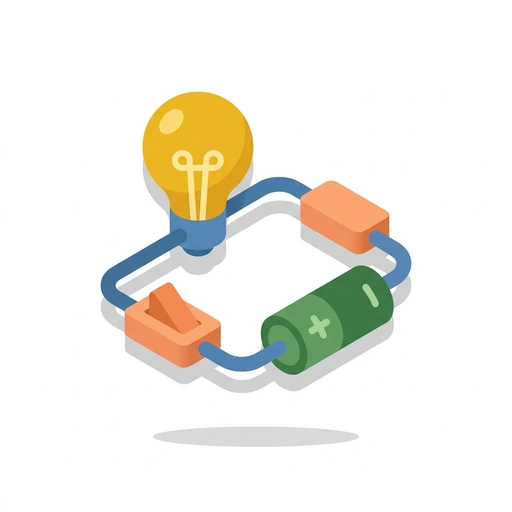
How Electric Circuits Work
Learn how electricity moves through everyday devices and gain the confidence to build your own circuits. From breadboarding components to debugging with a multimeter, discover the practical rules that bring hardware to life.
Start How Car Engines and Turbos Work today.
Download Tomo, search How Car Engines and Turbos Work, and play your first lesson in under a minute.