
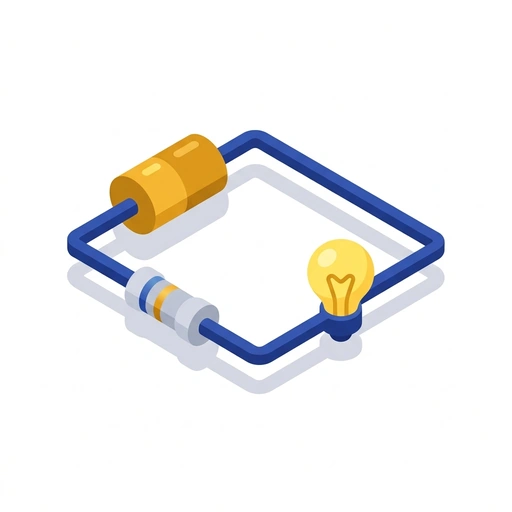
How Electrical Circuits Work
Demystify electricity by building, measuring, and troubleshooting real circuits. Learn how voltage, current, and resistance interact to power everyday devices safely.
Like Duolingo, but for How Electrical Circuits Work. Tomo turns the whole topic into a game you play five minutes a day, until it actually sticks.
25 levels across 3 sections, about 50 minutes end to end, roughly 10 days at five minutes a day. It moves through Making Things Light Up, Routing and Measuring Electricity, and Real-World Systems and Safety. It starts from scratch.
Free forever · No credit card · iPhone & Android

Key ideas in How Electrical Circuits Work
- A single wire delivers charges to a component, but energy is only transferred if current can complete the return trip
- The negative terminal must be linked back into the loop to keep electrons moving
- Electricity does not pool up inside a component to power it
- Air has enormous resistance that ordinary low-voltage batteries cannot overcome
- A circuit switch works by physically opening a gap so current immediately drops to zero
- Even a hairline gap breaks the conductive loop entirely
- LEDs are one-way gates that block current if wired in reverse
- Simple filament light bulbs work identically regardless of which direction current passes through them
- The longer lead (anode) of an LED must connect toward the positive terminal to light up
- Current takes the path of least resistance, skipping the motor entirely when a direct wire connects the terminals
- With nearly zero resistance to slow the flow, huge amounts of current surge through the wire
- The runaway current drains the battery rapidly and causes the wire to heat up dangerously
- Metals like copper, steel, and aluminum let electrons drift freely and complete a circuit
- Plastics and rubbers hold their electrons tightly and prevent current from flowing
- Insulation exists on wires to keep touching conductors from creating unintended connections
- A switch works by creating an intentional physical gap in the wire
You've tried the other tabs
Thirty open tabs. Four facts you actually kept.
You watched. You nodded. By Sunday it was gone.
One answer, then back to scrolling.
Eight weeks. You meant to finish. You didn't.
Tomo gives How Electrical Circuits Work the Duolingo treatment: levels, streaks, and quick quizzes that test what you just learned. That game loop is what the tabs above never had, so it's the one you actually finish.
Here's what playing it feels like
A real question from this course. Take your best guess.
You connect one wire from a battery to a bulb on a table. Why does it stay dark?
Get it right to open this lesson and 24 more in the app.
Where How Electrical Circuits Work takes you
- 1
Making Things Light Up
- Getting Current to Flow in a Loop
- Regulating Flow with Switches and Resistors
- 2
Routing and Measuring Electricity
- Wiring in Series Versus Parallel
- Measuring the Big Three: Volts, Amps, and Ohms
- Powering Loads with Batteries and DC Supplies
- 3
Real-World Systems and Safety
- Finding and Fixing Circuit Faults
- Mains Power and Household Safety
- Directing and Conditioning the Flow
3 sections · 8 units · 25 levels. Built to play, not to enroll.
You pick the voice
How Electrical Circuits Work is taught in the The Professor style: clear, structured, thorough. Want a different feel? In the app you can spin up the same topic in any of Tomo's teaching styles. Same facts, totally different vibe.
More Technology on Tomo
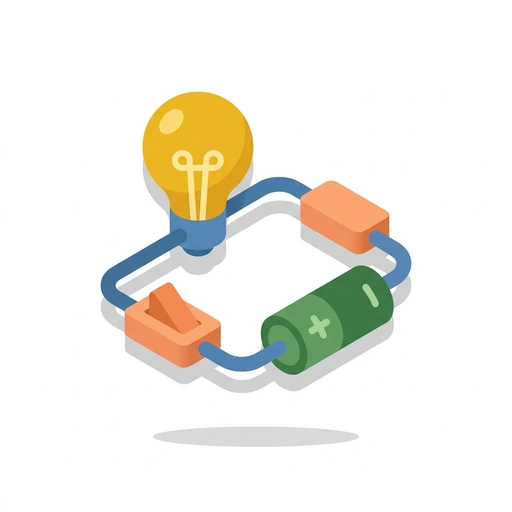
How Electric Circuits Work
Learn how electricity moves through everyday devices and gain the confidence to build your own circuits. From breadboarding components to debugging with a multimeter, discover the practical rules that bring hardware to life.
Hands-On Electronics
Demystify how everyday gadgets work by building and understanding circuits from the ground up. Learn to direct electrical currents, wire components safely, and read circuit behaviors.

The Flow of Power: Basic Circuits
Stop guessing and start building. Learn to direct the invisible force of electricity to power lights, motors, and your own inventions.
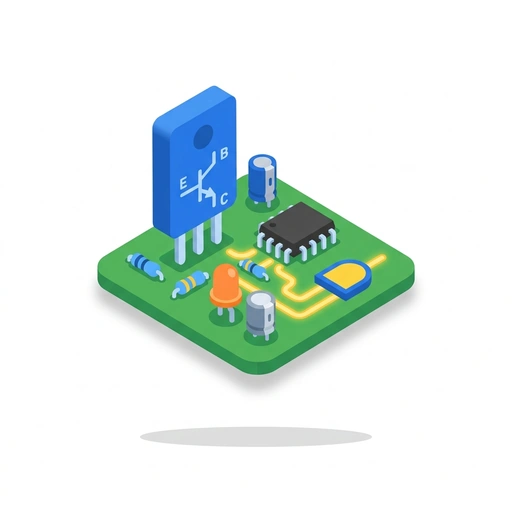
Practical Electronics: From Circuits to Chips
Learn how electricity is harnessed, amplified, and programmed to power modern hardware. Explore real-world circuits from basic LEDs and transistors up to microcontrollers, op-amps, and commercial silicon chips.
Mastering the Flow: Practical Electronics
Move beyond simple batteries and bulbs to design circuits that solve real problems. Master the math of power, troubleshoot like a pro, and understand how modern gadgets actually think.

Build Your First Smart Gadget
Stop just looking at gadgets and start building them. Learn how to control electricity with code and sensors to create your own interactive inventions.
Start How Electrical Circuits Work today.
Download Tomo, search How Electrical Circuits Work, and play your first lesson in under a minute.