

The Flow of Power: Basic Circuits
Stop guessing and start building. Learn to direct the invisible force of electricity to power lights, motors, and your own inventions.
Like Duolingo, but for The Flow of Power: Basic Circuits. Tomo turns the whole topic into a game you play five minutes a day, until it actually sticks.
A short one: 12 levels across 2 sections, about 24 minutes end to end, roughly 5 days at five minutes a day. It moves through Building Your First Loop and Measuring and Mastering Power. It starts from scratch.
Free forever · No credit card · iPhone & Android

Key ideas in The Flow of Power: Basic Circuits
- Electricity requires a continuous path to flow
- The power source provides the voltage (push)
- A break anywhere in the loop stops the flow of electrons
- The load is the component that performs the intended task
- Air acts as an insulator that blocks the circuit path
- A circuit without a load is dangerous, and without a source is inert
- The necessity of a closed loop for current flow
- Identifying the essential roles of power and load
- LEDs are polarized and only allow current in one direction
- The longer leg of an LED usually connects toward the positive terminal
- Flipping a polarized component is a standard troubleshooting step
- Electricity takes the path of least resistance
- Bypassing the load causes a massive, rapid flow of energy
- Short circuits generate heat and can melt wires or damage batteries
- Applying polarity rules to component orientation
- Recognizing the danger and cause of a short circuit
You've tried the other tabs
Thirty open tabs. Four facts you actually kept.
You watched. You nodded. By Sunday it was gone.
One answer, then back to scrolling.
Eight weeks. You meant to finish. You didn't.
Tomo gives The Flow of Power: Basic Circuits the Duolingo treatment: levels, streaks, and quick quizzes that test what you just learned. That game loop is what the tabs above never had, so it's the one you actually finish.
Here's what playing it feels like
A real question from this course. Take your best guess.
What part of our electrical vessel provides the 'push' known as voltage?
Get it right to open this lesson and 11 more in the app.
Where The Flow of Power: Basic Circuits takes you
- 1
Building Your First Loop
- Making the Connection
- Controlling the Flow
- 2
Measuring and Mastering Power
- The Language of Electricity
- Safety and Troubleshooting
2 sections · 4 units · 12 levels. Built to play, not to enroll.
Tomo is in ChatGPT
Tomo is also a ChatGPT plugin: the same playable courses, built and played inside your chat.
Add Tomo to ChatGPT- What to ask
- “Make me a Tomo course on black holes.” “Turn this chat into a Tomo course.”
- What you get
- Quick questions with instant feedback, hearts and stars, ready to play in about a minute.
- Where it goes
- No sign-up to start. Connect your Tomo account and your streak carries on in the app.
You pick the voice
The Flow of Power: Basic Circuits is taught in the Pirate style: arr, learning be an adventure!. Want a different feel? In the app you can spin up the same topic in any of Tomo's teaching styles. Same facts, totally different vibe.
More Technology on Tomo
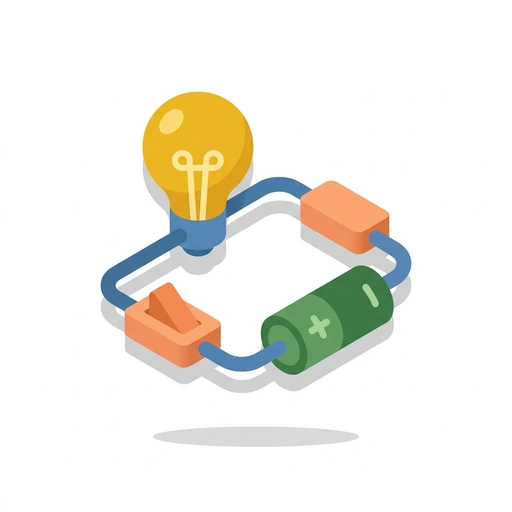
How Electric Circuits Work
Learn how electricity moves through everyday devices and gain the confidence to build your own circuits. From breadboarding components to debugging with a multimeter, discover the practical rules that bring hardware to life.
How Electronics Work
Learn how electricity moves through circuits, powers components, and responds to controls. Build real intuition for voltage, resistance, and transistors through practical circuit design. Go from a bare battery to building responsive, sensor-driven hardware.
The Flow of Power
Stop guessing and start building. Learn to see electricity as a flowing current you can direct, control, and use to bring your own gadgets to life.
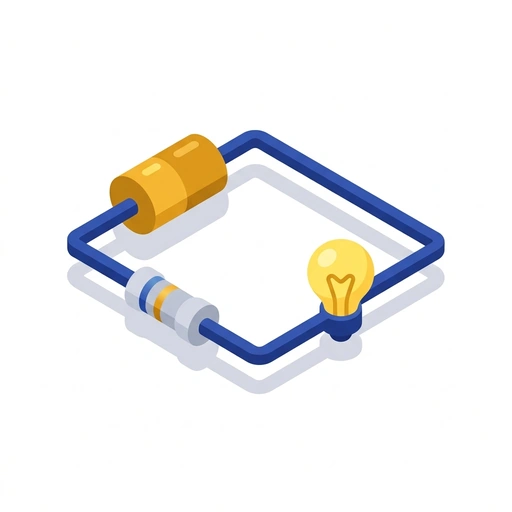
How Electrical Circuits Work
Demystify electricity by building, measuring, and troubleshooting real circuits. Learn how voltage, current, and resistance interact to power everyday devices safely.
Writing Your First Python Scripts
Build a working intuition for the world's most popular programming language. Learn how Python stores information, makes decisions, and automates repetitive tasks with clean, readable code.
Hands-On Electronics
Demystify how everyday gadgets work by building and understanding circuits from the ground up. Learn to direct electrical currents, wire components safely, and read circuit behaviors.
Start The Flow of Power: Basic Circuits today.
Download Tomo, search The Flow of Power: Basic Circuits, and play your first lesson in under a minute.