
How to Read a Tape Measure
Crack the code of fractional tick marks, mysterious diamond symbols, and the loose metal hook. Learn how the blade works so you can measure accurately down to the sixteenth of an inch.
Like Duolingo, but for How to Read a Tape Measure. Tomo turns the whole topic into a game you play five minutes a day, until it actually sticks.
A short one: 12 levels across 2 sections, about 24 minutes end to end, roughly 5 days at five minutes a day. It moves through Decoding the Markings and Handling the Tool for True Precision. It starts from scratch.
Free forever · No credit card · iPhone & Android
Key ideas in How to Read a Tape Measure
- The longest mark always represents the full inch
- Marks steadily shrink as the division becomes finer
- Line height on a tape measure directly signals the fraction denominator
- Each progressively shorter line on a tape measure divides the previous span in half
- Half-inch marks split the inch, quarter marks split the halves, and eighths split the quarters
- Sixteenths represent the tightest standard sub-interval on a tape measure
- Even numerators like 2/4 or 4/8 reduce to larger fractions already represented by taller lines (1/2)
- Every unique mark on a tape measure is labeled with an odd numerator like 1/8, 3/8, 5/8, or 7/8
- You never need to search for an even fraction like 6/8 because it sits right on the 3/4 mark
- The tall half-inch line visually bisects the inch into lower (under 1/2) and upper (over 1/2) zones
- 5/8 is just past 4/8 (1/2), so jumping straight to the half-inch mark bypasses the first half of the inch entirely
- Scanning starts from the nearest prominent landmark rather than counting from zero
- Measurements in the final quarter of an inch sit immediately before the next whole number
- 15/16 is exactly one sixteenth tick backward from the upcoming whole inch mark
- Counting backward one tick from the next inch is much faster than counting forward fifteen ticks from the last inch
- Whole-foot marks appear every 12 inches on the blade to save you from doing mental math on large inch totals
You've tried the other tabs
Thirty open tabs. Four facts you actually kept.
You watched. You nodded. By Sunday it was gone.
One answer, then back to scrolling.
Eight weeks. You meant to finish. You didn't.
Tomo gives How to Read a Tape Measure the Duolingo treatment: levels, streaks, and quick quizzes that test what you just learned. That game loop is what the tabs above never had, so it's the one you actually finish.
Here's what playing it feels like
A real question from this course. Take your best guess.
What happens to the lines on the tape measure as the slices get tinier and tinier?
Get it right to open this lesson and 11 more in the app.
Where How to Read a Tape Measure takes you
- 1
Decoding the Markings
- The Line Hierarchy
- Framing Symbols and Layout Marks
- 2
Handling the Tool for True Precision
- The Moving Hook and Case
- Field Techniques for Dead-On Accuracy
2 sections · 4 units · 12 levels. Built to play, not to enroll.
You pick the voice
How to Read a Tape Measure is taught in the Explain Like I'm 5 style: no big words. promise.. Want a different feel? In the app you can spin up the same topic in any of Tomo's teaching styles. Same facts, totally different vibe.
More Technology on Tomo
Tape Measure Precision
Move beyond slow tick-counting and eliminate measuring errors. Learn to read blade graduations at a glance, exploit built-in tape mechanics, and decode trade layout markings.
Reading a Tape Measure
Unlock the secret language of tick marks, line heights, and hidden tool features. Gain the confidence to measure furniture, rooms, and materials with pin-point accuracy on the first try.
Precision with the Tape Measure
Unlock the deliberate engineering hidden inside standard tape measures. Learn how to calibrate the sliding hook, decode framing diamonds, and measure complex spaces without compounding errors.
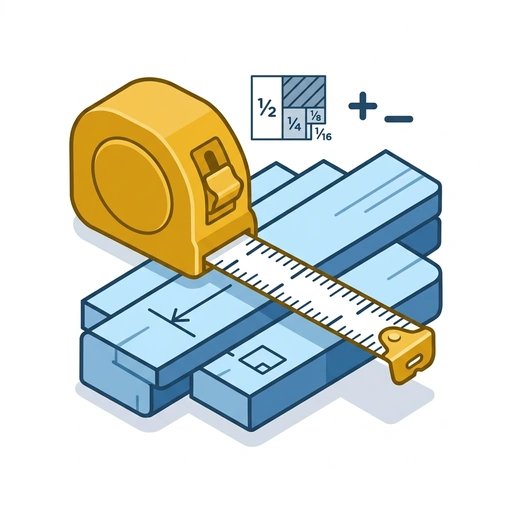
Reading the Tape Measure
Learn to read every tick mark on a tape measure instantly without slow counting. Master sixteenth-inch fractions, mental tape math, real lumber dimensions, and professional framing layouts.
Reading the Tape Measure
Unlock the visual code behind the tick marks to read measurements instantly. Master fractions, hidden tape features, and zero-error layout techniques.
Tape Measure Fluency
Stop counting tiny tick marks and start reading, calling, and laying out dimensions like a seasoned jobsite pro. Learn real trade callouts, hook mechanics, stud markings, and precision layout habits.
Start How to Read a Tape Measure today.
Download Tomo, search How to Read a Tape Measure, and play your first lesson in under a minute.