
How Your Car Works and Why It Breaks
Learn what happens under the hood and how to spot mechanical trouble before you get stranded. Diagnose common engine, brake, and electrical issues and make informed fixes with confidence.
Like Duolingo, but for How Your Car Works and Why It Breaks. Tomo turns the whole topic into a game you play five minutes a day, until it actually sticks.
26 levels across 4 sections, about 52 minutes end to end, roughly 10 days at five minutes a day. It moves through First Response: Roadside Triage and Vital Fluids; The Powertrain: Combustion, Cooling, and Electrical Flow; Control Systems: Brakes, Suspension, and Steering; and Modern Electronics: Sensor Diagnostics and the Computer. It starts from scratch.
Free forever · No credit card · iPhone & Android
Key ideas in How Your Car Works and Why It Breaks
- Car batteries emit flammable hydrogen gas, especially when heavily discharged or taking in current
- The final cable connection often throws an electrical spark as the circuit closes
- Connecting the final ground clamp to unpainted frame or engine metal keeps the spark well away from the battery's vented gases
- A car's thin floor pan will crush and buckle under the weight of the vehicle
- Jacks must be aligned only with reinforced factory lift points, such as pinch welds or sturdy frame rails
- Lifting on non-reinforced spots damages the body and risks the jack slipping out
- Compact spares have a narrower tread and smaller outer diameter, offering far less traction for stopping and cornering
- Because the spare has a smaller radius, it spins significantly faster than the full-sized tire on the other side, causing drivetrain gears (the differential) to overheat if driven fast or far
- Yellow dashboard symbols warn of an issue that needs inspection or service soon, but allows driving to a safe spot
- Red symbols mean a critical system (like oil pressure or braking) has failed and running the car risks catastrophic damage or crash
- A flashing light—especially a flashing check engine icon—signals active misfires that quickly destroy expensive engine components
- Lug nuts require immense torque to break loose; if the car is already lifted, applying force spins the free wheel and can tip the car off the jack
- Tires should be lowered back until resting firmly on the ground before final tightening
- Tightening lug nuts across from each other in a star pattern draws the wheel flush against the hub without warping the brake rotor
- Engine oil forms a thin liquid barrier preventing metal components from scraping together
- Low oil level starves moving engine parts, causing destructive friction and metal-on-metal wear
You've tried the other tabs
Thirty open tabs. Four facts you actually kept.
You watched. You nodded. By Sunday it was gone.
One answer, then back to scrolling.
Eight weeks. You meant to finish. You didn't.
Tomo gives How Your Car Works and Why It Breaks the Duolingo treatment: levels, streaks, and quick quizzes that test what you just learned. That game loop is what the tabs above never had, so it's the one you actually finish.
Here's what playing it feels like
A real question from this course. Take your best guess.
What often happens the exact moment you hook up the final jumper cable clamp?
Get it right to open this lesson and 25 more in the app.
Where How Your Car Works and Why It Breaks takes you
- 1
First Response: Roadside Triage and Vital Fluids
- Roadside Triage: Dead Batteries and Flat Tires
- Reading Car Fluids: Leaks, Levels, and Warnings
- 2
The Powertrain: Combustion, Cooling, and Electrical Flow
- The Combustion Engine: Air, Fuel, and Spark
- The Cooling Loop: Preventing Catastrophic Overheating
- The Starting and Charging Circuit
- 3
Control Systems: Brakes, Suspension, and Steering
- Hydraulic Brakes: How They Stop and Why They Squeak
- Tires and Suspension: Alignment, Balance, and Clunks
- 4
Modern Electronics: Sensor Diagnostics and the Computer
- The Engine Computer and Decoding Trouble Codes
4 sections · 8 units · 26 levels. Built to play, not to enroll.
Tomo is in ChatGPT
Tomo is also a ChatGPT plugin: the same playable courses, built and played inside your chat.
Add Tomo to ChatGPT- What to ask
- “Make me a Tomo course on black holes.” “Turn this chat into a Tomo course.”
- What you get
- Quick questions with instant feedback, hearts and stars, ready to play in about a minute.
- Where it goes
- No sign-up to start. Connect your Tomo account and your streak carries on in the app.
You pick the voice
How Your Car Works and Why It Breaks is taught in the Professor style: clear, structured, thorough. Want a different feel? In the app you can spin up the same topic in any of Tomo's teaching styles. Same facts, totally different vibe.
More Technology on Tomo

Hands-On Auto Mechanics
Move beyond routine fluid changes into real-world diagnostic and mechanical repair. Learn to track down electrical gremlins, interpret live sensor data, and pinpoint chassis and engine faults before unbolting parts.
Car Engines and Diesel Power
Start from zero and discover how internal combustion engines actually turn fuel into movement. Learn the physics behind heavy diesel machinery and build the foundational diagnostic mindset of a professional mechanic.
Everyday Car Mechanics
Demystify what happens under your car's hood with practical, hands-on knowledge. Learn how to check vital fluids, diagnose weird noises, understand core engine systems, and deal honestly with mechanics.

90s Impala Security Systems
Master the quirks of the 1990s Chevrolet Impala SS security system. Learn to diagnose the notorious VATS lockout and implement permanent reliability fixes.
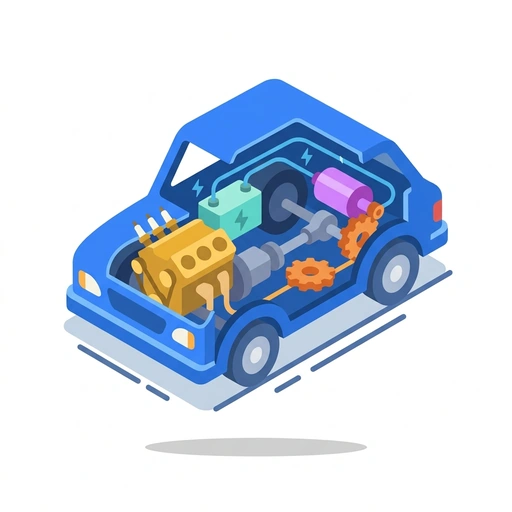
How Cars Work
Discover what happens beneath the metal when you press the pedal, turn the wheel, or charge up. Explore the mechanical gears, electric powertrains, and computer reflexes that move modern automobiles.
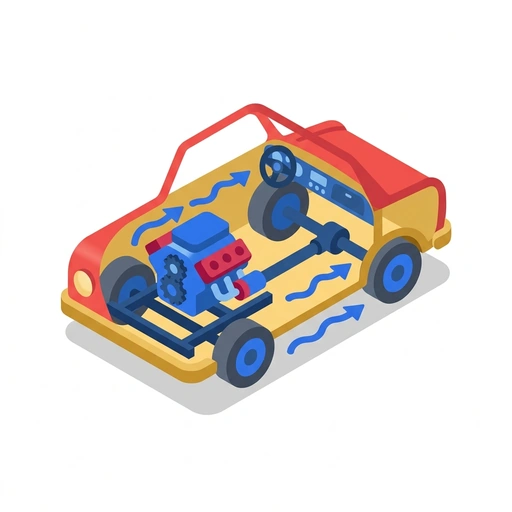
How Cars Work
Demystify what happens beneath the hood and behind the dashboard. Learn how engines, transmissions, and brakes operate, how to spot warning signs before they become costly breakdowns, and how to make confident decisions as an owner.
Start How Your Car Works and Why It Breaks today.
Download Tomo, search How Your Car Works and Why It Breaks, and play your first lesson in under a minute.