
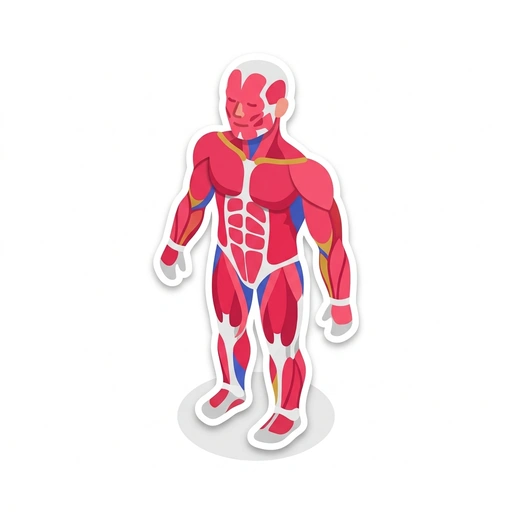
Human Muscle Anatomy
Discover how facial expressions, posture, and athletic movements actually work from the inside out. Learn the major muscle groups of the human body and the physiological mechanics behind every motion.
Like Duolingo, but for Human Muscle Anatomy. Tomo turns the whole topic into a game you play five minutes a day, until it actually sticks.
24 levels across 3 sections, about 48 minutes end to end, roughly 10 days at five minutes a day. It moves through The Expressive Face and Head, The Torso and Upper Limbs, and The Lower Body and Muscle Physiology. It starts from scratch.
Free forever · No credit card · iPhone & Android
Key ideas in Human Muscle Anatomy
- Limb and torso muscles pull bone against bone across joints to move limbs
- Facial muscles anchor directly into the dermal skin layer
- Pulling skin instead of joints enables nuanced surface wrinkles, ripples, and expressions
- Orbicularis muscles are ring-shaped muscles acting like circular drawstrings
- Orbicularis oculi loops around each eye socket to blink, close eyelids, or squint
- Orbicularis oris loops around the mouth opening to compress and purse the lips
- The zygomaticus major originates on the cheekbone and inserts into the mouth corner
- Contracting it pulls the corners of the mouth diagonally upward and outward
- This upward lift creates the classic smile shape and bunches the cheeks
- The frontalis covers the forehead and pulls the eyebrows upward to convey surprise or curiosity
- The corrugator supercilii draws the brows inward and downward, creating vertical worry lines between the eyes
- Raising the brow opposes the furrowing action of the corrugator
- Stress habitually clenches the jaw elevators and knots the muscles between the eyebrows
- Allowing the lower jaw to unclamp with lips resting softly releases the jaw muscles
- Consciously softening the space between the brows releases the corrugators
- Clenching your teeth causes the masseter to bulge at the corner of your lower jaw
You've tried the other tabs
Thirty open tabs. Four facts you actually kept.
You watched. You nodded. By Sunday it was gone.
One answer, then back to scrolling.
Eight weeks. You meant to finish. You didn't.
Tomo gives Human Muscle Anatomy the Duolingo treatment: levels, streaks, and quick quizzes that test what you just learned. That game loop is what the tabs above never had, so it's the one you actually finish.
Here's what playing it feels like
A real question from this course. Take your best guess.
Why is it handy that facial muscles pull skin instead of joints?
Get it right to open this lesson and 23 more in the app.
Where Human Muscle Anatomy takes you
- 1
The Expressive Face and Head
- Mapping the Muscles of Facial Expression
- The Mechanics of Chewing and Neck Support
- 2
The Torso and Upper Limbs
- The Core, Spine, and Respiration
- Driving the Arms: Shoulders, Chest, and Elbows
- 3
The Lower Body and Muscle Physiology
- Powering the Hips and Thighs
- Calves, Ankles, and the Foot Foundation
- Contraction, Muscle Pairs, and Adaptation
3 sections · 7 units · 24 levels. Built to play, not to enroll.
You pick the voice
Human Muscle Anatomy is taught in the Explain Like I'm 5 style: no big words. promise.. Want a different feel? In the app you can spin up the same topic in any of Tomo's teaching styles. Same facts, totally different vibe.
More Science on Tomo
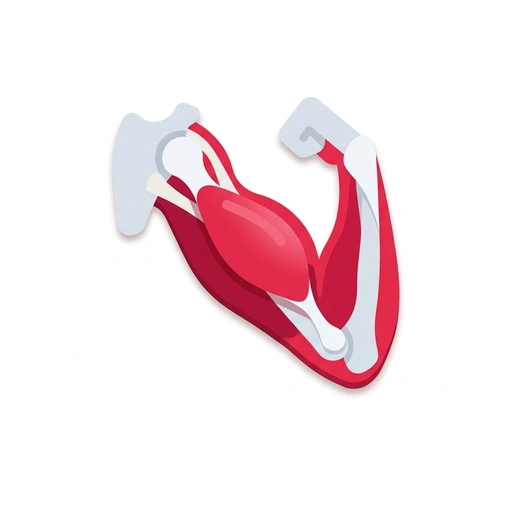
Decoding Human Muscle Names
Stop memorizing muscle names as arbitrary Latin jargon. Discover the simple visual code of shapes, sizes, and attachment points that makes anatomical names instantly make sense.
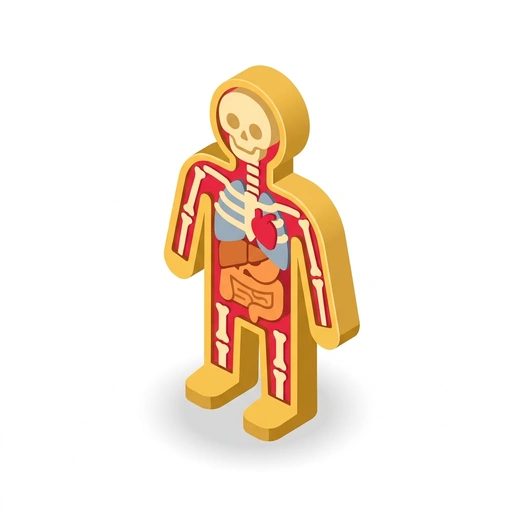
Anatomy of the Human Body
Discover how your bones, muscles, and internal systems coordinate every breath and step. Understand the physical machinery that powers daily movement, circulation, and sensation.
Human Anatomy: Bones and Muscle
Move beyond memorizing muscle and bone names to understand how the human musculoskeletal system functions as an integrated mechanical machine. Learn how joints dictate movement, why muscles operate in coupled pairs, and how living tissue remodels under load.

Bones of the Face and Body
Discover the names, shapes, and hidden engineering of the human skeleton. Learn to identify the bones across your face, limbs, and core, and see how they protect your organs and power everyday movement.
How the Human Body Fits Together
Explore the elegant architecture of your own body from the inside out. Learn how your skeleton, muscles, circulation, and vital organs coordinate to keep you upright, moving, and alive.
Human Anatomy: Form and Function
Bridge the gap between basic body parts and true functional anatomy. Discover how bones, muscles, nerves, and organs mechanically coordinate to sustain motion, regulate pressure, and maintain life.
Start Human Muscle Anatomy today.
Download Tomo, search Human Muscle Anatomy, and play your first lesson in under a minute.