
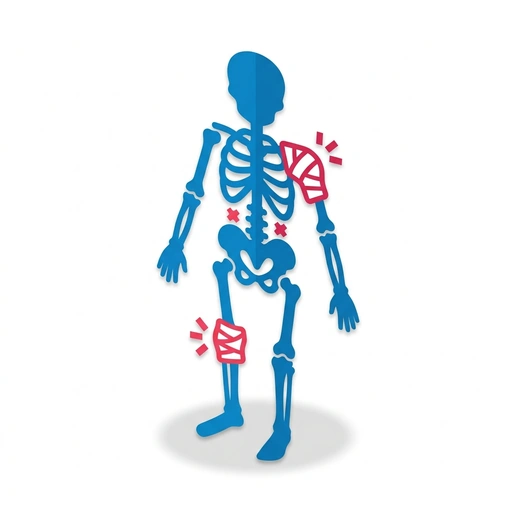
Musculoskeletal Disorders in Nursing
Learn to spot limb-threatening complications, manage traction safely, and protect post-op joints. Designed for nursing students preparing for clinicals and exams.
Like Duolingo, but for Musculoskeletal Disorders in Nursing. Tomo turns the whole topic into a game you play five minutes a day, until it actually sticks.
A short one: 12 levels across 2 sections, about 24 minutes end to end, roughly 5 days at five minutes a day. It moves through Spotting Threats to Limb and Life and Immobilization, Hardware, and Joint Care. It starts from scratch.
Free forever · No credit card · iPhone & Android
Key ideas in Musculoskeletal Disorders in Nursing
- People naturally have different baseline skin temperatures, pulse strengths, and color
- Comparing the injured limb directly to the healthy uninjured limb lets you spot subtle cooling, swelling, or paleness before tissue dies
- Assessing an injured limb in isolation easily hides early circulation decline
- Pain that is out of proportion to the injury or that fails to respond to strong painkillers is typically the earliest sign of dying muscle tissue
- Ischemia starves muscles of oxygen, producing a deep, relentless ache distinct from bone fracture pain
- Waiting for numbness or loss of pulses causes delays that can lead to permanent muscle damage
- When fresh arterial blood cannot enter the limb, the skin looks pale (pallor), turns cool (poikilothermia), and refills sluggishly after pressure
- When veins are compressed, blood enters but cannot escape, causing a dark purple, congested, and tense limb
- Distinguishing between blocked entry and blocked exit directs the emergency response
- Sensory nerve fibers are more sensitive to oxygen loss than motor nerve fibers
- Tingling or pins-and-needles (paresthesia) appears early and represents the crucial window to intervene
- Complete motor paralysis occurs much later after prolonged oxygen starvation
- Major arteries can keep pulsing down the center of a limb even while microvascular pressure starves the surrounding muscles
- Loss of a pulse (pulselessness) is an ominous, very late finding indicating widespread arterial collapse and imminent tissue death
- Waiting for a pulse to disappear before sounding the alarm leads to amputations and permanent disability
- Elevating a limb with compartment syndrome lowers arterial blood pressure into the limb, cutting off vital blood flow
You've tried the other tabs
Thirty open tabs. Four facts you actually kept.
You watched. You nodded. By Sunday it was gone.
One answer, then back to scrolling.
Eight weeks. You meant to finish. You didn't.
Tomo gives Musculoskeletal Disorders in Nursing the Duolingo treatment: levels, streaks, and quick quizzes that test what you just learned. That game loop is what the tabs above never had, so it's the one you actually finish.
Here's what playing it feels like
A real question from this course. Take your best guess.
Someone has a cast on their left arm. What is the best way to catch early blood flow troubles?
Get it right to open this lesson and 11 more in the app.
How to learn Musculoskeletal Disorders in Nursing, step by step
Go in order. 12 short levels across 2 sections, about 24 minutes in all, five minutes a day.
- 1
Spotting Threats to Limb and Life
- The Neurovascular Check: The 6 Ps
- Acute Emergencies: Compartment Syndrome and Fat Embolism
- 2
Immobilization, Hardware, and Joint Care
- Casts, Traction, and Pin Care
- Arthroplasty: Protecting the Replacement
2 sections · 4 units · 12 levels. Built to play, not to enroll.
Questions about Musculoskeletal Disorders in Nursing
How do I learn Musculoskeletal Disorders in Nursing?
Go in order: start with Spotting Threats to Limb and Life, then Immobilization, Hardware, and Joint Care. On Tomo that's 12 short levels, about 24 minutes in all, played five minutes a day. Start free and play the first level in under a minute.
Is there a Duolingo-style app for Musculoskeletal Disorders in Nursing?
Yes. Tomo works like Duolingo: short daily lessons, streaks and quick quizzes. Musculoskeletal Disorders in Nursing is one of its free courses, and you can type any other topic to get a course of your own.
Is the Musculoskeletal Disorders in Nursing course free?
Yes. Musculoskeletal Disorders in Nursing is playable on Tomo's free plan, which doesn't expire. No credit card, no waitlist. Download the app and start your first lesson.
How long does it take to learn Musculoskeletal Disorders in Nursing?
12 levels across 2 sections, about 24 minutes of play in total. It's built for five minutes a day, so you finish it a little at a time instead of all at once.
Do I need any background to start Musculoskeletal Disorders in Nursing?
No. It's pitched at a beginner level, so it starts where you are and builds up. If you can tap a phone, you can start.
Tomo is in ChatGPT
Tomo is also a ChatGPT plugin: the same playable courses, built and played inside your chat.
Add Tomo to ChatGPT- What to ask
- “Make me a Tomo course on black holes.” “Turn this chat into a Tomo course.”
- What you get
- Quick questions with instant feedback, hearts and stars, ready to play in about a minute.
- Where it goes
- No sign-up to start. Connect your Tomo account and your streak carries on in the app.
You pick the voice
Musculoskeletal Disorders in Nursing is taught in the Bestie style: your friend who just gets it. Want a different feel? In the app you can spin up the same topic in any of Tomo's teaching styles. Same facts, totally different vibe.
More Health on Tomo
Musculoskeletal Disorders for Med-Surg
Master high-yield musculoskeletal nursing concepts from acute compartment syndrome and traction care to arthroplasty precautions and chronic joint differentiators.
Clinical Nursing Judgment
Bridge the gap between basic nursing tasks and proactive clinical decision-making. Learn to anticipate patient deterioration, interpret complex diagnostic trends, titrate high-alert therapies, and navigate critical bedside complications with confidence.
The Nursing Process in Practice
Learn how nurses make critical clinical decisions through a systematic problem-solving framework. Turn raw patient clues into focused nursing diagnoses, actionable care plans, and life-saving evaluations.
Becoming a NICU Nurse
Discover what neonatal intensive care nurses do each day and map out a step-by-step path starting right now in middle school. Learn how early classes, practical caregiving skills, and nursing school prepare you to protect the tiniest patients.
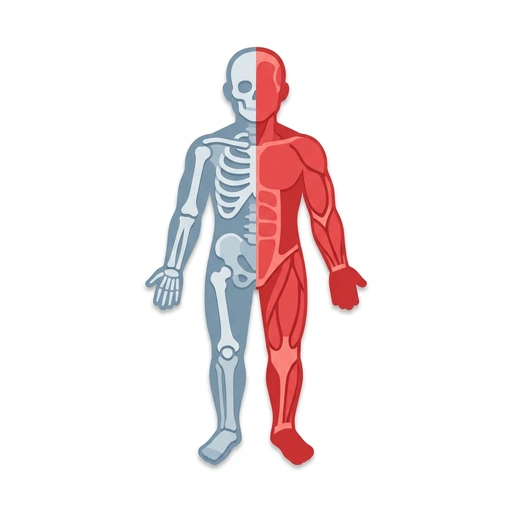
Musculoskeletal Anatomy in Motion
Bridge the gap between memorizing bone names and understanding how the living body generates force and stabilizes joints. Explore the mechanical levers, dynamic force couples, and tissue adaptations that govern human movement and physical resilience.

Clinical Nutrition in Complex Illness
An advanced clinical guide to metabolic triage, specialized enteral and parenteral compounding, and physiological rescue in organ failure. Learn to make high-stakes feeding decisions, troubleshoot intestinal failure, and navigate immunometabolic shifts.
Start Musculoskeletal Disorders in Nursing today.
Download Tomo, search Musculoskeletal Disorders in Nursing, and play your first lesson in under a minute.