
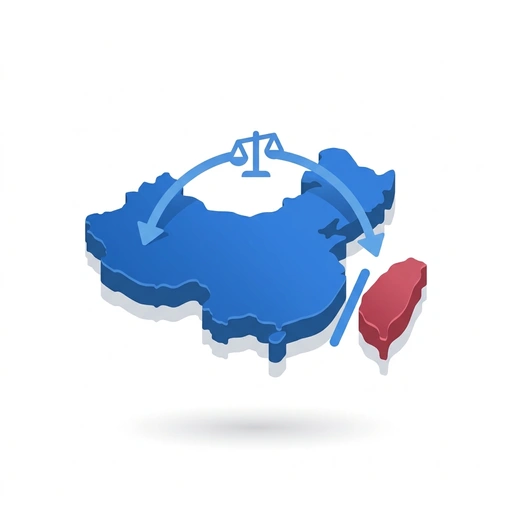
The China-Taiwan Conflict
Understand the modern flashpoint of the Taiwan Strait beyond the headlines. Learn how grey-zone warfare, the semiconductor supply chain, and strategic ambiguity shape the daily calculus between Beijing, Taipei, and Washington.
Like Duolingo, but for The China-Taiwan Conflict. Tomo turns the whole topic into a game you play five minutes a day, until it actually sticks.
A short one: 12 levels across 2 sections, about 24 minutes end to end, roughly 5 days at five minutes a day. It moves through The Tactical Standoff in the Strait and The Strategic Calculus and Flashpoints. It assumes you already know the basics.
Free forever · No credit card · iPhone & Android

Key ideas in The China-Taiwan Conflict
- Grey-zone tactics deliberately avoid armed strikes to keep actions beneath legal thresholds for war.
- Gradual incremental advances steadily alter regional operational baselines without triggering a military response.
- Ambiguous coercion prevents Taiwan and its allies from establishing clear legal grounds for armed intervention.
- Daily sorties force Taiwan to scramble jets or paint targets with radar, wearing down smaller airframes.
- Maintenance turnaround and pilot fatigue steadily accumulate faster for Taiwan's smaller defense fleet.
- An ADIZ covers international airspace where military responses consume resources without sovereign borders being breached.
- The China Coast Guard conducts law enforcement boardings to project legal administrative authority near Kinmen.
- The maritime militia uses commercial fishing hulls to harass and swarm while maintaining civilian deniability.
- Grey-zone operations keep grey-hulled navy warships in reserve to avoid directly triggering naval rules of engagement.
- Disinformation pushes 'US skepticism' to convince Taiwan's public that foreign allies will never come to their aid.
- Cognitive warfare seeks to break societal resilience and sow defeatism long before any kinetic assault occurs.
- Cyber and information operations weaponize internal societal debates to paralyze consensus on defense spending.
- A formal blockade is an internationally recognized act of war that permits third parties to treat the waters as a war zone
- A quarantine relies on law-enforcement inspections to sever commercial shipping without declaring formal hostilities
- Presenting economic strangulation as domestic administrative enforcement complicates foreign military intervention
- The maritime militia uses commercial fishing hulls to harass and swarm while maintaining civilian deniability
You've tried the other tabs
Thirty open tabs. Four facts you actually kept.
You watched. You nodded. By Sunday it was gone.
One answer, then back to scrolling.
Eight weeks. You meant to finish. You didn't.
Tomo gives The China-Taiwan Conflict the Duolingo treatment: levels, streaks, and quick quizzes that test what you just learned. That game loop is what the tabs above never had, so it's the one you actually finish.
Here's what playing it feels like
A real question from this course. Take your best guess.
How do gradual, incremental military maneuvers reshape the balance in the Taiwan Strait?
Get it right to open this lesson and 11 more in the app.
How to learn The China-Taiwan Conflict, step by step
Go in order. 12 short levels across 2 sections, about 24 minutes in all, five minutes a day.
- 1
The Tactical Standoff in the Strait
- Decoding Grey-Zone Coercion
- Asymmetric Defense and the Silicon Shield
- 2
The Strategic Calculus and Flashpoints
- Navigating Strategic Ambiguity
- Triggers, Timelines, and Escalation Risks
2 sections · 4 units · 12 levels. Built to play, not to enroll.
Questions about The China-Taiwan Conflict
How do I learn The China-Taiwan Conflict?
Go in order: start with The Tactical Standoff in the Strait, then The Strategic Calculus and Flashpoints. On Tomo that's 12 short levels, about 24 minutes in all, played five minutes a day. Start free and play the first level in under a minute.
Is there a Duolingo-style app for The China-Taiwan Conflict?
Yes. Tomo works like Duolingo: short daily lessons, streaks and quick quizzes. The China-Taiwan Conflict is one of its free courses, and you can type any other topic to get a course of your own.
Is The China-Taiwan Conflict free?
Yes. The China-Taiwan Conflict is playable on Tomo's free plan, which doesn't expire. No credit card, no waitlist. Download the app and start your first lesson.
How long does it take to learn The China-Taiwan Conflict?
12 levels across 2 sections, about 24 minutes of play in total. It's built for five minutes a day, so you finish it a little at a time instead of all at once.
Do I need any background to start The China-Taiwan Conflict?
No. It's pitched at an intermediate level, so it starts where you are and builds up. If you can tap a phone, you can start.
Tomo is in ChatGPT
Tomo is also a ChatGPT plugin: the same playable courses, built and played inside your chat.
Add Tomo to ChatGPT- What to ask
- “Make me a Tomo course on black holes.” “Turn this chat into a Tomo course.”
- What you get
- Quick questions with instant feedback, hearts and stars, ready to play in about a minute.
- Where it goes
- No sign-up to start. Connect your Tomo account and your streak carries on in the app.
You pick the voice
The China-Taiwan Conflict is taught in the Professor style: clear, structured, thorough. Want a different feel? In the app you can spin up the same topic in any of Tomo's teaching styles. Same facts, totally different vibe.
More History on Tomo
How Nations Project Power
Look past diplomatic talking points and decode how global politics actually works. Learn to analyze international crises through geographic vulnerabilities, economic leverage, and below-the-radar strategic maneuvers.

The 1960s: How Consensus Fractured
Examine how the post-war American consensus shattered under the pressure of youth rebellion, tactical civil rights escalation, and the first televised war. Learn the structural forces behind the era's cultural explosion and how the political backlash of 1968 shaped modern polarization.
How Modern China Works
Look past the surface headlines to grasp the real mechanics driving contemporary China. Explore how internal migration, the party-state bureaucracy, state capitalism, and demographic shifts shape the world's second-largest power.
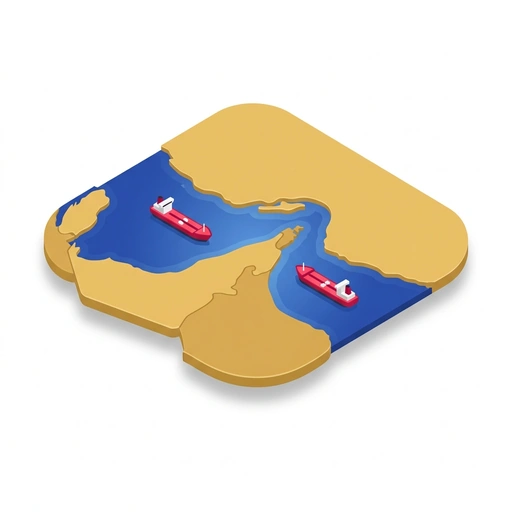
The Strait of Hormuz
Understand why a narrow 21-mile waterway holds the key to global energy flows and maritime strategy. Trace the geography between Iran and Oman, explore the incentives of Gulf states and world powers, and decode how deterrence works in a vital global choke point.
Analyzing International Affairs
Learn to look past diplomatic rhetoric and decode how nations actually compete, form alliances, and wield power. Build the core analytical mental models used by foreign policy analysts and diplomats.

How the Tudors Ruled
Look past the palace gossip and beheadings to uncover how the Tudor dynasty actually held power. Discover the high-stakes factional courtcraft, bureaucratic inventions, and covert intelligence networks that forged a modern state.
Start The China-Taiwan Conflict today.
Download Tomo, search The China-Taiwan Conflict, and play your first lesson in under a minute.