
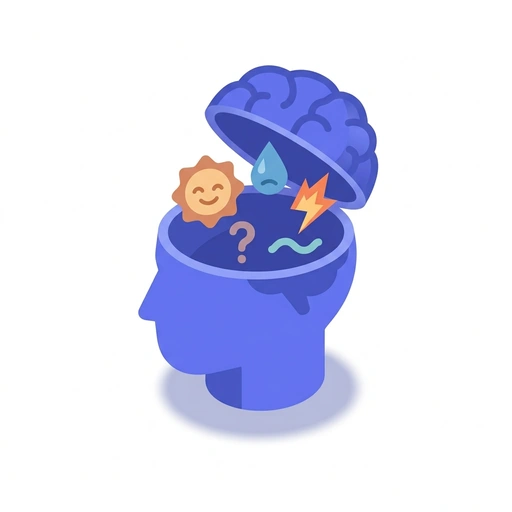
Why We Feel What We Feel
Like Duolingo, but for Why We Feel What We Feel. Tomo turns the whole topic into a game you play five minutes a day, until it actually sticks.
For the part of you with thirty open tabs that never became anything.
22 levels across 3 sections, about 44 minutes end to end, roughly 9 days at five minutes a day. It moves through Decoding Your Emotional Reactions, Why the Brain and Body Feel, and Navigating and Reshaping Your Feelings. It starts from scratch.
Free forever · No credit card · iPhone & Android

Key ideas in Why We Feel What We Feel
- The brain constructs emotions by interpreting internal body sensations and past experiences together
- Emotions are real-time guesses about what an event means for your well-being, not fixed biological switches
- Vague labels like 'stressed' obscure the specific unmet need or threat your brain detected
- Different granular emotions require completely different coping actions (e.g., setting a boundary for resentment vs. reducing workload for overwhelm)
- A primary emotion is the brain's initial, direct response to an event
- A secondary emotion is an evaluative reaction to having had the first emotion (feeling bad about feeling sad)
- Putting feelings into specific words activates language regions in the prefrontal cortex, which dampens the amygdala's alarm response
- Accurate labeling signals to the brain that the situation has been categorized and understood, easing fight-or-flight tension
- The brain tracks and scores multiple personal goals and values at once
- A single milestone can represent achievement of independence while simultaneously representing the loss of daily social safety
- External events do not cause feelings directly; they pass through an internal interpretation filter first
- Different appraisals of the identical situation produce entirely different emotional states
- Recognizing your appraisal gives you insight into why your emotion occurred
- The brain operates as a prediction engine relying on stored memories of similar past moments
- Feelings often emerge instantly as educated guesses rather than delayed reactions to complete facts
- A rapid emotional reaction can misfire if the current situation only superficially resembles an old one
You've tried the other tabs
Thirty open tabs. Four facts you actually kept.
You watched. You nodded. By Sunday it was gone.
One answer, then back to scrolling.
Eight weeks. You meant to finish. You didn't.
Tomo gives Why We Feel What We Feel the Duolingo treatment: levels, streaks, and quick quizzes that test what you just learned. That game loop is what the tabs above never had, so it's the one you actually finish.
Here's what playing it feels like
A real question from this course. Take your best guess.
What is an emotion really doing when something happens?
Get it right to open this lesson and 21 more in the app.
Where Why We Feel What We Feel takes you
Unpack the hidden machinery of human emotion. Discover how your brain, body, and thoughts team up to create your feelings, and learn how to navigate them with confidence.
- 1
Decoding Your Emotional Reactions
- Naming What You Actually Feel
- How Thoughts Create Feelings
- 2
Why the Brain and Body Feel
- The Body's Physical Alarm System
- The Brain's Emotional Circuits
- The Evolutionary Purpose of Hard Emotions
- 3
Navigating and Reshaping Your Feelings
- The Biology of Closeness and Connection
- Regulating Your Emotional Thermostat
3 sections · 7 units · 22 levels. Built to play, not to enroll.
You pick the voice
Why We Feel What We Feel is taught in the Explain Like I'm 5 style: no big words. promise.. Want a different feel? In the app you can spin up the same topic in any of Tomo's teaching styles. Same facts, totally different vibe.
More Psychology on Tomo

Healing Your Inner Child
Move beyond basic awareness to actively mend the emotional echoes of your past. Learn to recognize hidden triggers, soothe your nervous system, and reclaim the playful confidence you were born with.

Why We Do What We Do
Unlock the hidden patterns behind human actions, from the habits that shape your day to the social forces that influence your biggest decisions.
The Language of Feelings
Learn to translate the silent signals of your emotions into stronger, more resilient relationships. This course gives you the tools to decode what you're feeling and respond with intention instead of impulse.
Living with an ADHD Brain
Stop fighting your brain and start working with it. Learn why your mind wanders, how to handle the daily 'chaos,' and ways to turn your unique focus into a strength.

Emotional Intelligence: The Six Seconds Model
Move beyond basic empathy into a rigorous, data-driven framework for self-mastery and purpose-driven leadership using the world's leading EQ methodology.
The Body's Emotional Language
Discover how your muscles store stress and learn to listen to the physical signals your body sends during emotional moments.
Start Why We Feel What We Feel today.
Download Tomo, search Why We Feel What We Feel, and play your first lesson in under a minute.