
Anatomy for Pilates Movement
Understand the functional anatomy behind classic Pilates exercises and cues. Learn how the deep core, spine, and joint stabilizers work together to guide safe, effective movement.
Like Duolingo, but for Anatomy for Pilates Movement. Tomo turns the whole topic into a game you play five minutes a day, until it actually sticks.
A short one: 12 levels across 2 sections, about 24 minutes end to end, roughly 5 days at five minutes a day. It moves through The Core and Spine in Motion and Connecting Limbs to the Center. It starts from scratch.
Free forever · No credit card · iPhone & Android

Key ideas in Anatomy for Pilates Movement
- The Pilates core is a 3D pressurized canister rather than just a flat front wall
- The breathing diaphragm caps the top while the pelvic floor forms the base
- The deep abdominal muscles wrap around the sides and connect into the back
- On an inhale, the diaphragm contracts downward and the pelvic floor relaxes and descends in sync
- The two structures move in the same direction at the same time like a piston
- On an exhale, both the diaphragm and pelvic floor recoil upward to stabilize pressure
- The transversus abdominis acts as an anticipatory stabilizer, firing milliseconds before movement
- Cinched deep abdominals secure the spine and pelvis so limb movement does not yank the lower back
- Drawing the navel gently to the spine cues this corset-like stabilization
- Neutral pelvis maintains the spine's natural inward lower-back curve
- Muscles produce the most stabilizing force when kept at mid-range length rather than over-shortened or over-stretched
- A neutral pelvis creates equal muscular tension across the front and back of the cylinder
- Imprint gently shortens the waist and brings the lower back toward the floor using the abdominals
- Imprinting provides a bony, stable base when the heavy leverage of the legs exceeds the client's current deep core strength
- An arching lower back indicates the deep stabilizers have failed to resist the load
- The rib cage section (thoracic) naturally permits twisting
You've tried the other tabs
Thirty open tabs. Four facts you actually kept.
You watched. You nodded. By Sunday it was gone.
One answer, then back to scrolling.
Eight weeks. You meant to finish. You didn't.
Tomo gives Anatomy for Pilates Movement the Duolingo treatment: levels, streaks, and quick quizzes that test what you just learned. That game loop is what the tabs above never had, so it's the one you actually finish.
Here's what playing it feels like
A real question from this course. Take your best guess.
Which two parts form the top lid and bottom base of this deep core cylinder?
Get it right to open this lesson and 11 more in the app.
Where Anatomy for Pilates Movement takes you
- 1
The Core and Spine in Motion
- The Deep Core Cylinder
- Segmental Spine Mechanics
- 2
Connecting Limbs to the Center
- Scapular Stability and Shoulder Mechanics
- Pelvic-Hip Disassociation
2 sections · 4 units · 12 levels. Built to play, not to enroll.
You pick the voice
Anatomy for Pilates Movement is taught in the The Bestie style: your friend who just gets it. Want a different feel? In the app you can spin up the same topic in any of Tomo's teaching styles. Same facts, totally different vibe.
More Health on Tomo
Pilates Anatomy: Movement from Within
Discover how your muscles and bones work together to create the strength, length, and control that define the Pilates method.
Pilates Anatomy: The Body in Motion
Understand how your muscles and bones work together to create the strength and control that defines Pilates. Learn to move from your center and protect your spine with every breath.
Pilates Anatomy in Action
Go beyond standard choreography to understand the muscular forces and biomechanics driving every Pilates movement. Master how deep stabilizers, myofascial slings, and spinal articulation interact to eliminate compensations. Refine your execution and cuing by matching precise functional anatomy to real-time practice.
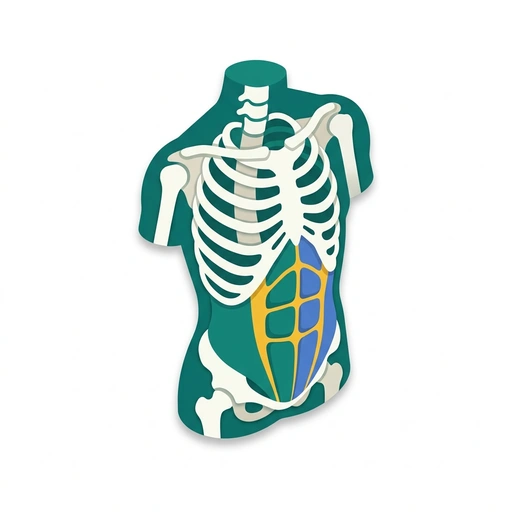
Anatomy for Pilates
Understand the muscles, joints, and mechanics behind every Pilates movement. Learn how your core, spine, and breath work together to build balanced strength and prevent strain.
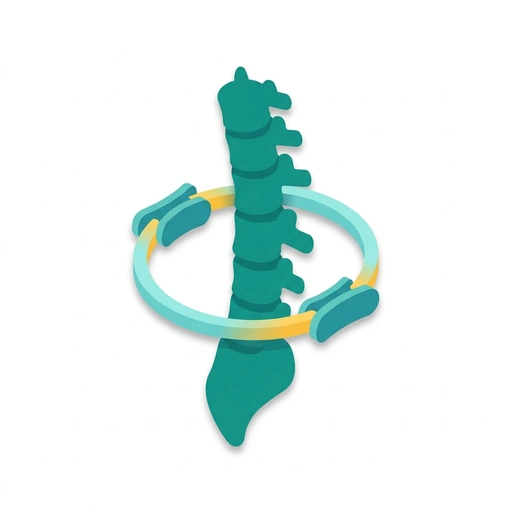
Anatomy for Pilates Movement
Bridge the gap between textbook anatomy and movement instruction. Understand joint mechanics, muscular lines of pull, and functional compensations across the classic and contemporary Pilates repertoire.
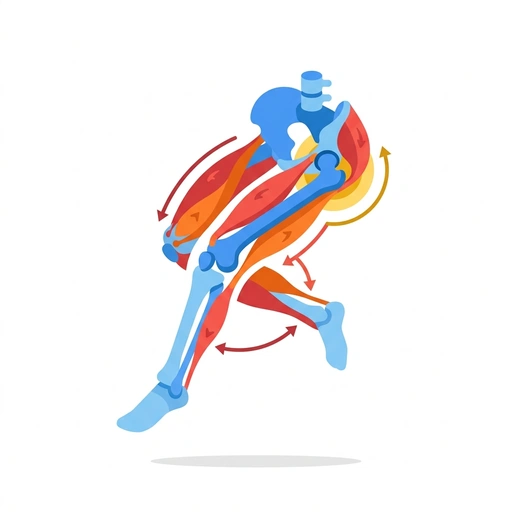
Anatomy for Pilates Professionals
Bridge the gap between textbook anatomy and the moving body. Master the musculoskeletal relationships that drive core stability, spinal articulation, and efficient movement patterns in your clients.
Start Anatomy for Pilates Movement today.
Download Tomo, search Anatomy for Pilates Movement, and play your first lesson in under a minute.