
Pilates Anatomy: The Body in Motion
Understand how your muscles and bones work together to create the strength and control that defines Pilates. Learn to move from your center and protect your spine with every breath.
Like Duolingo, but for Pilates Anatomy: The Body in Motion. Tomo turns the whole topic into a game you play five minutes a day, until it actually sticks.
24 levels across 3 sections, about 48 minutes end to end, roughly 10 days at five minutes a day. It moves through Finding Your Center, Alignment and Control, and The Mechanics of Flow. It starts from scratch.
Free forever · No credit card · iPhone & Android

Key ideas in Pilates Anatomy: The Body in Motion
- The 3D nature of the Powerhouse versus a 2D abdominal focus
- The function of the Transversus Abdominis as a stabilizer
- The pelvic floor muscles lift upward to provide a base of support
- The diaphragm moves down on inhalation and up on exhalation to manage internal pressure
- A weak pelvic floor prevents the rest of the core from pressurizing correctly
- Proper breathing in Pilates coordinates the 'lid' with the 'walls' of the core
- Pelvic floor engagement is the first step in many Pilates movements
- The core is a pressurized canister system
- The role of the pelvic floor in foundational stability
- The diaphragm's role in the internal pressure system
- Deep muscles (stabilizers) hold the skeleton in place during a hold
- Surface muscles (movers) like the rectus abdominis create visible motion like curling or twisting
- Pilates prioritizes the 'quiet' deep muscles to protect joints
- Distinguishing between movers and stabilizers
- Inhaling into the belly causes the abdominal wall to distend and relax
- Lateral breathing directs air into the sides and back of the ribcage
You've tried the other tabs
Thirty open tabs. Four facts you actually kept.
You watched. You nodded. By Sunday it was gone.
One answer, then back to scrolling.
Eight weeks. You meant to finish. You didn't.
Tomo gives Pilates Anatomy: The Body in Motion the Duolingo treatment: levels, streaks, and quick quizzes that test what you just learned. That game loop is what the tabs above never had, so it's the one you actually finish.
Here's what playing it feels like
A real question from this course. Take your best guess.
Where is the Transversus Abdominis (TA) located in relation to your other abdominal muscles?
Get it right to open this lesson and 23 more in the app.
Where Pilates Anatomy: The Body in Motion takes you
- 1
Finding Your Center
- The Core Beyond the Six-Pack
- Breathing for Stability
- 2
Alignment and Control
- The Spine's Natural Curves
- Pelvic Stability
- Shoulder and Neck Integration
- 3
The Mechanics of Flow
- Articulating the Spine
- Lengthening Under Tension
- The Full Body Connection
3 sections · 8 units · 24 levels. Built to play, not to enroll.
Tomo is in ChatGPT
Tomo is also a ChatGPT plugin: the same playable courses, built and played inside your chat.
Add Tomo to ChatGPT- What to ask
- “Make me a Tomo course on black holes.” “Turn this chat into a Tomo course.”
- What you get
- Quick questions with instant feedback, hearts and stars, ready to play in about a minute.
- Where it goes
- No sign-up to start. Connect your Tomo account and your streak carries on in the app.
You pick the voice
Pilates Anatomy: The Body in Motion is taught in the Professor style: clear, structured, thorough. Want a different feel? In the app you can spin up the same topic in any of Tomo's teaching styles. Same facts, totally different vibe.
More Health on Tomo
Pilates Anatomy: Movement from Within
Discover how your muscles and bones work together to create the strength, length, and control that define the Pilates method.
Pilates: Strength through Control
Build a resilient body and a focused mind by mastering the powerhouse. This course takes you from your first lateral breath to the fluid, precise movements that define the Pilates method.
Anatomy for Pilates Movement
Understand the functional anatomy behind classic Pilates exercises and cues. Learn how the deep core, spine, and joint stabilizers work together to guide safe, effective movement.
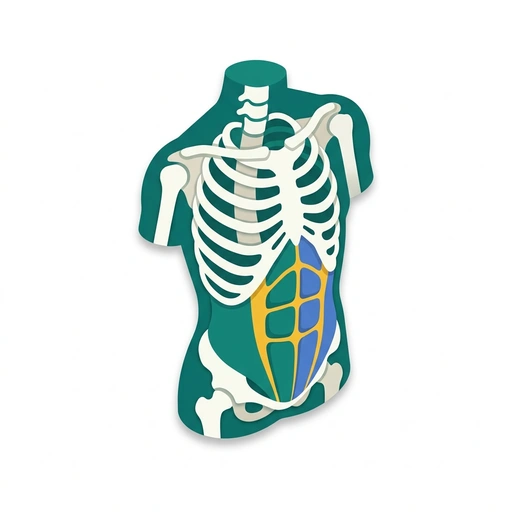
Anatomy for Pilates
Understand the muscles, joints, and mechanics behind every Pilates movement. Learn how your core, spine, and breath work together to build balanced strength and prevent strain.
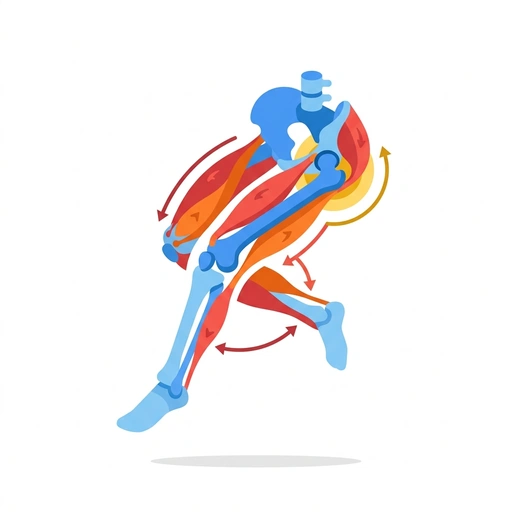
Anatomy for Pilates Professionals
Bridge the gap between textbook anatomy and the moving body. Master the musculoskeletal relationships that drive core stability, spinal articulation, and efficient movement patterns in your clients.
Mat Pilates: Movement and Anatomy
Discover the anatomical logic and precise movements of classical mat Pilates. Learn how to activate your powerhouse, articulate your spine, and build lasting core stability from the floor up.
Start Pilates Anatomy: The Body in Motion today.
Download Tomo, search Pilates Anatomy: The Body in Motion, and play your first lesson in under a minute.