
Anatomy for Pilates Movement
Like Duolingo, but for Anatomy for Pilates Movement. Tomo turns the whole topic into a game you play five minutes a day, until it actually sticks.
For the part of you with thirty open tabs that never became anything.
24 levels across 4 sections, about 48 minutes end to end, roughly 10 days at five minutes a day. It moves through The Core Cylinder in Motion, Spinal Articulation and Upper Body Integration, Lower Kinetic Chain and Pelvic Support, and Clinical Movement Analysis and Client Adaptation. It assumes you already know the basics.
Free forever · No credit card · iPhone & Android
Key ideas in Anatomy for Pilates Movement
- The inner unit fires before movement via gentle, anticipatory tone
- Rigid, maximal bracing locks the spine and restricts fluid movement
- Transversus and multifidus provide low-threshold segmental control
- Lateral costal breathing directs air wide into the lower ribs and back
- Passive belly breathing causes the abdominal wall to lose support
- Continuous abdominal tone is preserved throughout both breath phases
- Superficial rectus abdominis overactivity overwhelms deep stabilizers
- Doming pushes intra-abdominal pressure outward instead of containing it
- Proper deep recruitment flattens and draws the abdominal wall inward
- The respiratory diaphragm and pelvic floor move in tandem like a piston
- During exhalation, the diaphragm and pelvic floor both lift upward
- Inhalation requires the pelvic floor to yield and widen with descent
- Neutral alignment preserves each client's natural lumbar lordosis
- Imprinting flattens natural shock-absorbing curves and tilts the pelvis
- Pelvic neutral optimizes deep stabilizer recruitment and hip mechanics
- Hip flexion occurs at the coxafemoral joint independently of lumbar flexion
You've tried the other tabs
Thirty open tabs. Four facts you actually kept.
You watched. You nodded. By Sunday it was gone.
One answer, then back to scrolling.
Eight weeks. You meant to finish. You didn't.
Tomo gives Anatomy for Pilates Movement the Duolingo treatment: levels, streaks, and quick quizzes that test what you just learned. That game loop is what the tabs above never had, so it's the one you actually finish.
Here's what playing it feels like
A real question from this course. Take your best guess.
What happens if a client clamps their belly as hard as possible during Pilates?
Get it right to open this lesson and 23 more in the app.
Where Anatomy for Pilates Movement takes you
Bridge the gap between textbook anatomy and movement instruction. Understand joint mechanics, muscular lines of pull, and functional compensations across the classic and contemporary Pilates repertoire.
- 1
The Core Cylinder in Motion
- Dynamic Cueing for the Deep Core
- Pelvo-Lumbar Mechanics in Hip Movement
- 2
Spinal Articulation and Upper Body Integration
- Spinal Articulation and Segmental Control
- Scapulohumeral Rhythm and Shoulder Support
- 3
Lower Kinetic Chain and Pelvic Support
- Hip Kinematics and Femoral Centration
- Lower Chain Alignment and Foot Mechanics
- 4
Clinical Movement Analysis and Client Adaptation
- Deconstructing Common Compensations
- Anatomical Modifications for Special Populations
4 sections · 8 units · 24 levels. Built to play, not to enroll.
You pick the voice
Anatomy for Pilates Movement is taught in the Explain Like I'm 5 style: no big words. promise.. Want a different feel? In the app you can spin up the same topic in any of Tomo's teaching styles. Same facts, totally different vibe.
More Health on Tomo
Anatomy for Pilates Professionals
Bridge the gap between textbook anatomy and the moving body. Master the musculoskeletal relationships that drive core stability, spinal articulation, and efficient movement patterns in your clients.
Reformer Pilates Anatomy and Alignment
Learn the essential biomechanics, cueing principles, and joint safety rules needed for Reformer Pilates. Master pelvic alignment, core activation, and exercise modifications for special populations.
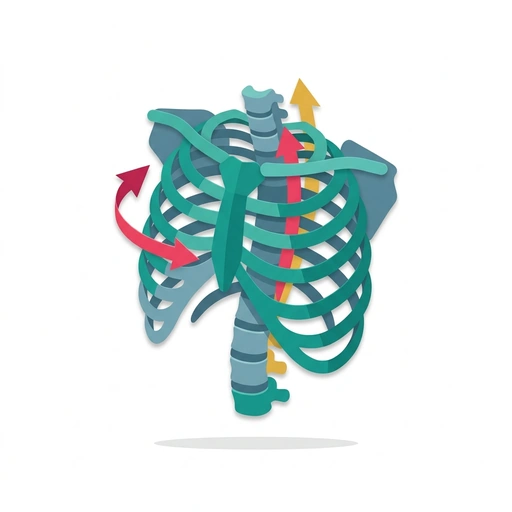
Pilates Anatomy in Motion
Look past generic cues and uncover the biomechanics behind every roll, reach, and teaser. Learn how deep stabilizers, myofascial slings, and joint mechanics work together to build effortless, injury-free movement.
Pilates Anatomy: Movement from Within
Discover how your muscles and bones work together to create the strength, length, and control that define the Pilates method.

Anatomy for Pilates and Sculpt
Learn the functional anatomy needed to lead safe, effective, and powerful movement classes. Master the 'why' behind every cue and understand how the body moves from the inside out.
Pilates Anatomy: The Body in Motion
Understand how your muscles and bones work together to create the strength and control that defines Pilates. Learn to move from your center and protect your spine with every breath.
Start Anatomy for Pilates Movement today.
Download Tomo, search Anatomy for Pilates Movement, and play your first lesson in under a minute.