
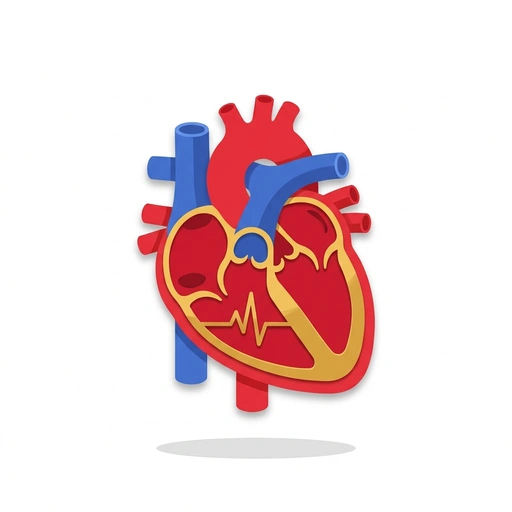
Cardiovascular Physiology for Nursing Practice
Bridge structural anatomy, cellular electrophysiology, and hemodynamics directly to clinical nursing assessment. Master the mechanics of cardiac output, valve dynamics, and rhythm strip translation to anticipate bedside complications and interpret vital sign trends with diagnostic confidence.
Like Duolingo, but for Cardiovascular Physiology for Nursing Practice. Tomo turns the whole topic into a game you play five minutes a day, until it actually sticks.
A deep dive: 39 levels across 5 sections, about 78 minutes end to end, roughly 16 days at five minutes a day. It moves through The Mechanical Pump and Pressure Gradients, Hemodynamics and Cardiac Output Regulation, Cellular Electrophysiology and Pacemaker Architecture, Electrocardiographic Translation and Rhythm Mechanics, and Vascular Perfusion and Systemic Integration. It assumes you already know the basics.
Free forever · No credit card · iPhone & Android
Key ideas in Cardiovascular Physiology for Nursing Practice
- The left ventricle pumps into high-pressure systemic circulation, so its failure backs fluid into pulmonary vessels.
- The right ventricle pumps into low-pressure pulmonary circulation, so its failure backs fluid into systemic veins.
- Papillary muscles contract during systole to pull chordae tendineae taut against surging ventricular pressures.
- Chordae tendineae prevent the valve leaflets from everting or prolapsing backward into the lower-pressure atria.
- Atrioventricular valves open passively when falling ventricular pressure drops below pressure in the atria.
- Semilunar valves lack chordae tendineae and rely entirely on pressure differentials across their pocket-like cusps.
- When the ventricle relaxes, arterial pressure exceeds ventricular pressure, forcing blood back to snap cusps shut.
- S1 marks the acoustic reverberation from rapid closure of the mitral and tricuspid atrioventricular valves.
- S1 occurs at the onset of isovolumetric ventricular contraction, signaling the clinical start of mechanical systole.
- Deep inspiration lowers intrathoracic pressure, increasing systemic venous return to the right heart.
- Increased right ventricular volume lengthens ejection time, noticeably delaying pulmonic valve closure (P2).
- S2 is composed of aortic valve closure (A2) followed closely by delayed pulmonic valve closure (P2).
- Auscultation points sit downstream along the directional path of ejected blood flow.
- The anatomical heart valves lie clustered beneath the sternum where sounds overlap.
- Aortic valve sounds radiate up and rightward along the ascending aorta to the 2nd ICS.
- Systolic murmurs happen between S1 and S2 while the ventricles are contracting.
You've tried the other tabs
Thirty open tabs. Four facts you actually kept.
You watched. You nodded. By Sunday it was gone.
One answer, then back to scrolling.
Eight weeks. You meant to finish. You didn't.
Tomo gives Cardiovascular Physiology for Nursing Practice the Duolingo treatment: levels, streaks, and quick quizzes that test what you just learned. That game loop is what the tabs above never had, so it's the one you actually finish.
Here's what playing it feels like
A real question from this course. Take your best guess.
If your patient's right ventricle begins to fail, where does backed-up fluid accumulate?
Get it right to open this lesson and 38 more in the app.
How to learn Cardiovascular Physiology for Nursing Practice, step by step
Go in order. 39 short levels across 5 sections, about 1 hour 18 minutes in all, five minutes a day.
- 1
The Mechanical Pump and Pressure Gradients
- Tracing Sequential Flow and Valvular Competence
- Auscultation Landmarks and Valvular Hemodynamics
- 2
Hemodynamics and Cardiac Output Regulation
- Deconstructing Stroke Volume and Ventricular Work
- Venous Return and Volume Responsiveness
- Arterial Pressures and Bedside Perfusion Math
- 3
Cellular Electrophysiology and Pacemaker Architecture
- Myocyte Versus Nodal Action Potentials
- Excitation-Contraction Coupling and Inotropic Pathways
- The Anatomical Conduction Highway
- 4
Electrocardiographic Translation and Rhythm Mechanics
- Connecting Myocardial Vectors to Surface Waveforms
- Hemodynamic Consequences of Arrhythmias
- 5
Vascular Perfusion and Systemic Integration
- Coronary Anatomy and Myocardial Perfusion Timing
- Autonomic Feedback and Neurohormonal Homeostasis
5 sections · 12 units · 39 levels. Built to play, not to enroll.
Questions about Cardiovascular Physiology for Nursing Practice
How do I learn Cardiovascular Physiology for Nursing Practice?
Go in order: start with The Mechanical Pump and Pressure Gradients, then Hemodynamics and Cardiac Output Regulation, then Cellular Electrophysiology and Pacemaker Architecture, then Electrocardiographic Translation and Rhythm Mechanics, and 1 more section after that. On Tomo that's 39 short levels, about 1 hour 18 minutes in all, played five minutes a day. Start free and play the first level in under a minute.
Is there a Duolingo-style app for Cardiovascular Physiology for Nursing Practice?
Yes. Tomo works like Duolingo: short daily lessons, streaks and quick quizzes. Cardiovascular Physiology for Nursing Practice is one of its free courses, and you can type any other topic to get a course of your own.
Is the Cardiovascular Physiology for Nursing Practice course free?
Yes. Cardiovascular Physiology for Nursing Practice is playable on Tomo's free plan, which doesn't expire. No credit card, no waitlist. Download the app and start your first lesson.
How long does it take to learn Cardiovascular Physiology for Nursing Practice?
39 levels across 5 sections, about 1 hour 18 minutes of play in total. It's built for five minutes a day, so you finish it a little at a time instead of all at once.
Do I need any background to start Cardiovascular Physiology for Nursing Practice?
No. It's pitched at an intermediate level, so it starts where you are and builds up. If you can tap a phone, you can start.
Tomo is in ChatGPT
Tomo is also a ChatGPT plugin: the same playable courses, built and played inside your chat.
Add Tomo to ChatGPT- What to ask
- “Make me a Tomo course on black holes.” “Turn this chat into a Tomo course.”
- What you get
- Quick questions with instant feedback, hearts and stars, ready to play in about a minute.
- Where it goes
- No sign-up to start. Connect your Tomo account and your streak carries on in the app.
You pick the voice
Cardiovascular Physiology for Nursing Practice is taught in the Professor style: clear, structured, thorough. Want a different feel? In the app you can spin up the same topic in any of Tomo's teaching styles. Same facts, totally different vibe.
More Health on Tomo
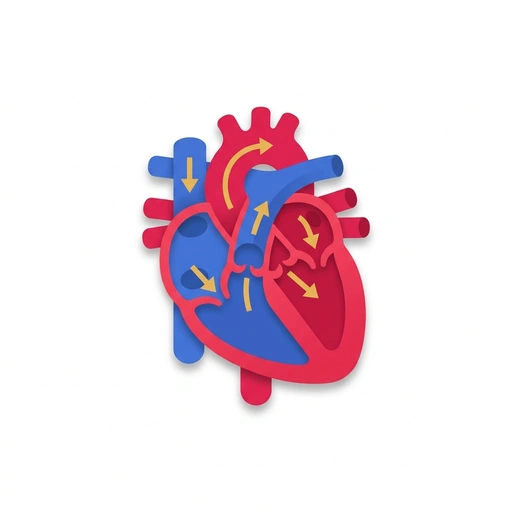
Heart Anatomy and Physiology
Build a rigorous, exam-ready mental model of how the human heart pumps, conducts, and regulates blood. Master the full circuit of blood flow, electrical pacemaking, cardiac output formulas, and clinical perfusion assessments.
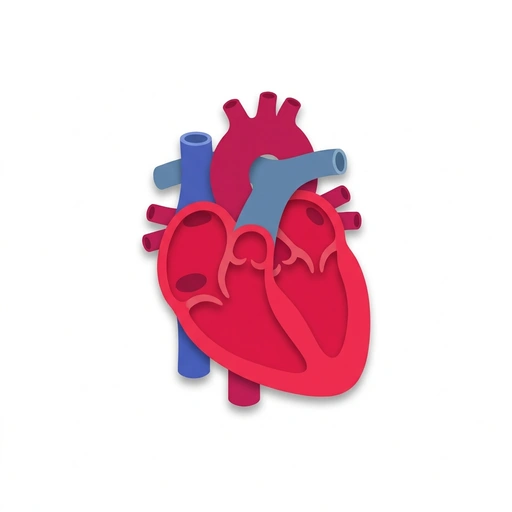
Functional Anatomy of the Heart
Move beyond basic chambers and diagrams to understand how cardiac architecture drives pressure, flow, and electrical signaling. Learn to connect valve structure to heart sounds, ventricular geometry to pumping mechanics, and coronary maps to ischemia risks.
Clinical Anatomy and Physiology
Bridge foundational human biology and medical practice. Connect gross anatomical architecture and systemic physiology directly to bedside physical diagnosis and clinical signs.
Advanced Pathophysiology for Ontario PCPs
A mastery-level exploration of the physiological breakdowns in respiratory, cardiac, and neurological systems, tailored for the Ontario Primary Care Paramedic scope.
Human Anatomy for Nursing Practice
Master the anatomical structures, spatial relationships, and physiological landmarks most frequently tested on nursing exams and licensing boards. Bridge structural blueprints directly to clinical assessments, auscultation zones, and common nursing interventions.
Human Anatomy Foundations
Build the structural vocabulary and physiological concepts you need before walking into your first anatomy and physiology lab. Decode directional terms, master tissue architecture, and map major regulatory systems.
Start Cardiovascular Physiology for Nursing Practice today.
Download Tomo, search Cardiovascular Physiology for Nursing Practice, and play your first lesson in under a minute.