
Clinical Chest Examination
Learn to perform an accurate respiratory examination, recognize pathological chest sounds, and synthesize clinical findings into actionable diagnoses.
Like Duolingo, but for Clinical Chest Examination. Tomo turns the whole topic into a game you play five minutes a day, until it actually sticks.
27 levels across 3 sections, about 54 minutes end to end, roughly 11 days at five minutes a day. It moves through First Impressions and Peripheral Clues, The Physical Chest Exam: Technique and Sensation, and Diagnostic Synthesis and Emergency Escalation. It assumes you already know the basics.
Free forever · No credit card · iPhone & Android
Key ideas in Clinical Chest Examination
- Patients consciously alter rate and tidal volume if told breathing is being watched
- Retaining radial pulse position masks observation of thoracic excursion
- A full 30 to 60-second count is required to catch subtle tachypnea or Cheyne-Stokes
- Speech continuity reveals ventilatory reserve much faster than pulse oximetry lag
- Single-word dyspnea marks extreme respiratory muscle fatigue and imminent arrest
- Normal pulse oximetry can falsely reassure during acute work-of-breathing crises
- Tripoding fixes the pectoral girdle to maximize accessory muscle leverage
- Sternocleidomastoid contraction signals diaphragm exhaustion and high ventilatory load
- Suprasternal and intercostal indrawing reflects large negative intrathoracic pressures
- Inspiratory stridor denotes extrathoracic upper airway compromise like epiglottitis
- Audible expiratory wheeze reflects intrathoracic small-airway narrowing and trapping
- Stertor or rattles arise from secretions fluttering in the pharynx or trachea
- Nasal cannulas deliver low-flow baseline FiO2 between roughly 24% and 40%
- Simple open face masks supply intermediate FiO2 ranging from 40% to 60%
- Non-rebreather reservoir masks deliver high-flow emergency FiO2 approaching 85-90%
- Hyperacute dyspnea over minutes indicates sudden mechanical or vascular events like embolism or pneumothorax
You've tried the other tabs
Thirty open tabs. Four facts you actually kept.
You watched. You nodded. By Sunday it was gone.
One answer, then back to scrolling.
Eight weeks. You meant to finish. You didn't.
Tomo gives Clinical Chest Examination the Duolingo treatment: levels, streaks, and quick quizzes that test what you just learned. That game loop is what the tabs above never had, so it's the one you actually finish.
Here's what playing it feels like
A real question from this course. Take your best guess.
Why do clinicians keep their fingers on a patient's wrist pulse after they finish counting heartbeats?
Get it right to open this lesson and 26 more in the app.
Where Clinical Chest Examination takes you
- 1
First Impressions and Peripheral Clues
- The End-of-Bed Assessment
- Targeted Respiratory History Taking
- Peripheral Signs: Hands, Face, and Neck
- 2
The Physical Chest Exam: Technique and Sensation
- Thoracic Inspection and Palpation
- Percussion: Mapping Thoracic Density
- Auscultation: Breath Sounds and Added Noises
- 3
Diagnostic Synthesis and Emergency Escalation
- Pattern Recognition: The Classic Chest Syndromes
- Red Flags, Escalation, and Next Steps
3 sections · 8 units · 27 levels. Built to play, not to enroll.
Tomo is in ChatGPT
Tomo is also a ChatGPT plugin: the same playable courses, built and played inside your chat.
Add Tomo to ChatGPT- What to ask
- “Make me a Tomo course on black holes.” “Turn this chat into a Tomo course.”
- What you get
- Quick questions with instant feedback, hearts and stars, ready to play in about a minute.
- Where it goes
- No sign-up to start. Connect your Tomo account and your streak carries on in the app.
You pick the voice
Clinical Chest Examination is taught in the Professor style: clear, structured, thorough. Want a different feel? In the app you can spin up the same topic in any of Tomo's teaching styles. Same facts, totally different vibe.
More Health on Tomo
Integrated Clinical Assessment
Bridge the gap between raw examination maneuvers and smart diagnostic reasoning. Learn to gather focused histories, target physical exams using likelihood ratios, and build shared care plans.
Thinking Like a Doctor
Step into the shoes of a medical student to learn how doctors gather clues, solve diagnostic puzzles, and treat the human body as a complex system.
Pediatric Nursing Memory Hooks
Lock in high-yield pediatric nursing concepts, tricky medical terminology, and classic board exam patterns. Master developmental milestones, cardiac defects, and emergency triage with durable memory frameworks.
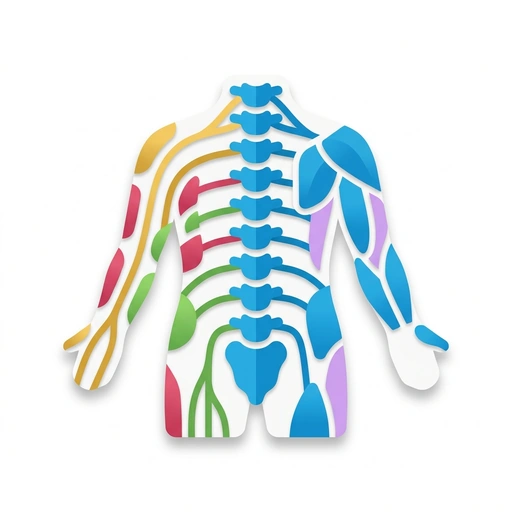
Mapping Dermatomes and Myotomes
Learn the body's hidden electrical blueprint. Decode numbness, tingling, and weakness by tracing nerve roots straight to the spine.
Clinical Anatomy and Physiology
Bridge foundational human biology and medical practice. Connect gross anatomical architecture and systemic physiology directly to bedside physical diagnosis and clinical signs.
The Pilates Pelvic Floor
Bridge the gap between anatomy diagrams and real movement cues. Learn how the pelvic floor anchors the powerhouse, responds to breath, and transforms classic Pilates repertoire on the mat and reformer.
Start Clinical Chest Examination today.
Download Tomo, search Clinical Chest Examination, and play your first lesson in under a minute.