
Electronics: Making Real Circuits Work
Bridge the gap between theoretical schematics and physical hardware that actually functions as intended. Learn to tame power supply sag, drive heavy loads without damaging components, condition noisy signals, and isolate elusive circuit faults.
Like Duolingo, but for Electronics: Making Real Circuits Work. Tomo turns the whole topic into a game you play five minutes a day, until it actually sticks.
A short one: 11 levels across 2 sections, about 22 minutes end to end, roughly 4 days at five minutes a day. It moves through Powering and Switching Real Loads and Conditioning Signals and Tracking Down Faults. It assumes you already know the basics.
Free forever · No credit card · iPhone & Android

Key ideas in Electronics: Making Real Circuits Work
- Real power traces possess parasitic inductance and resistance that resist sudden current changes.
- Sudden load spikes drop rail voltage below an IC's minimum operating threshold, causing brownouts.
- Total power supply amp ratings describe steady-state capability, not sub-microsecond transient response.
- PCB trace length introduces parasitic inductance that chokes off fast current delivery.
- Decoupling capacitors must sit immediately adjacent to chip power pins to bypass trace inductance.
- High-frequency switching noise cannot be shunted away if capacitor loop area is too large.
- Small ceramic capacitors respond in nanoseconds due to low equivalent series resistance (ESR).
- Large electrolytic capacitors hold significant charge reservoirs to buffer lower-frequency sags.
- Paralleling both types covers both microsecond transients and high-frequency edge noise.
- Return currents running across shared ground impedance produce a non-zero voltage spike at chip ground.
- Simultaneous switching of multiple outputs dumps rapid current into ground pins, triggering bounce.
- Ground bounce shifts the chip's internal reference, turning a real LOW into a false logic HIGH.
- A BJT must receive enough base current to enter saturation, dropping collector-emitter voltage near zero
- Insufficient base current leaves a BJT in its linear active region where high voltage drops create severe heat
- Decreasing the series base resistor value increases base current to drive the transistor fully into saturation
- Gate threshold voltage is only where conduction barely begins, typically at microamps of drain current
You've tried the other tabs
Thirty open tabs. Four facts you actually kept.
You watched. You nodded. By Sunday it was gone.
One answer, then back to scrolling.
Eight weeks. You meant to finish. You didn't.
Tomo gives Electronics: Making Real Circuits Work the Duolingo treatment: levels, streaks, and quick quizzes that test what you just learned. That game loop is what the tabs above never had, so it's the one you actually finish.
Here's what playing it feels like
A real question from this course. Take your best guess.
Your microcontroller restarts the instant a big motor clicks on. What happened?
Get it right to open this lesson and 10 more in the app.
Where Electronics: Making Real Circuits Work takes you
- 1
Powering and Switching Real Loads
- Taming Power Rails and Voltage Sag
- Switching Power with Transistors and MOSFETs
- 2
Conditioning Signals and Tracking Down Faults
- Conditioning Signals Without Loading the Source
- Isolating Circuit Faults with Systematic Probing
2 sections · 4 units · 11 levels. Built to play, not to enroll.
Tomo is in ChatGPT
Tomo is also a ChatGPT plugin: the same playable courses, built and played inside your chat.
Add Tomo to ChatGPT- What to ask
- “Make me a Tomo course on black holes.” “Turn this chat into a Tomo course.”
- What you get
- Quick questions with instant feedback, hearts and stars, ready to play in about a minute.
- Where it goes
- No sign-up to start. Connect your Tomo account and your streak carries on in the app.
You pick the voice
Electronics: Making Real Circuits Work is taught in the Explain Like I'm 5 style: no big words. promise.. Want a different feel? In the app you can spin up the same topic in any of Tomo's teaching styles. Same facts, totally different vibe.
More Technology on Tomo
Building Working Circuits
Bridge the gap between textbook schematics and hardware that actually turns on and runs reliably. Learn to select the right components, tame noise and power drops, and diagnose real circuits on the bench.
How Electronics Work
Learn how electricity moves through circuits, powers components, and responds to controls. Build real intuition for voltage, resistance, and transistors through practical circuit design. Go from a bare battery to building responsive, sensor-driven hardware.

How Electrical Circuits Work
Demystify electricity by building, measuring, and troubleshooting real circuits. Learn how voltage, current, and resistance interact to power everyday devices safely.
Everyday Electronics in Action
Discover how everyday gadgets really work by tracing the path of electricity through loops, resistors, capacitors, and switches. Build a practical mental model of basic circuits using real-world examples.
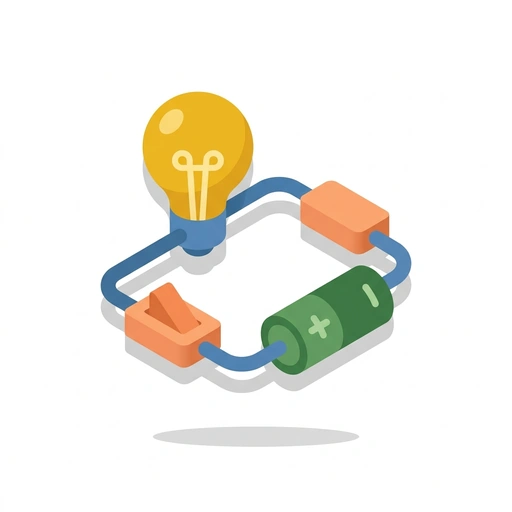
How Electric Circuits Work
Learn how electricity moves through everyday devices and gain the confidence to build your own circuits. From breadboarding components to debugging with a multimeter, discover the practical rules that bring hardware to life.
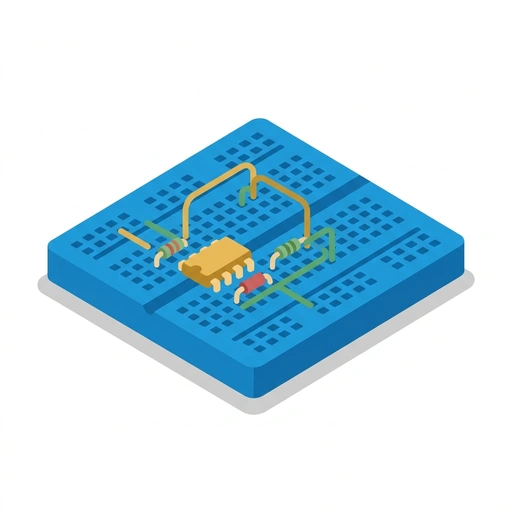
Hands-On Electronics
Build, control, and troubleshoot real physical circuits without frying components. Move from lighting your first LED safely to switching power with transistors and hunting down dead connections with a multimeter.
Start Electronics: Making Real Circuits Work today.
Download Tomo, search Electronics: Making Real Circuits Work, and play your first lesson in under a minute.