
Gym Science: Muscle, Mind, and Fuel
Like Duolingo, but for Gym Science: Muscle, Mind, and Fuel. Tomo turns the whole topic into a game you play five minutes a day, until it actually sticks.
For the part of you with thirty open tabs that never became anything.
24 levels across 3 sections, about 48 minutes end to end, roughly 10 days at five minutes a day. It moves through Tuning the Lift: Biomechanics in Practice, Fuel and Adaptation: Applied Gym Nutrition, and The Lifter's Mind: Psychology and Programming. It assumes you already know the basics.
Free forever · No credit card · iPhone & Android

Key ideas in Gym Science: Muscle, Mind, and Fuel
- Elevating the humerus overhead places the long head of the triceps in a lengthened, high-tension position.
- Changing joint angle alters muscle resting length and shifts leverage along the active length-tension curve.
- Overhead elbow extension loads the long head far more than pressing down with elbows pinned at the ribs.
- Diaphragmatic inhalation expands the lower torso in 360 degrees before muscle contraction.
- Valsalva contraction against a closed glottis pressurizes the abdominal cavity against the spine.
- Tensing the rectus abdominis and obliques locks the pelvis and ribcage into a rigid platform.
- Bands add tension as joint leverages improve toward the top of squats and bench presses.
- Free-weight dumbbell flies lose all pec tension at the top because gravity acts vertically.
- Cables maintain continuous perpendicular resistance across an entire arc of motion.
- External focus on an implement or environment maximizes motor unit recruitment efficiency and force output.
- Internal focus on target muscle contraction increases local EMG activity but reduces peak force and speed.
- Constrained action occurs when overthinking internal muscle mechanics disrupts movement fluidity.
- A multi-second static pause dissipates elastic energy stored in tendons during the eccentric phase.
- Without the stretch reflex assist, active contractile fibers must recruit more motor units to start movement.
- Momentum at the turnaround reduces mechanical tension demand on the target muscle fibers.
- A moment arm is the horizontal distance between the load's line of pull and the joint axis.
You've tried the other tabs
Thirty open tabs. Four facts you actually kept.
You watched. You nodded. By Sunday it was gone.
One answer, then back to scrolling.
Eight weeks. You meant to finish. You didn't.
Tomo gives Gym Science: Muscle, Mind, and Fuel the Duolingo treatment: levels, streaks, and quick quizzes that test what you just learned. That game loop is what the tabs above never had, so it's the one you actually finish.
Here's what playing it feels like
A real question from this course. Take your best guess.
What happens inside a muscle when you alter your starting joint angle for an exercise?
Get it right to open this lesson and 23 more in the app.
Where Gym Science: Muscle, Mind, and Fuel takes you
Unlock the real mechanics behind muscle growth, training psychology, and performance nutrition. Bridge the gap between gym-floor intuition and exercise physiology to make every rep and meal count.
- 1
Tuning the Lift: Biomechanics in Practice
- Immediate Adjustments for Mechanical Tension
- Joint Angles and Lever Mechanics
- Hypertrophy Physiology and Motor Unit Recruitment
- 2
Fuel and Adaptation: Applied Gym Nutrition
- Protein Synthesis and Macronutrient Allocation
- Peri-Workout Hydration and Energy Systems
- Recovery Physiology and Systemic Repair
- 3
The Lifter's Mind: Psychology and Programming
- Perceived Exertion and Central Drive
- Autoregulation and Managing Fatigue
3 sections · 8 units · 24 levels. Built to play, not to enroll.
You pick the voice
Gym Science: Muscle, Mind, and Fuel is taught in the The Professor style: clear, structured, thorough. Want a different feel? In the app you can spin up the same topic in any of Tomo's teaching styles. Same facts, totally different vibe.
More Sports on Tomo
Whole-Body EMS with Miha Bodytec
Bridge clinical neuromuscular physiology and advanced WB-EMS programming. Learn precise current parameter manipulation, motor unit recruitment mechanics, and rigorous safety protocols for high-intensity training.

The Strategic Athlete: Thinking Like a Pro
Move beyond basic drills and start reading the game like a veteran. Learn to manipulate space, manage your energy, and outsmart opponents using the hidden patterns of high-level play.
Mastering the Open Road
Move beyond basic steering and learn to read the road like a pro. Master advanced maneuvers, predictive safety, and the hidden mechanics that keep you in control during any situation.

Mastering the Wind: Advanced Sail Trim
Move beyond basic steering and learn how to shape your sails for maximum power. Discover how to read the water, adjust for speed, and fix common rigging mistakes that slow you down.
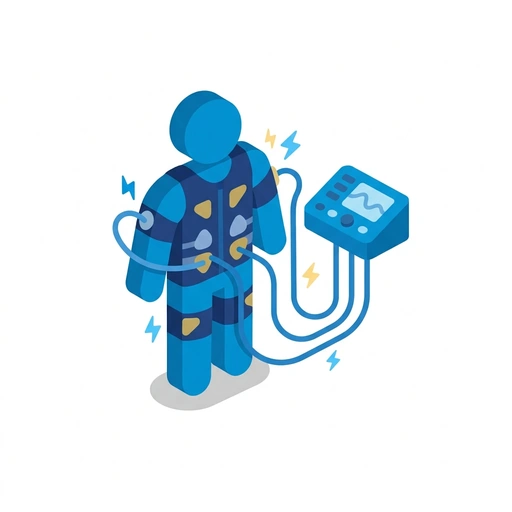
EMS Training with Miha Bodytec
Learn to run safe, professional whole-body EMS sessions using Miha Bodytec systems. Master vest fitting, real-time impulse modulation, dynamic exercise cues, and clinical safety protocols.

Stronger Steps: Gym for Dancers
Stop struggling with shaky balances and soft knees. Master the gym routines that turn wobbly movements into powerful, sharp performances with better stamina.
Start Gym Science: Muscle, Mind, and Fuel today.
Download Tomo, search Gym Science: Muscle, Mind, and Fuel, and play your first lesson in under a minute.