
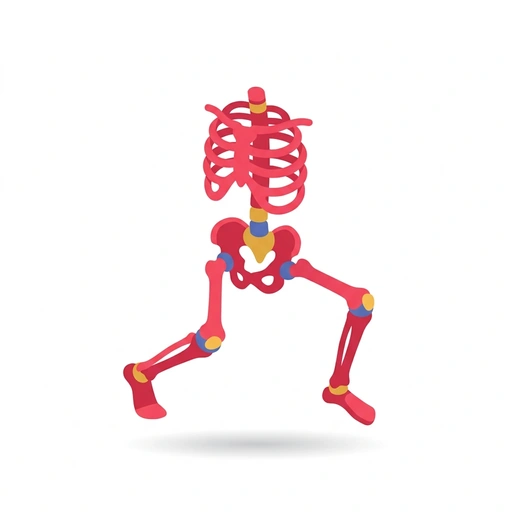
Functional Anatomy in Sport
Decode the biomechanical language used by athletic trainers, physical therapists, and sports medicine pros. Learn how joints, planes, and kinetic chains work under real athletic loads.
Like Duolingo, but for Functional Anatomy in Sport. Tomo turns the whole topic into a game you play five minutes a day, until it actually sticks.
A short one: 12 levels across 2 sections, about 24 minutes end to end, roughly 5 days at five minutes a day. It moves through Speaking the Language of Movement and Joint Mechanics Under Athletic Load. It assumes you already know the basics.
Free forever · No credit card · iPhone & Android

Key ideas in Functional Anatomy in Sport
- Sagittal actions (flexion/extension) dominate linear gym lifting.
- Frontal control resists lateral collapse (valgus) during cutting.
- Transverse rotation drives sudden cutting and non-contact tear risks.
- Proximal bracing of the deep core provides a rigid anchor point.
- Large hip and pelvic drivers transfer kinetic torque upward.
- Distal limbs uncoil at peak velocity only after central segments lock.
- Closed-chain movements anchor the distal end, forcing co-contraction of joint stabilizers.
- Open-chain leg extensions isolate the quadriceps without multi-joint stabilization.
- Weight-bearing foot contact stimulates axial joint compressive stability.
- Medial displacement describes inward movement toward the central body midline.
- Anterior tilt or displacement describes forward movement toward the front.
- Knee valgus collapse and pelvic unleveling occur in the frontal plane.
- Tibial or femoral internal rotation occurs in the transverse plane.
- Forward lean and lumbar hyperextension occur solely in the sagittal plane.
- Agonists contract while Ia interneurons inhibit antagonist motor pools.
- Antagonists lengthen under tension near end-range to brake the moving limb.
You've tried the other tabs
Thirty open tabs. Four facts you actually kept.
You watched. You nodded. By Sunday it was gone.
One answer, then back to scrolling.
Eight weeks. You meant to finish. You didn't.
Tomo gives Functional Anatomy in Sport the Duolingo treatment: levels, streaks, and quick quizzes that test what you just learned. That game loop is what the tabs above never had, so it's the one you actually finish.
Here's what playing it feels like
A real question from this course. Take your best guess.
When you plant your foot and push off sideways, what is your body working hard to prevent?
Get it right to open this lesson and 11 more in the app.
Where Functional Anatomy in Sport takes you
- 1
Speaking the Language of Movement
- Motion Planes and Kinetic Chains
- Muscle Teams and Contraction Dynamics
- 2
Joint Mechanics Under Athletic Load
- The Lower Kinetic Chain: Hip, Knee, and Foot
- The Upper Kinetic Chain: Shoulder and Spine
2 sections · 4 units · 12 levels. Built to play, not to enroll.
You pick the voice
Functional Anatomy in Sport is taught in the The Bestie style: your friend who just gets it. Want a different feel? In the app you can spin up the same topic in any of Tomo's teaching styles. Same facts, totally different vibe.
More Sports on Tomo
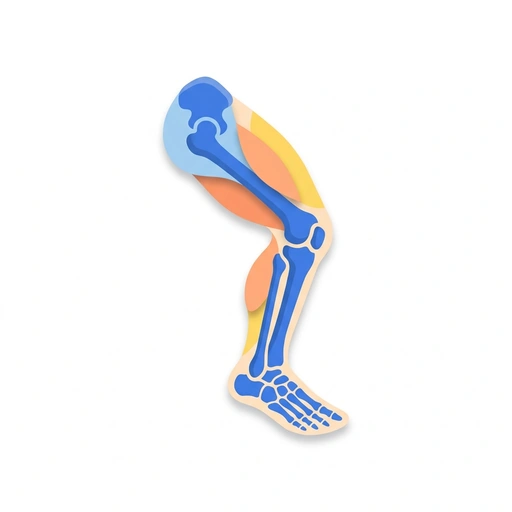
Anatomy for Athletic Movement
Bridge the gap between textbook anatomy and high-performance sport. Learn the functional terminology of planes, muscular roles, connective tissue mechanics, and kinetic chains to talk and train like a sports clinician.
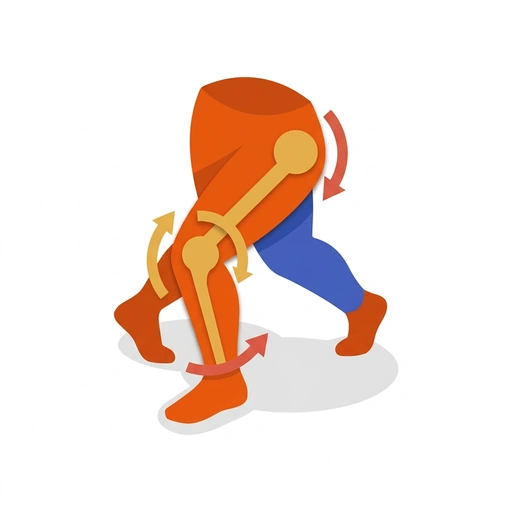
Lower Body Mechanics
Upgrade your squats, hinges, and lunges by understanding joint angles, pelvic control, and ground contact. Eliminate lower back strain and knee pain by fixing the subtle power leaks in your stance.
Western Saddle Fitting: The Balanced Tree
Go beyond the basics of cinching up to understand the complex geometry of the western tree, equine anatomy, and how to ensure your horse's long-term soundness through a perfect fit.
Horseback Riding Basics
Discover the fundamentals of balanced riding, compare classic English and Western styles, and see how the versatile American Quarter Horse brings both disciplines to life.
Whole-Body EMS with Miha Bodytec
Bridge clinical neuromuscular physiology and advanced WB-EMS programming. Learn precise current parameter manipulation, motor unit recruitment mechanics, and rigorous safety protocols for high-intensity training.
Gym Science: Muscle, Mind, and Fuel
Unlock the real mechanics behind muscle growth, training psychology, and performance nutrition. Bridge the gap between gym-floor intuition and exercise physiology to make every rep and meal count.
Start Functional Anatomy in Sport today.
Download Tomo, search Functional Anatomy in Sport, and play your first lesson in under a minute.