
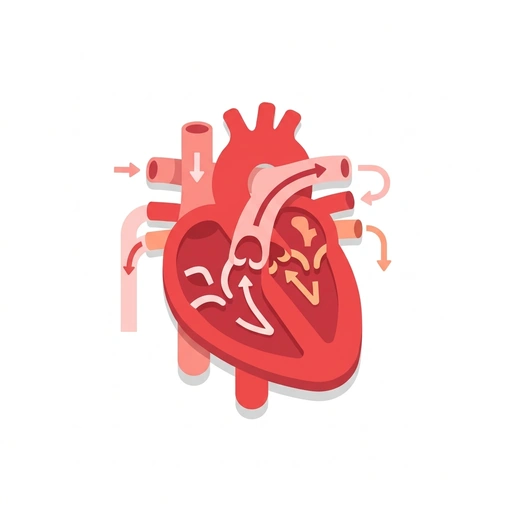
How the Body Balances Itself
Discover how your body works on autopilot to keep you alive and functioning. Learn the real-time feedback loops your organs, nerves, and hormones use to regulate breathing, blood flow, hydration, and body heat.
Like Duolingo, but for How the Body Balances Itself. Tomo turns the whole topic into a game you play five minutes a day, until it actually sticks.
A short one: 12 levels across 2 sections, about 24 minutes end to end, roughly 5 days at five minutes a day. It moves through The Body Under Demand and The Invisible Stabilizers. It starts from scratch.
Free forever · No credit card · iPhone & Android
Key ideas in How the Body Balances Itself
- Working skeletal muscles release chemical signals that widen local blood vessels to quickly increase oxygen and glucose delivery
- The sympathetic nervous system narrows blood vessels feeding resting organs like the digestive tract to shunt blood to active limbs
- Blood flow to vital control centers like the brain stays relatively constant even during peak exertion
- Metabolizing cells produce carbon dioxide, which turns into carbonic acid and lowers blood pH
- Special sensors in the brainstem and major arteries are far more sensitive to rising acidity and CO2 than to declining oxygen levels
- During normal exertion, arterial oxygen levels remain largely adequate, so CO2 accumulation drives the urge to breathe
- The central nervous system anticipates physical effort, triggering an autonomic feedforward response before movement occurs
- Sympathetic nerve signals and early adrenaline release elevate heart rate and dilate bronchioles in the lungs ahead of time
- This preparatory response prevents a lag in fuel and oxygen delivery at the instant work starts
- When exertion outpaces aerobic energy production, rapid anaerobic breakdown generates hydrogen ions and metabolic waste that make the muscle acidic
- This sharp drop in local pH and accumulation of metabolites irritate sensory nerve endings, causing the familiar burn
- Lactate is actually a usable fuel cleared quickly by cells, not a corrosive toxin trapped in the tissue
- When intense exertion stops, metabolic demand does not instantly fall to resting levels
- The body continues taking in extra oxygen (excess post-exercise oxygen consumption) to restock cellular ATP and phosphocreatine reserves and process metabolic byproducts
- Ventilation only drops back down to baseline once these chemical fuels are replenished and normal blood chemistry is restored
- The autonomic nervous system regulates heart rate and organs continuously without conscious effort
You've tried the other tabs
Thirty open tabs. Four facts you actually kept.
You watched. You nodded. By Sunday it was gone.
One answer, then back to scrolling.
Eight weeks. You meant to finish. You didn't.
Tomo gives How the Body Balances Itself the Duolingo treatment: levels, streaks, and quick quizzes that test what you just learned. That game loop is what the tabs above never had, so it's the one you actually finish.
Here's what playing it feels like
A real question from this course. Take your best guess.
When you suddenly sprint for a bus, what happens to blood flow around your stomach and intestines?
Get it right to open this lesson and 11 more in the app.
Where How the Body Balances Itself takes you
- 1
The Body Under Demand
- Surviving Sudden Effort
- The Body's Alarm System
- 2
The Invisible Stabilizers
- Guarding Water and Fuel
- Managing Heat and Fever
2 sections · 4 units · 12 levels. Built to play, not to enroll.
Tomo is in ChatGPT
Tomo is also a ChatGPT plugin: the same playable courses, built and played inside your chat.
Add Tomo to ChatGPT- What to ask
- “Make me a Tomo course on black holes.” “Turn this chat into a Tomo course.”
- What you get
- Quick questions with instant feedback, hearts and stars, ready to play in about a minute.
- Where it goes
- No sign-up to start. Connect your Tomo account and your streak carries on in the app.
You pick the voice
How the Body Balances Itself is taught in the Bestie style: your friend who just gets it. Want a different feel? In the app you can spin up the same topic in any of Tomo's teaching styles. Same facts, totally different vibe.
More Science on Tomo
How the Human Body Works
Discover the mechanical and chemical principles that keep your body alive and moving. Learn how organs coordinate behind the scenes, how muscles generate force, and how your system automatically balances itself.
How the Human Body Works
Discover how your body functions as an interconnected living machine. Explore the mechanics of bones and muscles, the heart and lungs' oxygen highway, digestive fuel conversion, and the nervous system's command center.
Mapping the Human Body
Discover how the living human body is built, organized, and engineered to function. Learn to read anatomical landmarks, understand how joints and muscles generate motion, and trace how internal organs coordinate life beneath your skin.
The Science of Athletic Energy
Discover the physics, math, and metabolism behind human athletic performance. Learn how your body converts food calories into mechanical watts, why speed demands exponential power, and how to manage fuel and heat during exertion.
How Body Systems Interlock
Move beyond isolated anatomy to discover how the human body coordinates its major systems under load. Learn how the nervous, cardiovascular, renal, and respiratory networks constantly negotiate trade-offs to keep you functional and stable.
Fluid Engineering in Practice
Bridge the gap between textbook fluid physics and working piping systems. Learn to calculate practical friction losses, match pumps to system resistance curves, and prevent catastrophic cavitation and water hammer.
Start How the Body Balances Itself today.
Download Tomo, search How the Body Balances Itself, and play your first lesson in under a minute.