
Human Anatomy for Patient Care
Learn the essential structures and functional systems of the human body through a practical clinical lens. Understand how organs interact, where vital landmarks sit, and why anatomical knowledge forms the foundation of frontline healthcare.
Like Duolingo, but for Human Anatomy for Patient Care. Tomo turns the whole topic into a game you play five minutes a day, until it actually sticks.
22 levels across 3 sections, about 44 minutes end to end, roughly 9 days at five minutes a day. It moves through Navigating the Living Body; Vital Systems in Real Time; and Processing, Filtering, and Protection. It starts from scratch.
Free forever · No credit card · iPhone & Android
Key ideas in Human Anatomy for Patient Care
- Anatomical position always uses the patient's own left and right, never the observer's viewpoint
- When facing a patient, the patient's right side directly faces your left side
- Using the patient's orientation prevents dangerous surgical and charting errors
- Surface landmarks are prominent bones and skin folds that sit directly over key vessels and organs
- Feeling the bony wrist below the thumb reveals the radial pulse without ultrasound
- The hip's anterior bony points and the sternum act as physical reference anchors across the body
- Proximal means closer to the limb's attachment to the torso, while distal means farther out toward fingers or toes
- Anterior refers toward the front surface of the body, and posterior refers toward the back
- Superficial means toward the outside surface, whereas deep means internal
- Dividing the abdomen into four quadrants (RUQ, LUQ, RLQ, LLQ) using the belly button as the center helps isolate internal organs
- The appendix sits consistently in the right lower quadrant (RLQ)
- The gallbladder and liver sit in the upper right, while the spleen and stomach occupy the upper left
- The axial skeleton forms the central axis (skull, ribs, spine) specifically built to enclose delicate organs
- The appendicular skeleton comprises the limbs and their girdles, adapted primarily for locomotion and manipulation
- Bones are dynamic living tissues that act as the body's primary mineral reservoir, releasing or storing calcium as needed
- Red bone marrow inside bones actively manufactures red and white blood cells
You've tried the other tabs
Thirty open tabs. Four facts you actually kept.
You watched. You nodded. By Sunday it was gone.
One answer, then back to scrolling.
Eight weeks. You meant to finish. You didn't.
Tomo gives Human Anatomy for Patient Care the Duolingo treatment: levels, streaks, and quick quizzes that test what you just learned. That game loop is what the tabs above never had, so it's the one you actually finish.
Here's what playing it feels like
A real question from this course. Take your best guess.
You stand directly in front of someone to check their shoulder. Which side of their body lines up with your own left hand?
Get it right to open this lesson and 21 more in the app.
Where Human Anatomy for Patient Care takes you
- 1
Navigating the Living Body
- Mapping the Body and Finding Landmarks
- The Structural Framework: Bones and Joint Mechanics
- 2
Vital Systems in Real Time
- Circulating Blood and Pressure: The Cardiovascular Loop
- Ventilation and Gas Exchange: The Respiratory Highway
- Signaling and Reflexes: The Nervous Network
- 3
Processing, Filtering, and Protection
- Metabolism and Fluid Balance: Digestion and Excretion
- The Defensive Boundary: Integumentary and Lymphatic Systems
3 sections · 7 units · 22 levels. Built to play, not to enroll.
Tomo is in ChatGPT
Tomo is also a ChatGPT plugin: the same playable courses, built and played inside your chat.
Add Tomo to ChatGPT- What to ask
- “Make me a Tomo course on black holes.” “Turn this chat into a Tomo course.”
- What you get
- Quick questions with instant feedback, hearts and stars, ready to play in about a minute.
- Where it goes
- No sign-up to start. Connect your Tomo account and your streak carries on in the app.
You pick the voice
Human Anatomy for Patient Care is taught in the Bestie style: your friend who just gets it. Want a different feel? In the app you can spin up the same topic in any of Tomo's teaching styles. Same facts, totally different vibe.
More Health on Tomo
The Human Body in Care Work
Understand how the human body functions, breaks down, and heals through the practical lens of caregiving. Learn to interpret vital signals, safeguard fragile skin, and support mobility with anatomical confidence.
The Human Body: Systems and Survival
A comprehensive journey through human anatomy and physiology, designed for the aspiring medical professional. Learn how the body maintains balance, responds to stress, and functions as a complex biological machine.
Anatomy and Physiology for Nursing
Build a working understanding of the human body and how its organ systems cooperate to keep us alive. Tailored for nursing entrance exams like the TEAS and HESI, this course covers high-yield anatomy, physiological feedback loops, and cellular mechanisms.
Clinical Anatomy: The Body in Action
Master the structural logic of the human body through the lens of clinical practice. Learn to visualize internal systems and speak the precise language used by medical professionals to describe health and injury.
How Your Body Fits Together
Discover the brilliant engineering beneath your skin. Learn how your bones, muscles, organs, and nerves connect and collaborate to keep you moving, breathing, and alive.
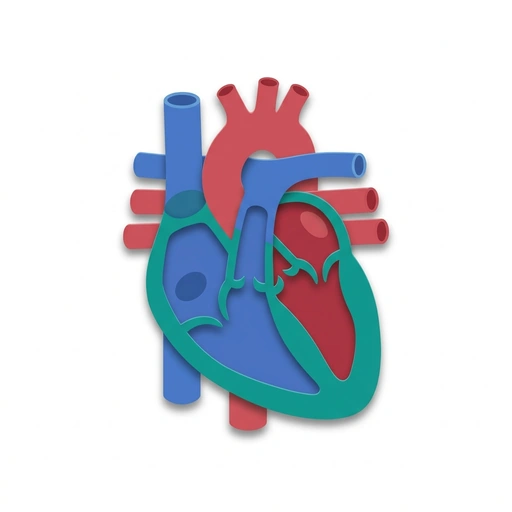
Anatomy and Physiology for Patient Care
Understand how the human body functions as an interconnected system. Learn the core physiological concepts and organ systems that underpin vital signs, fluid balance, and clinical nursing assessments.
Start Human Anatomy for Patient Care today.
Download Tomo, search Human Anatomy for Patient Care, and play your first lesson in under a minute.