
Mapping Your Own Body
Learn basic human anatomy by reading the physical landmarks, levers, and cavities of your own living frame. Discover how bones act as structural bridges, why muscles work strictly in pulling pairs, and where your vital organs actually sit.
Like Duolingo, but for Mapping Your Own Body. Tomo turns the whole topic into a game you play five minutes a day, until it actually sticks.
A short one: 12 levels across 2 sections, about 24 minutes end to end, roughly 5 days at five minutes a day. It moves through The Movable Frame and The Engine Within. It starts from scratch.
Free forever · No credit card · iPhone & Android
Key ideas in Mapping Your Own Body
- Certain bones sit right under the skin with almost no muscle covering them, making them reliable surface landmarks
- The collarbone, the elbow point, and the upper rim of the hip can be felt directly from the outside
- Bones deeply cushioned by thick muscle, like the femur in the thigh, cannot be palpated directly along their shaft
- The human spine naturally alternates inward and outward curves from neck to lower back
- An S-shaped spine behaves like a flexible spring, compressing and rebounding to cushion vertical jolts
- A straight, rigid pillar would transmit every impact directly into the skull and joints
- The rib cage is not a rigid, solid box of fused bone
- Most ribs connect to the central breastbone via flexible strips of cartilage
- This cartilage hinge allows the ribs to swing upward and outward to let the lungs fill with air
- The pelvis acts as a structural basin that bridges the upper and lower body
- The base of the spine rests in the center of the pelvic ring
- The pelvis divides the downward load and channels it outward into the left and right hip sockets
- Bony projections give tendons a raised anchor point away from the pivot center of a joint
- The cartilage hinge allows the ribs to swing upward and outward to let the lungs fill with air
- Increasing the distance from the pivot gives muscles greater mechanical leverage
- Without these bumps, tendons would pull almost parallel to the bone, making movement sluggish and weak
You've tried the other tabs
Thirty open tabs. Four facts you actually kept.
You watched. You nodded. By Sunday it was gone.
One answer, then back to scrolling.
Eight weeks. You meant to finish. You didn't.
Tomo gives Mapping Your Own Body the Duolingo treatment: levels, streaks, and quick quizzes that test what you just learned. That game loop is what the tabs above never had, so it's the one you actually finish.
Here's what playing it feels like
A real question from this course. Take your best guess.
Which of these spots can you easily touch right under the surface from the outside?
Get it right to open this lesson and 11 more in the app.
Where Mapping Your Own Body takes you
- 1
The Movable Frame
- Finding Your Skeletal Landmarks
- How Joints Permit and Restrict Motion
- 2
The Engine Within
- How Muscles and Tendons Generate Force
- Mapping the Internal Cavities
2 sections · 4 units · 12 levels. Built to play, not to enroll.
Tomo is in ChatGPT
Tomo is also a ChatGPT plugin: the same playable courses, built and played inside your chat.
Add Tomo to ChatGPT- What to ask
- “Make me a Tomo course on black holes.” “Turn this chat into a Tomo course.”
- What you get
- Quick questions with instant feedback, hearts and stars, ready to play in about a minute.
- Where it goes
- No sign-up to start. Connect your Tomo account and your streak carries on in the app.
You pick the voice
Mapping Your Own Body is taught in the Professor style: clear, structured, thorough. Want a different feel? In the app you can spin up the same topic in any of Tomo's teaching styles. Same facts, totally different vibe.
More Science on Tomo
Your Body's Blueprint
Discover the incredible engineering of the human body, from the electrical signals in your brain to the living architecture of your bones.
How the Human Body Is Built
Decode the architecture beneath your skin. Learn to identify major skeletal landmarks, trace how muscles pull against joints, and understand how internal organs are organized into working compartments.
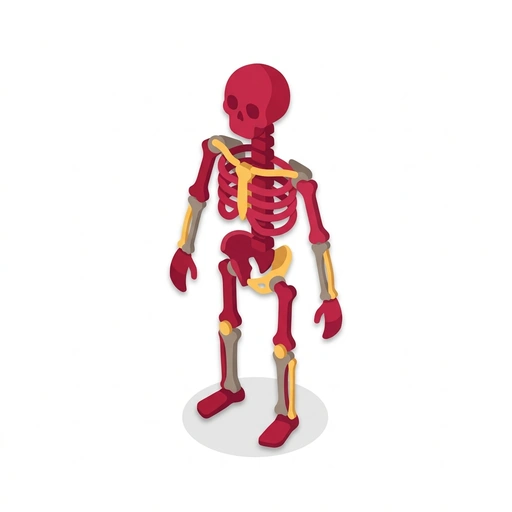
How the Human Body Fits Together
Explore the elegant architecture of your own body from the inside out. Learn how your skeleton, muscles, circulation, and vital organs coordinate to keep you upright, moving, and alive.
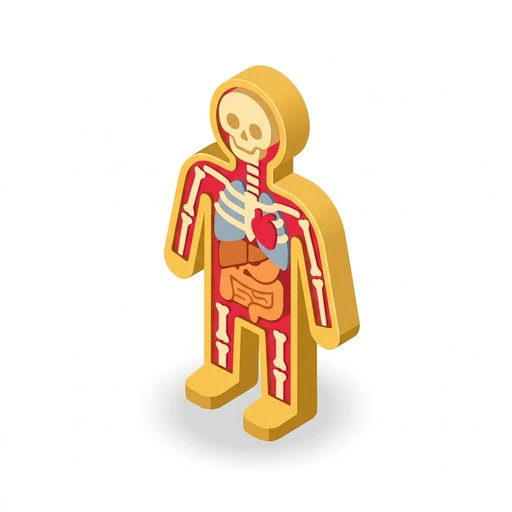
Anatomy of the Human Body
Discover how your bones, muscles, and internal systems coordinate every breath and step. Understand the physical machinery that powers daily movement, circulation, and sensation.
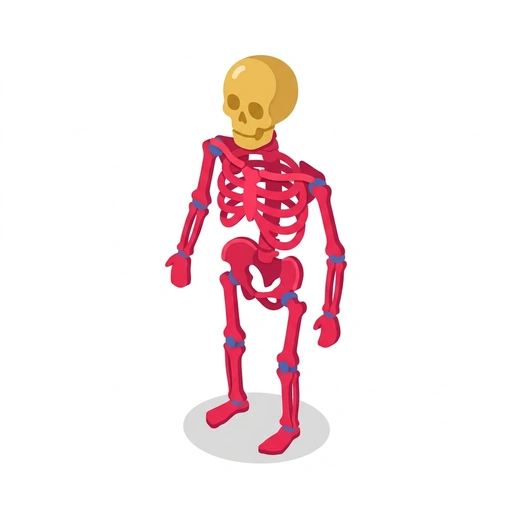
How the Human Body Fits Together
Move beyond memorizing isolated bones and organs to understand how your body is engineered. Learn the mechanical tradeoffs, vascular highways, and pressure chambers that keep everything working.
How the Human Body Works
Discover how your body coordinates movement, fuels your cells, and keeps you alive. Learn the mechanics behind everyday sensations from your heartbeat to muscle fatigue.
Start Mapping Your Own Body today.
Download Tomo, search Mapping Your Own Body, and play your first lesson in under a minute.