
Mat Pilates: Movement and Anatomy
Discover the anatomical logic and precise movements of classical mat Pilates. Learn how to activate your powerhouse, articulate your spine, and build lasting core stability from the floor up.
Like Duolingo, but for Mat Pilates: Movement and Anatomy. Tomo turns the whole topic into a game you play five minutes a day, until it actually sticks.
22 levels across 3 sections, about 44 minutes end to end, roughly 9 days at five minutes a day. It moves through Finding the Powerhouse and Mat Alignment, Classical Repertoire: Flexion and Extension, and Planes of Motion and Total-Body Control. It starts from scratch.
Free forever · No credit card · iPhone & Android
Key ideas in Mat Pilates: Movement and Anatomy
- Expanding the ribs sideways lets you take full breaths while keeping the abdominal wall braced
- Belly breathing requires releasing core tension, which destabilizes the torso during Pilates exercises
- Lateral breathing supplies ample oxygen without letting the stomach push outward
- In neutral pelvis, the two hip bones and pubic bone rest on the same level horizontal plane
- A neutral position leaves a small, natural natural curve under the lower back rather than squishing it flat
- Flattening the spine completely is an imprint or tuck, not neutral
- The Powerhouse creates a 360-degree cinching sensation like a snug corset drawing inward and upward
- It combines drawing the belly button gently toward the spine with a subtle lift of the pelvic floor
- It is active deep stabilization, not holding your breath or forcefully sucking the stomach up under the ribs
- In Pilates, anchoring means drawing the shoulder blades gently down and wide across the back ribs
- Hiking the shoulders tenses the neck muscles during arm work or abdominal curls
- Pinching the shoulder blades together overly arches the upper spine instead of keeping it stable
- Pilates stance starts from turning out from the hip sockets, not twisting at the knees or ankles
- Pressing the heels together naturally zips up the inner thighs and deep seat muscles
- This lower-body engagement anchors the pelvis firmly in place from the ground up
- The Hundred is a warm-up exercise designed to stimulate circulation and build breathing endurance
You've tried the other tabs
Thirty open tabs. Four facts you actually kept.
You watched. You nodded. By Sunday it was gone.
One answer, then back to scrolling.
Eight weeks. You meant to finish. You didn't.
Tomo gives Mat Pilates: Movement and Anatomy the Duolingo treatment: levels, streaks, and quick quizzes that test what you just learned. That game loop is what the tabs above never had, so it's the one you actually finish.
Here's what playing it feels like
A real question from this course. Take your best guess.
What happens to your body if you switch to deep belly breathing during a Pilates exercise?
Get it right to open this lesson and 21 more in the app.
Where Mat Pilates: Movement and Anatomy takes you
- 1
Finding the Powerhouse and Mat Alignment
- The Pilates Setup: Breath, Center, and Neutral Spine
- The First Flexion: From Pelvic Curl to the Hundred
- 2
Classical Repertoire: Flexion and Extension
- Spine Articulation: The Roll-Up and Rolling Ball
- The Abdominal Series of Five: Dissociation and Endurance
- Spinal Extension: Opening the Front Body
- 3
Planes of Motion and Total-Body Control
- Lateral and Rotational Control: Side Kicks and Twists
- Full-Body Integration, Flow, and Postural Transfer
3 sections · 7 units · 22 levels. Built to play, not to enroll.
You pick the voice
Mat Pilates: Movement and Anatomy is taught in the The Professor style: clear, structured, thorough. Want a different feel? In the app you can spin up the same topic in any of Tomo's teaching styles. Same facts, totally different vibe.
More Health on Tomo
Anatomy for Pilates
Understand the muscles, joints, and mechanics behind every Pilates movement. Learn how your core, spine, and breath work together to build balanced strength and prevent strain.
Pilates Anatomy: The Body in Motion
Understand how your muscles and bones work together to create the strength and control that defines Pilates. Learn to move from your center and protect your spine with every breath.
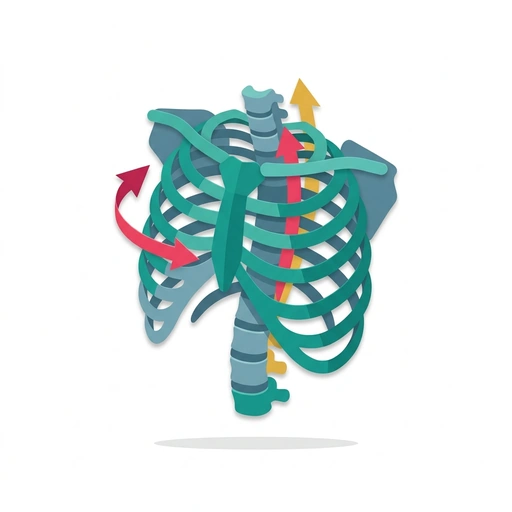
Pilates Anatomy in Motion
Look past generic cues and uncover the biomechanics behind every roll, reach, and teaser. Learn how deep stabilizers, myofascial slings, and joint mechanics work together to build effortless, injury-free movement.
Pilates Anatomy in Action
Understand the real muscles and mechanics behind classic Pilates cues. Learn how your core, spine, and breath interact so every mat exercise feels lighter, safer, and far more effective.
Pilates Anatomy: Movement from Within
Discover how your muscles and bones work together to create the strength, length, and control that define the Pilates method.
Pilates: Strength through Control
Build a resilient body and a focused mind by mastering the powerhouse. This course takes you from your first lateral breath to the fluid, precise movements that define the Pilates method.
Start Mat Pilates: Movement and Anatomy today.
Download Tomo, search Mat Pilates: Movement and Anatomy, and play your first lesson in under a minute.