
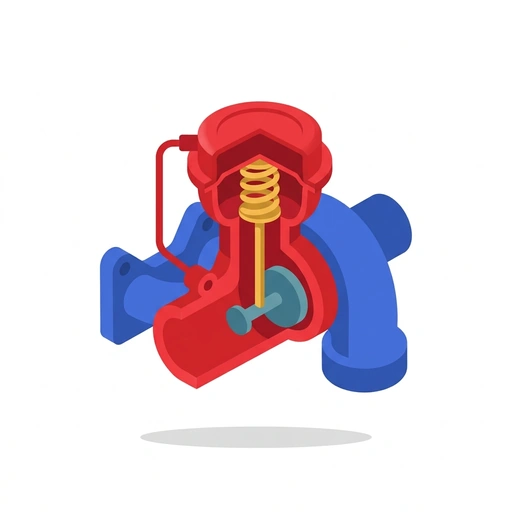
Turbo Wastegates and Boost Control
Learn how forced induction systems regulate air pressure to create safe horsepower. Explore pneumatic actuators, electronic solenoids, internal versus external wastegates, and the intake protection of blow-off valves.
Like Duolingo, but for Turbo Wastegates and Boost Control. Tomo turns the whole topic into a game you play five minutes a day, until it actually sticks.
A short one: 12 levels across 2 sections, about 24 minutes end to end, roughly 5 days at five minutes a day. It moves through The Pressure Limit: How Wastegates Work and Mastering the Boost Target. It assumes you already know the basics.
Free forever · No credit card · iPhone & Android

Key ideas in Turbo Wastegates and Boost Control
- More boost forces more air and fuel into the engine, producing more exhaust volume
- Higher exhaust volume spins the turbine faster, creating a self-reinforcing boost runaway loop
- Uncontrolled boost causes cylinder pressure spikes, catastrophic detonation, and compressor overspeed
- A wastegate is an exhaust valve located upstream of the turbine housing
- Opening the wastegate routes exhaust gas directly into the downpipe to bypass the turbine wheel
- Venting intake charge air is the job of a blow-off valve, not a wastegate
- The actuator's internal spring holds the wastegate flap tightly shut until overcome by pressure
- Connecting reference boost directly to the actuator provides purely mechanical baseline boost
- Electronic boost controllers can raise boost above spring pressure, but never below it
- Charge air pressure fills the sealed chamber and pushes against the flexible rubber diaphragm
- Diaphragm movement overcomes internal spring tension to extend the rigid actuator rod
- The extending rod rotates an external crank arm, swinging the internal wastegate flapper open
- Preload compresses the actuator spring before any manifold boost pressure enters the chamber
- Higher preload raises crack pressure, requiring more boost to initially unseat the flapper
- Increased preload creates a tighter flapper seal, reducing early exhaust spool leaks
- Internal wastegates house a pivoting flapper valve directly inside the turbo's turbine exhaust housing
You've tried the other tabs
Thirty open tabs. Four facts you actually kept.
You watched. You nodded. By Sunday it was gone.
One answer, then back to scrolling.
Eight weeks. You meant to finish. You didn't.
Tomo gives Turbo Wastegates and Boost Control the Duolingo treatment: levels, streaks, and quick quizzes that test what you just learned. That game loop is what the tabs above never had, so it's the one you actually finish.
Here's what playing it feels like
A real question from this course. Take your best guess.
What happens if a turbo engine produces higher exhaust volume with nothing to slow it down?
Get it right to open this lesson and 11 more in the app.
Where Turbo Wastegates and Boost Control takes you
- 1
The Pressure Limit: How Wastegates Work
- Regulating Boost at the Source
- Internal Flappers, External Gates, and Boost Creep
- 2
Mastering the Boost Target
- Dialing in Boost: From Bleeder Valves to Solenoids
- Exhaust vs Intake: Wastegates and Blow-Off Valves
2 sections · 4 units · 12 levels. Built to play, not to enroll.
Tomo is in ChatGPT
Tomo is also a ChatGPT plugin: the same playable courses, built and played inside your chat.
Add Tomo to ChatGPT- What to ask
- “Make me a Tomo course on black holes.” “Turn this chat into a Tomo course.”
- What you get
- Quick questions with instant feedback, hearts and stars, ready to play in about a minute.
- Where it goes
- No sign-up to start. Connect your Tomo account and your streak carries on in the app.
You pick the voice
Turbo Wastegates and Boost Control is taught in the Bestie style: your friend who just gets it. Want a different feel? In the app you can spin up the same topic in any of Tomo's teaching styles. Same facts, totally different vibe.
More Technology on Tomo
Turbos, Superchargers, and Boost
Understand the mechanics, fluid dynamics, and thermodynamics of forced induction. Learn how compressors, intercoolers, and wastegates manipulate air density and exhaust gas energy to produce reliable engine power.
Internal Combustion Engine Dynamics
Move beyond the basic four-stroke cycle to understand how airflow, fuel chemistry, and timing dictate engine performance. Learn to diagnose combustion behavior and evaluate how modern mechanical systems balance power and efficiency.
Car Mechanics and Performance Tuning
Unpack the mechanical systems that turn fuel into fast, controlled lap times. Learn how airflow dynamics, ECU calibration, torque multiplication, and suspension geometry work together as an integrated performance machine.
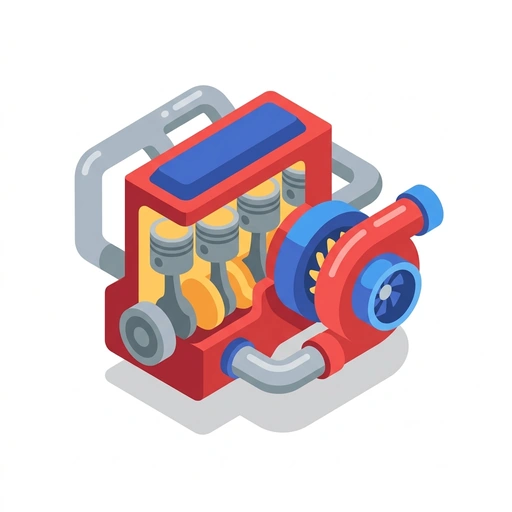
How Car Engines and Turbos Work
Trace the path of power from a drop of fuel to rotating tires. Master the four-stroke cycle, mechanical drivetrain connections, and how turbos harness exhaust to unlock massive power.
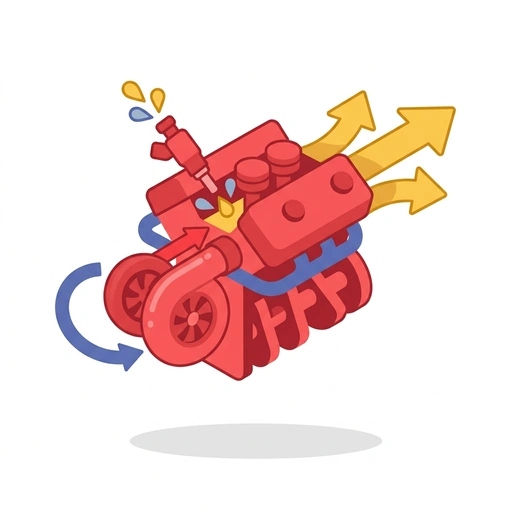
How Car Engines and Turbos Work
Discover how tiny drops of gasoline create explosive forward motion. Trace the path from piston stroke to crankshaft spin, then see how a turbocharger harvests exhaust to unlock effortless speed.
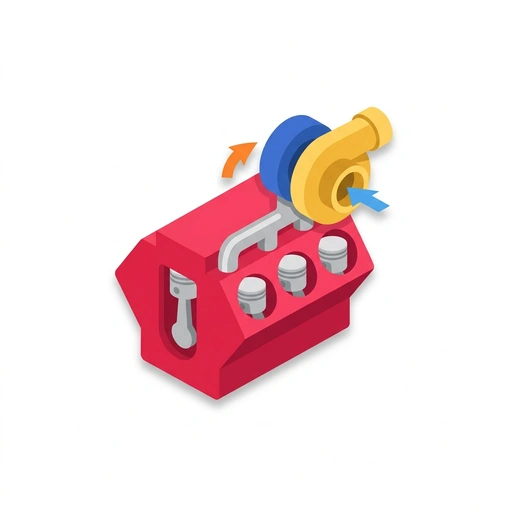
How Engines and Turbos Work
Understand the mechanical magic under the hood. Follow the path of fuel and air as it transforms into wheel-turning power, and see how turbos capture waste exhaust to deliver massive performance.
Start Turbo Wastegates and Boost Control today.
Download Tomo, search Turbo Wastegates and Boost Control, and play your first lesson in under a minute.