
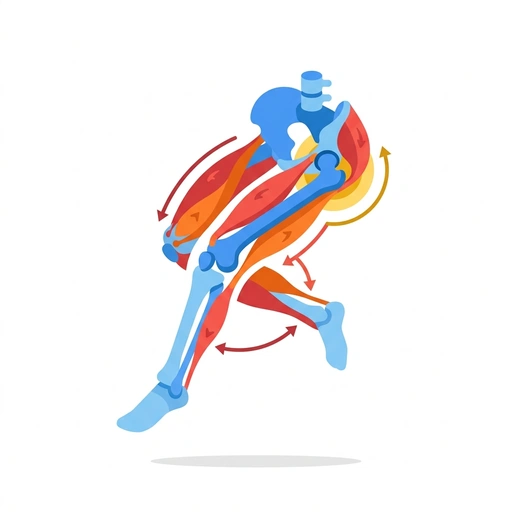
Anatomy for Pilates Professionals
Bridge the gap between textbook anatomy and the moving body. Master the musculoskeletal relationships that drive core stability, spinal articulation, and efficient movement patterns in your clients.
Like Duolingo, but for Anatomy for Pilates Professionals. Tomo turns the whole topic into a game you play five minutes a day, until it actually sticks.
21 levels across 4 sections, about 42 minutes end to end, roughly 8 days at five minutes a day. It moves through The Powerhouse and Spinal Mechanics, The Lower Kinetic Chain, The Shoulder Girdle and Upper Body, and Integration and Assessment. It assumes you already know the basics.
Free forever · No credit card · iPhone & Android
Key ideas in Anatomy for Pilates Professionals
- The TrA fibers run horizontally to wrap the torso like a corset.
- The diaphragm and pelvic floor move in the same direction to manage pressure.
- TrA activation narrows the waist without bringing the ribs toward the pelvis.
- Inhalation increases pressure as the 'piston' moves downward.
- Unlike the Rectus Abdominis, the TrA does not create spinal flexion.
- The pelvic floor must eccentrically load to support the descending diaphragm.
- The Transversus Abdominis functions as a dynamic corset rather than a simple flexor.
- Intra-abdominal pressure is regulated by the synergistic relationship between the diaphragm and pelvic floor.
- The Multifidus provides local, segmental stability to individual vertebrae.
- Exhalation naturally draws the abdominal wall inward toward the spine.
- Deep stabilizers fire milliseconds before global muscles like the glutes.
- The Transversus Abdominis functions as a dynamic corset
- The upward movement of the diaphragm creates space for the deep core to contract.
- Delayed Multifidus firing is a common cause of micro-instability in the spine.
- The Multifidus provides segmental stability to the vertebrae before global movement begins.
- Forced exhalation recruits the internal obliques and TrA more effectively.
You've tried the other tabs
Thirty open tabs. Four facts you actually kept.
You watched. You nodded. By Sunday it was gone.
One answer, then back to scrolling.
Eight weeks. You meant to finish. You didn't.
Tomo gives Anatomy for Pilates Professionals the Duolingo treatment: levels, streaks, and quick quizzes that test what you just learned. That game loop is what the tabs above never had, so it's the one you actually finish.
Here's what playing it feels like
A real question from this course. Take your best guess.
When managing internal pressure, how do the diaphragm and pelvic floor move in relation to each other?
Get it right to open this lesson and 20 more in the app.
How to learn Anatomy for Pilates Professionals, step by step
Go in order. 21 short levels across 4 sections, about 42 minutes in all, five minutes a day.
- 1
The Powerhouse and Spinal Mechanics
- The Deep Core and Breath
- Spinal Articulation and Segmental Control
- 2
The Lower Kinetic Chain
- Hip Mechanics and Pelvic Stability
- Knee, Ankle, and Foot Alignment
- 3
The Shoulder Girdle and Upper Body
- Scapulohumeral Rhythm
- The Cervical Spine and Head Placement
- 4
Integration and Assessment
- Identifying Common Compensations
4 sections · 7 units · 21 levels. Built to play, not to enroll.
Questions about Anatomy for Pilates Professionals
How do I learn Anatomy for Pilates Professionals?
Go in order: start with The Powerhouse and Spinal Mechanics, then The Lower Kinetic Chain, then The Shoulder Girdle and Upper Body, then Integration and Assessment. On Tomo that's 21 short levels, about 42 minutes in all, played five minutes a day. Start free and play the first level in under a minute.
Is there a Duolingo-style app for Anatomy for Pilates Professionals?
Yes. Tomo works like Duolingo: short daily lessons, streaks and quick quizzes. Anatomy for Pilates Professionals is one of its free courses, and you can type any other topic to get a course of your own.
Is the Anatomy for Pilates Professionals course free?
Yes. Anatomy for Pilates Professionals is playable on Tomo's free plan, which doesn't expire. No credit card, no waitlist. Download the app and start your first lesson.
How long does it take to learn Anatomy for Pilates Professionals?
21 levels across 4 sections, about 42 minutes of play in total. It's built for five minutes a day, so you finish it a little at a time instead of all at once.
Do I need any background to start Anatomy for Pilates Professionals?
No. It's pitched at an intermediate level, so it starts where you are and builds up. If you can tap a phone, you can start.
Tomo is in ChatGPT
Tomo is also a ChatGPT plugin: the same playable courses, built and played inside your chat.
Add Tomo to ChatGPT- What to ask
- “Make me a Tomo course on black holes.” “Turn this chat into a Tomo course.”
- What you get
- Quick questions with instant feedback, hearts and stars, ready to play in about a minute.
- Where it goes
- No sign-up to start. Connect your Tomo account and your streak carries on in the app.
You pick the voice
Anatomy for Pilates Professionals is taught in the Bestie style: your friend who just gets it. Want a different feel? In the app you can spin up the same topic in any of Tomo's teaching styles. Same facts, totally different vibe.
More Health on Tomo
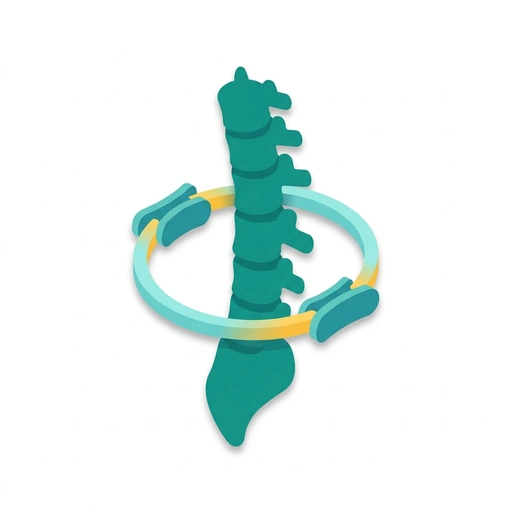
Anatomy for Pilates Movement
Bridge the gap between textbook anatomy and movement instruction. Understand joint mechanics, muscular lines of pull, and functional compensations across the classic and contemporary Pilates repertoire.
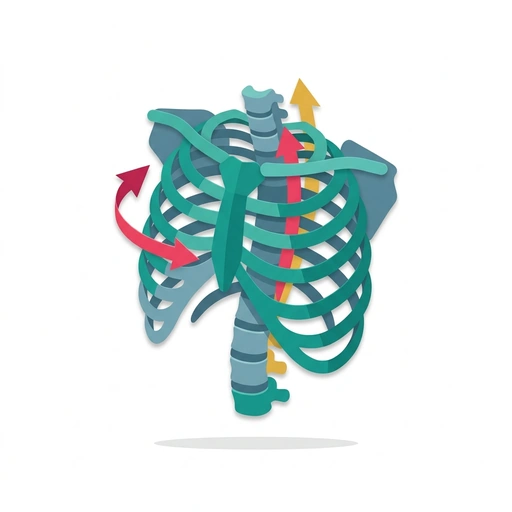
Pilates Anatomy in Motion
Look past generic cues and uncover the biomechanics behind every roll, reach, and teaser. Learn how deep stabilizers, myofascial slings, and joint mechanics work together to build effortless, injury-free movement.
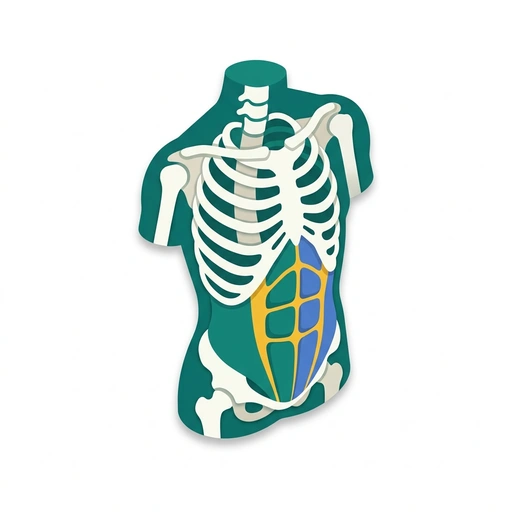
Anatomy for Pilates
Understand the muscles, joints, and mechanics behind every Pilates movement. Learn how your core, spine, and breath work together to build balanced strength and prevent strain.
Pilates Anatomy: Movement from Within
Discover how your muscles and bones work together to create the strength, length, and control that define the Pilates method.
Anatomy for Pilates Movement
Understand the functional anatomy behind classic Pilates exercises and cues. Learn how the deep core, spine, and joint stabilizers work together to guide safe, effective movement.
Pilates Anatomy in Action
Go beyond standard choreography to understand the muscular forces and biomechanics driving every Pilates movement. Master how deep stabilizers, myofascial slings, and spinal articulation interact to eliminate compensations. Refine your execution and cuing by matching precise functional anatomy to real-time practice.
Start Anatomy for Pilates Professionals today.
Download Tomo, search Anatomy for Pilates Professionals, and play your first lesson in under a minute.