
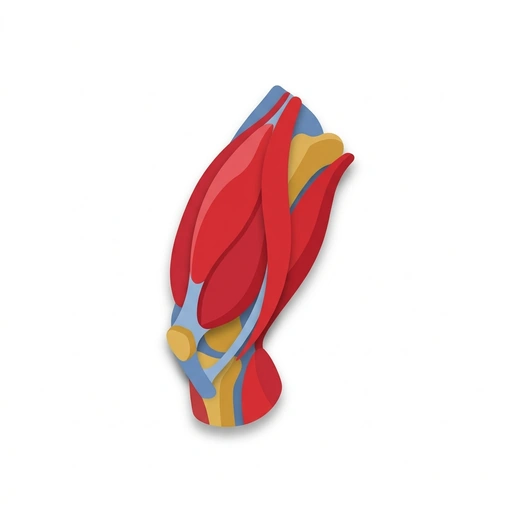
Functional Anatomy for Pilates
Bridge structural anatomy and practical movement analysis for Pilates instruction. Learn the origins, insertions, and coordinated actions of the major muscle groups that govern spinal articulation, pelvic stability, and full-body movement.
Like Duolingo, but for Functional Anatomy for Pilates. Tomo turns the whole topic into a game you play five minutes a day, until it actually sticks.
24 levels across 4 sections, about 48 minutes end to end, roughly 10 days at five minutes a day. It moves through The Lumbopelvic Cylinder, Scapular Mechanics and Upper Kinetic Support, Pelvic Alignment and Lower Extremity Control, and Spine Articulation and Functional Movement Systems. It assumes you already know the basics.
Free forever · No credit card · iPhone & Android

Key ideas in Functional Anatomy for Pilates
- Proper local stabilization maintains a neutral lumbar spine rather than driving the low back flat
- Transversus abdominis tenses the thoracolumbar fascia horizontally without flexing the lumbar spine
- Rectus abdominis produces sagittal flexion and anterior pelvic tilting when recruited as a prime mover
- The pelvic floor and transversus abdominis fire together to regulate intra-abdominal pressure
- Pre-activation of the inner cylinder occurs prior to limb loading to protect the lumbopelvic region
- Pelvic floor recruitment acts as the inferior closure of the pressurized core cylinder
- Multifidus attaches across adjacent spinous and transverse processes to provide segmental stiffness
- Global extensors like erector spinae generate torque across broad spinal spans rather than controlling single segments
- Deep local stabilizers resist shear and torsion rather than driving gross angular movement
- Inhalation causes the diaphragm to contract and descend toward the pelvis
- Lateral thoracic expansion allows diaphragmatic excursion while maintaining tonic transversus abdominis support
- The pelvic floor yields under descending visceral pressure without completely losing tonic stability
- Feedforward control signals local deep stabilizers milliseconds before limb movement begins
- Tensioning the deep fascial system precedes the generation of movement torque by global mobilizers
- Global prime movers engage only after the lumbopelvic foundation has achieved segmental stiffness
- Rectus abdominis runs vertically from the pubic crest to ribs 5–7 and the xiphoid process.
You've tried the other tabs
Thirty open tabs. Four facts you actually kept.
You watched. You nodded. By Sunday it was gone.
One answer, then back to scrolling.
Eight weeks. You meant to finish. You didn't.
Tomo gives Functional Anatomy for Pilates the Duolingo treatment: levels, streaks, and quick quizzes that test what you just learned. That game loop is what the tabs above never had, so it's the one you actually finish.
Here's what playing it feels like
A real question from this course. Take your best guess.
How does the transversus abdominis stabilize your lower back during movement?
Get it right to open this lesson and 23 more in the app.
How to learn Functional Anatomy for Pilates, step by step
Go in order. 24 short levels across 4 sections, about 48 minutes in all, five minutes a day.
- 1
The Lumbopelvic Cylinder
- Activating the Deep Spinal Stabilizers
- Balancing the Abdominal Wall and Pelvis
- 2
Scapular Mechanics and Upper Kinetic Support
- Stabilizing the Scapulothoracic Joint
- Mobilizing the Glenohumeral Joint and Posterior Sling
- 3
Pelvic Alignment and Lower Extremity Control
- Engaging the Hip Extensors and Posterior Chain
- Guiding Hip Flexion, Adduction, and Knee Tracking
- 4
Spine Articulation and Functional Movement Systems
- Articulating the Spine and Deep Intrinsic Musculature
- Coordinating Myofascial Slings Across the Repertoire
4 sections · 8 units · 24 levels. Built to play, not to enroll.
Questions about Functional Anatomy for Pilates
How do I learn Functional Anatomy for Pilates?
Go in order: start with The Lumbopelvic Cylinder, then Scapular Mechanics and Upper Kinetic Support, then Pelvic Alignment and Lower Extremity Control, then Spine Articulation and Functional Movement Systems. On Tomo that's 24 short levels, about 48 minutes in all, played five minutes a day. Start free and play the first level in under a minute.
Is there a Duolingo-style app for Functional Anatomy for Pilates?
Yes. Tomo works like Duolingo: short daily lessons, streaks and quick quizzes. Functional Anatomy for Pilates is one of its free courses, and you can type any other topic to get a course of your own.
Is the Functional Anatomy for Pilates course free?
Yes. Functional Anatomy for Pilates is playable on Tomo's free plan, which doesn't expire. No credit card, no waitlist. Download the app and start your first lesson.
How long does it take to learn Functional Anatomy for Pilates?
24 levels across 4 sections, about 48 minutes of play in total. It's built for five minutes a day, so you finish it a little at a time instead of all at once.
Do I need any background to start Functional Anatomy for Pilates?
No. It's pitched at an intermediate level, so it starts where you are and builds up. If you can tap a phone, you can start.
Tomo is in ChatGPT
Tomo is also a ChatGPT plugin: the same playable courses, built and played inside your chat.
Add Tomo to ChatGPT- What to ask
- “Make me a Tomo course on black holes.” “Turn this chat into a Tomo course.”
- What you get
- Quick questions with instant feedback, hearts and stars, ready to play in about a minute.
- Where it goes
- No sign-up to start. Connect your Tomo account and your streak carries on in the app.
You pick the voice
Functional Anatomy for Pilates is taught in the Professor style: clear, structured, thorough. Want a different feel? In the app you can spin up the same topic in any of Tomo's teaching styles. Same facts, totally different vibe.
More Health on Tomo
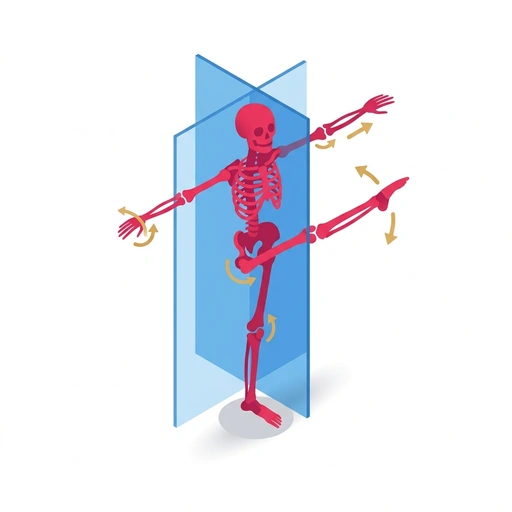
Functional Anatomy for STOTT Pilates
Bridge the gap between movement cueing and musculoskeletal mechanics. Learn to palpate bony landmarks, balance kinetic force couples, and stabilize the axial and appendicular skeleton during precision Pilates work.
Functional Anatomy for Stott Pilates
Connect muscle origins, insertions, and fiber angles directly to the biomechanics of contemporary Pilates. Learn how local stabilizers and global movers govern neutral alignment, imprint, and precision cueing.
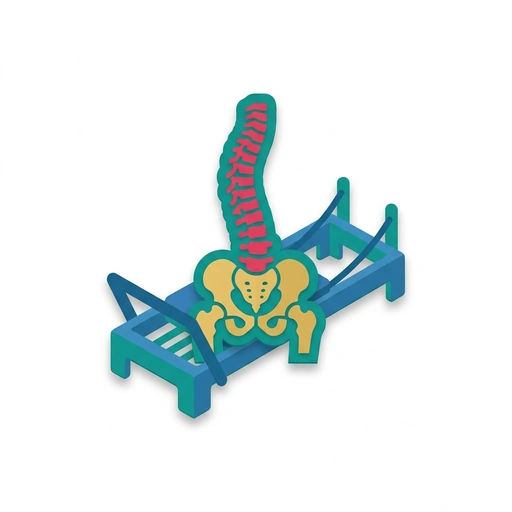
Pilates Biomechanics and Anatomy
Understand the musculoskeletal machinery and physiological reflexes that power Pilates. Learn how joint mechanics, myofascial slings, and spring physics transform classic exercises from rote choreography into targeted physical conditioning.
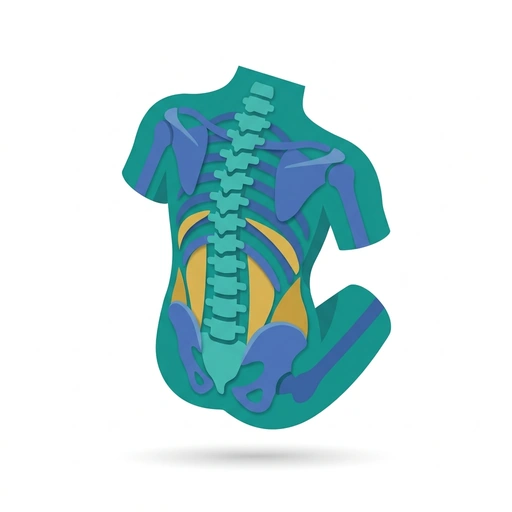
Functional Pilates Anatomy
Bridge the gap between traditional Pilates cues and real biomechanics. Learn how the deep core cylinder, pelvic stabilizers, and scapular rhythm interact so you can self-correct compensations and move with precise control.
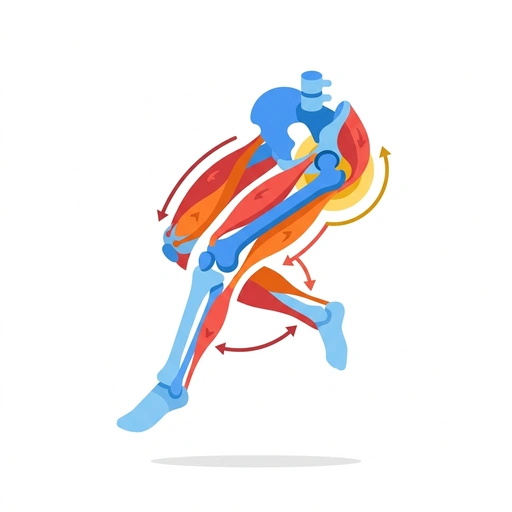
Anatomy for Pilates Professionals
Bridge the gap between textbook anatomy and the moving body. Master the musculoskeletal relationships that drive core stability, spinal articulation, and efficient movement patterns in your clients.
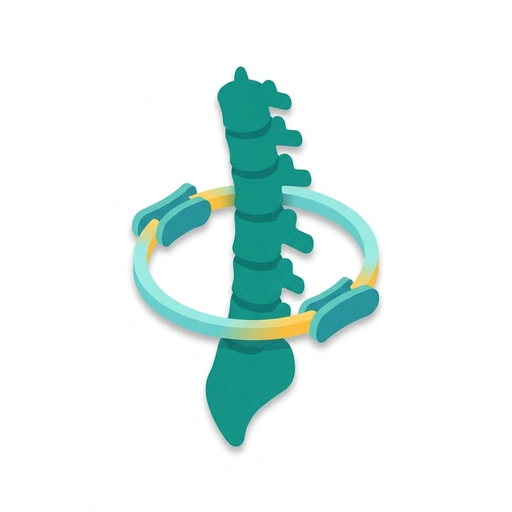
Anatomy for Pilates Movement
Bridge the gap between textbook anatomy and movement instruction. Understand joint mechanics, muscular lines of pull, and functional compensations across the classic and contemporary Pilates repertoire.
Start Functional Anatomy for Pilates today.
Download Tomo, search Functional Anatomy for Pilates, and play your first lesson in under a minute.