
Functional Anatomy for Stott Pilates
Connect muscle origins, insertions, and fiber angles directly to the biomechanics of contemporary Pilates. Learn how local stabilizers and global movers govern neutral alignment, imprint, and precision cueing.
Like Duolingo, but for Functional Anatomy for Stott Pilates. Tomo turns the whole topic into a game you play five minutes a day, until it actually sticks.
25 levels across 4 sections, about 50 minutes end to end, roughly 10 days at five minutes a day. It moves through Lumbopelvic Stabilization and Abdominal Mechanics, Rib Cage Dynamics and Scapular Stability, Lower Kinetic Chain and Hip Articulation, and Posterior Chain and Axial Integration. It assumes you already know the basics.
Free forever · No credit card · iPhone & Android
Key ideas in Functional Anatomy for Stott Pilates
- Transversus abdominis fibers run horizontally from the thoracolumbar fascia and iliac crest to the linea alba.
- Because its fibers do not run vertically across spinal joints, it creates hoop tension rather than spinal flexion.
- Contraction increases intra-abdominal pressure to stiffen the lumbar spine without changing lumbar curvature.
- The pelvic floor forms the base of the abdominal canister, attaching to the pubic bones, ischial spines, and sacrum.
- Pelvic floor activation triggers anticipatory co-contraction of the deep fibers of transversus abdominis.
- This co-activation increases force closure across the sacroiliac joint before distal limb loads apply shear.
- Multifidus originates on sacral and mamillary processes, inserting onto spinous processes 2 to 4 segments superiorly.
- This short, deep span allows multifidus to control intersegmental motion and counter anterior shear forces.
- Superficial erectors span multiple segments to produce gross extension torque rather than individual joint stiffness.
- An imprint uses transversus abdominis and oblique abdominal fibers to gently tilt the pelvis posteriorly.
- This action shortens the lumbar spine toward the mat to secure the lumbar-pelvic junction without spine flattening.
- Gluteal gripping should be inhibited to prevent driving the femoral head forward and bypassing deep core control.
- Superficial bracing relies on rectus abdominis and external obliques, which pushes the abdominal wall outward.
- Dominance of superficial muscles often triggers a Valsalva breath-hold, spiking intra-abdominal pressure dangerously.
- Deep local stabilization engages transversus abdominis to draw the wall inward while maintaining diaphragmatic breathing.
- Rectus abdominis attaches inferiorly at the pubic crest and superiorly at costal cartilages 5-7 and the xiphoid process.
You've tried the other tabs
Thirty open tabs. Four facts you actually kept.
You watched. You nodded. By Sunday it was gone.
One answer, then back to scrolling.
Eight weeks. You meant to finish. You didn't.
Tomo gives Functional Anatomy for Stott Pilates the Duolingo treatment: levels, streaks, and quick quizzes that test what you just learned. That game loop is what the tabs above never had, so it's the one you actually finish.
Here's what playing it feels like
A real question from this course. Take your best guess.
Why does contracting your transversus abdominis cinch the waist instead of bending your spine forward?
Get it right to open this lesson and 24 more in the app.
How to learn Functional Anatomy for Stott Pilates, step by step
Go in order. 25 short levels across 4 sections, about 50 minutes in all, five minutes a day.
- 1
Lumbopelvic Stabilization and Abdominal Mechanics
- Local Stabilizers and Pelvic Placement
- The Abdominal Wall in Spinal Articulation
- 2
Rib Cage Dynamics and Scapular Stability
- Respiratory Mechanics and the Thoracic Anchor
- Scapular Force Couples and Shoulder Girdle Mechanics
- 3
Lower Kinetic Chain and Hip Articulation
- The Iliopsoas and Lumbopelvic Balance
- Gluteals and Deep Rotators in Pelvic Stability
- 4
Posterior Chain and Axial Integration
- Spinal Extensors and Posterior Slings
- Glenohumeral Centering and Cervical Mechanics
4 sections · 8 units · 25 levels. Built to play, not to enroll.
Questions about Functional Anatomy for Stott Pilates
How do I learn Functional Anatomy for Stott Pilates?
Go in order: start with Lumbopelvic Stabilization and Abdominal Mechanics, then Rib Cage Dynamics and Scapular Stability, then Lower Kinetic Chain and Hip Articulation, then Posterior Chain and Axial Integration. On Tomo that's 25 short levels, about 50 minutes in all, played five minutes a day. Start free and play the first level in under a minute.
Is there a Duolingo-style app for Functional Anatomy for Stott Pilates?
Yes. Tomo works like Duolingo: short daily lessons, streaks and quick quizzes. Functional Anatomy for Stott Pilates is one of its free courses, and you can type any other topic to get a course of your own.
Is the Functional Anatomy for Stott Pilates course free?
Yes. Functional Anatomy for Stott Pilates is playable on Tomo's free plan, which doesn't expire. No credit card, no waitlist. Download the app and start your first lesson.
How long does it take to learn Functional Anatomy for Stott Pilates?
25 levels across 4 sections, about 50 minutes of play in total. It's built for five minutes a day, so you finish it a little at a time instead of all at once.
Do I need any background to start Functional Anatomy for Stott Pilates?
No. It's pitched at an intermediate level, so it starts where you are and builds up. If you can tap a phone, you can start.
Tomo is in ChatGPT
Tomo is also a ChatGPT plugin: the same playable courses, built and played inside your chat.
Add Tomo to ChatGPT- What to ask
- “Make me a Tomo course on black holes.” “Turn this chat into a Tomo course.”
- What you get
- Quick questions with instant feedback, hearts and stars, ready to play in about a minute.
- Where it goes
- No sign-up to start. Connect your Tomo account and your streak carries on in the app.
You pick the voice
Functional Anatomy for Stott Pilates is taught in the Professor style: clear, structured, thorough. Want a different feel? In the app you can spin up the same topic in any of Tomo's teaching styles. Same facts, totally different vibe.
More Health on Tomo
Functional Anatomy for STOTT Pilates
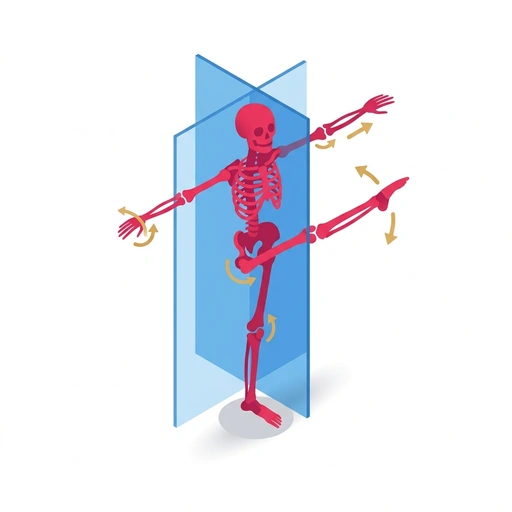
Bridge the gap between movement cueing and musculoskeletal mechanics. Learn to palpate bony landmarks, balance kinetic force couples, and stabilize the axial and appendicular skeleton during precision Pilates work.
Functional Anatomy for Pilates
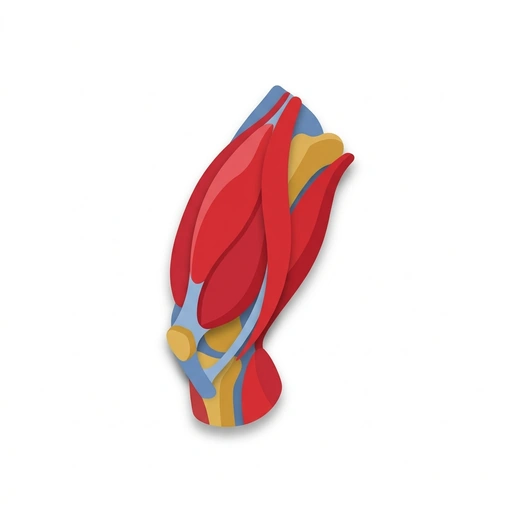
Bridge structural anatomy and practical movement analysis for Pilates instruction. Learn the origins, insertions, and coordinated actions of the major muscle groups that govern spinal articulation, pelvic stability, and full-body movement.
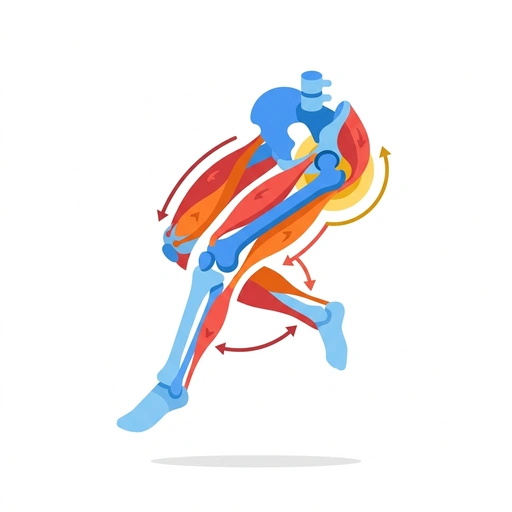
Anatomy for Pilates Professionals
Bridge the gap between textbook anatomy and the moving body. Master the musculoskeletal relationships that drive core stability, spinal articulation, and efficient movement patterns in your clients.
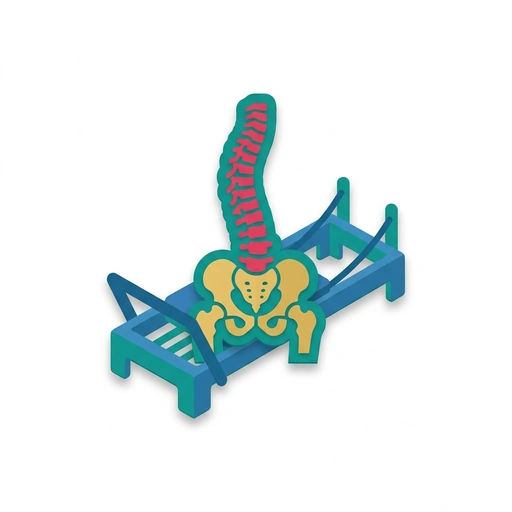
Pilates Biomechanics and Anatomy
Understand the musculoskeletal machinery and physiological reflexes that power Pilates. Learn how joint mechanics, myofascial slings, and spring physics transform classic exercises from rote choreography into targeted physical conditioning.
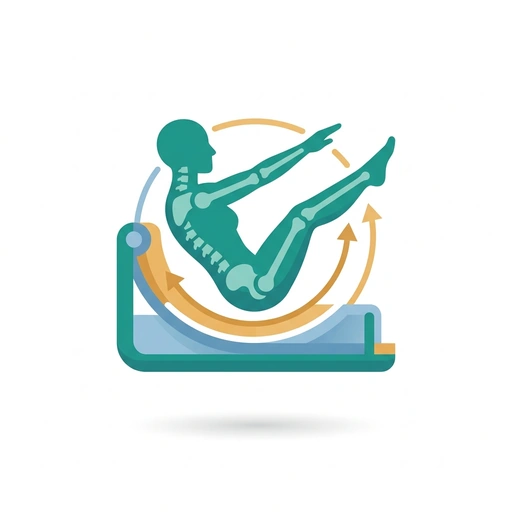
Anatomy for Pilates Movement
Understand the functional anatomy behind classic Pilates exercises and cues. Learn how the deep core, spine, and joint stabilizers work together to guide safe, effective movement.
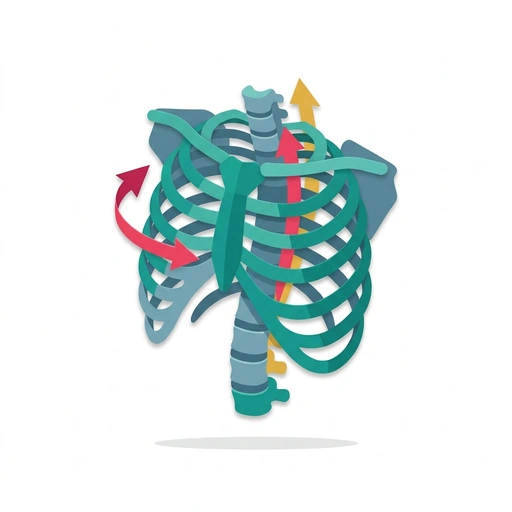
Pilates Anatomy in Motion
Look past generic cues and uncover the biomechanics behind every roll, reach, and teaser. Learn how deep stabilizers, myofascial slings, and joint mechanics work together to build effortless, injury-free movement.
Start Functional Anatomy for Stott Pilates today.
Download Tomo, search Functional Anatomy for Stott Pilates, and play your first lesson in under a minute.