
Pilates Biomechanics and Anatomy
Understand the musculoskeletal machinery and physiological reflexes that power Pilates. Learn how joint mechanics, myofascial slings, and spring physics transform classic exercises from rote choreography into targeted physical conditioning.
Like Duolingo, but for Pilates Biomechanics and Anatomy. Tomo turns the whole topic into a game you play five minutes a day, until it actually sticks.
25 levels across 4 sections, about 50 minutes end to end, roughly 10 days at five minutes a day. It moves through Deep Stabilization in Action, Spinal Articulation and Upper Extremity Mechanics, Kinetic Chains and Fascial Slings, and Neuromuscular Control and Physiological Load. It assumes you already know the basics.
Free forever · No credit card · iPhone & Android
Key ideas in Pilates Biomechanics and Anatomy
- The deep core acts as a 3D canister rather than just a flat abdominal brace
- Transversus abdominis and multifidi provide circumferential and segmental hoop support
- The respiratory diaphragm and pelvic floor act as dynamic top and bottom boundaries
- Feedforward control activates pelvic floor milliseconds before gross movement
- Pre-tensioning the endopelvic fascia prevents pelvic organ descent under load
- Deep stabilizers brace the center before superficial mover muscles fire
- Lateral rib cage expansion directs airflow outward and back without distending the belly
- Belly breathing during The Hundred forces the transversus abdominis to release tension
- Continuous breathing maintains intra-abdominal pressure without triggering a Valsalva maneuver
- Intra-abdominal pressure acts as an anterior hydraulic column in front of the spine
- Transversus contraction tensions the thoracolumbar fascia to resist shear forces
- Pressurizing the inner cylinder offloads vertical disc compression during loaded Pilates work
- Femoral head must glide in the acetabulum without dragging the hemipelvis.
- Pelvic rotation during leg arcs indicates failure of lumbopelvic dissociation.
- Neutral lordosis keeps facet joints congruent and absorbs load efficiently.
- Imprinting anchors hyperlordotic spines but limits full gluteal recruitment.
You've tried the other tabs
Thirty open tabs. Four facts you actually kept.
You watched. You nodded. By Sunday it was gone.
One answer, then back to scrolling.
Eight weeks. You meant to finish. You didn't.
Tomo gives Pilates Biomechanics and Anatomy the Duolingo treatment: levels, streaks, and quick quizzes that test what you just learned. That game loop is what the tabs above never had, so it's the one you actually finish.
Here's what playing it feels like
A real question from this course. Take your best guess.
How do the transversus abdominis and multifidi work together around your spine?
Get it right to open this lesson and 24 more in the app.
Where Pilates Biomechanics and Anatomy takes you
- 1
Deep Stabilization in Action
- Activating the Inner Core Cylinder
- Lumbopelvic Rhythm and Hip Dissociation
- 2
Spinal Articulation and Upper Extremity Mechanics
- Segmental Articulation of the Vertebral Column
- Scapulothoracic Dynamics and Upper Limb Integration
- 3
Kinetic Chains and Fascial Slings
- Myofascial Slings and Rotational Control
- Hip Complex Biomechanics and Lower Chain Tracking
- 4
Neuromuscular Control and Physiological Load
- Resistance Mechanics, Springs, and Eccentric Control
- Respiratory Physiology and Autonomic Regulation
4 sections · 8 units · 25 levels. Built to play, not to enroll.
You pick the voice
Pilates Biomechanics and Anatomy is taught in the The Professor style: clear, structured, thorough. Want a different feel? In the app you can spin up the same topic in any of Tomo's teaching styles. Same facts, totally different vibe.
More Health on Tomo
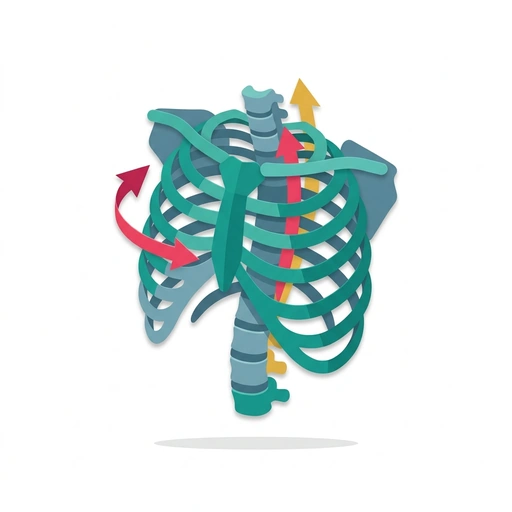
Pilates Anatomy in Motion
Look past generic cues and uncover the biomechanics behind every roll, reach, and teaser. Learn how deep stabilizers, myofascial slings, and joint mechanics work together to build effortless, injury-free movement.
Pilates Anatomy in Action
Go beyond standard choreography to understand the muscular forces and biomechanics driving every Pilates movement. Master how deep stabilizers, myofascial slings, and spinal articulation interact to eliminate compensations. Refine your execution and cuing by matching precise functional anatomy to real-time practice.
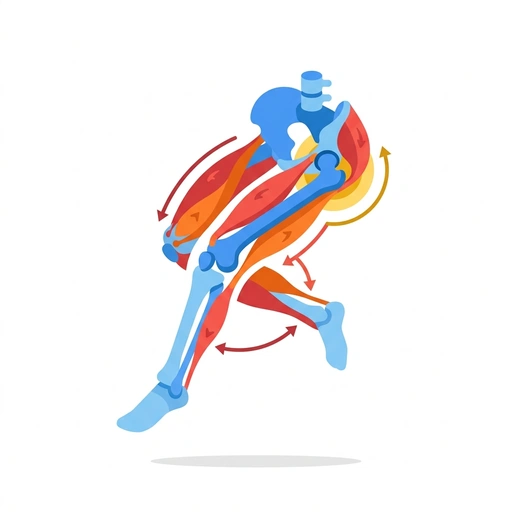
Anatomy for Pilates Professionals
Bridge the gap between textbook anatomy and the moving body. Master the musculoskeletal relationships that drive core stability, spinal articulation, and efficient movement patterns in your clients.
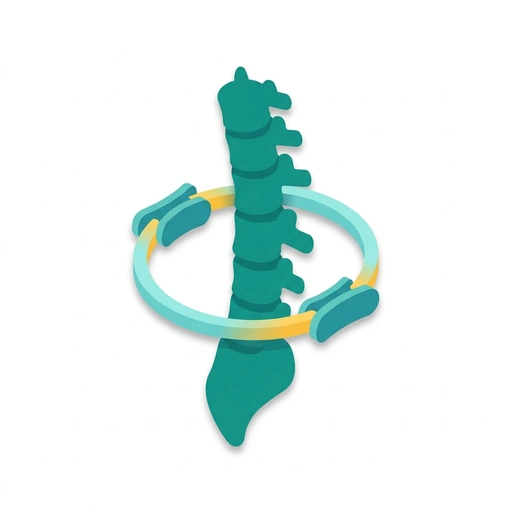
Anatomy for Pilates Movement
Bridge the gap between textbook anatomy and movement instruction. Understand joint mechanics, muscular lines of pull, and functional compensations across the classic and contemporary Pilates repertoire.
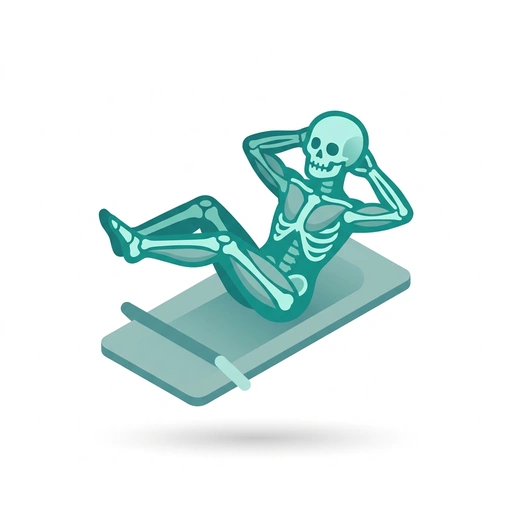
Pilates Anatomy in Action
Understand the real muscles and mechanics behind classic Pilates cues. Learn how your core, spine, and breath interact so every mat exercise feels lighter, safer, and far more effective.
Anatomy for Pilates Instruction
Bridge the gap between textbook anatomy and the moving body. Learn to see beneath the skin to refine your cueing, correct compensations, and deepen your students' mind-body connection.
Start Pilates Biomechanics and Anatomy today.
Download Tomo, search Pilates Biomechanics and Anatomy, and play your first lesson in under a minute.