
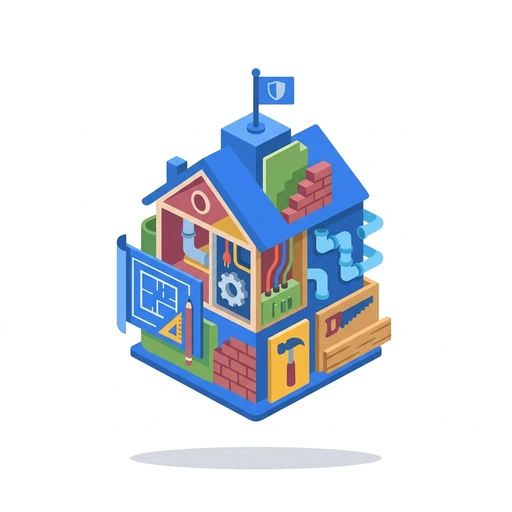
How Your House Works
Discover the hidden engineering behind your walls, from pressurized water loops to electrical breakers and load-bearing framing. Learn how your home's core systems function together so you can diagnose everyday issues, tackle common fixes safely, and know when to call a pro.
Like Duolingo, but for How Your House Works. Tomo turns the whole topic into a game you play five minutes a day, until it actually sticks.
A short one: 12 levels across 2 sections, about 24 minutes end to end, roughly 5 days at five minutes a day. It moves through Managing the Flows: Water and Power and The Structural Shell: Framing, Walls, and Exterior. It starts from scratch.
Free forever · No credit card · iPhone & Android

Key ideas in How Your House Works
- Supply pipes are pressurized at all times, which allows fresh water to flow up to upper floors without needing a slope
- Drain lines are not pressurized and depend entirely on downward sloping pipes and gravity to carry waste away
- Drain systems require open air balance so waste water can flow freely without forming a vacuum
- Every sink and tub drain has a curved pipe underneath called a P-trap that holds a pool of standing water
- The standing water in the P-trap blocks sewer gases from rising out of the drain into living spaces
- When a fixture sits unused for months, the water seal inside the trap can dry out through evaporation
- Water rushing down a sealed pipe creates suction (a negative pressure vacuum) behind it
- Rooftop plumbing vents supply fresh air behind rushing wastewater, breaking the suction
- Without proper venting, the vacuum pulls the standing water out of nearby P-traps, letting sewer smells in
- Sinks and toilets feature dedicated local shutoff valves (fixture stops) directly beneath them
- Turning a local shutoff clockwise stops the pressurized water to that specific fixture without cutting water to the rest of the house
- The main water shutoff cuts supply to the entire building and should be reserved for whole-house work or catastrophic leaks
- A worn, misaligned, or dirty rubber flapper lets water slowly leak from the tank into the bowl, triggering periodic refills
- A fill float set too high causes water to spill continuously into the vertical overflow tube
- Both the flapper and the fill float sit inside the upper tank and can be inspected or adjusted by hand without tools
- Electricity must flow in an unbroken circle from the breaker box to the fixture and back to work
You've tried the other tabs
Thirty open tabs. Four facts you actually kept.
You watched. You nodded. By Sunday it was gone.
One answer, then back to scrolling.
Eight weeks. You meant to finish. You didn't.
Tomo gives How Your House Works the Duolingo treatment: levels, streaks, and quick quizzes that test what you just learned. That game loop is what the tabs above never had, so it's the one you actually finish.
Here's what playing it feels like
A real question from this course. Take your best guess.
How does dirty water leave your home through the drain lines?
Get it right to open this lesson and 11 more in the app.
Where How Your House Works takes you
- 1
Managing the Flows: Water and Power
- Fresh Water In, Waste Out: Demystifying Home Plumbing
- Household Electricity: Circuits, Outlets, and Safe Power
- 2
The Structural Shell: Framing, Walls, and Exterior
- The Wooden Skeleton: Studs, Drywall, and Anchoring Weight
- The Exterior Shield: Masonry, Roofs, and Moisture Control
2 sections · 4 units · 12 levels. Built to play, not to enroll.
Tomo is in ChatGPT
Tomo is also a ChatGPT plugin: the same playable courses, built and played inside your chat.
Add Tomo to ChatGPT- What to ask
- “Make me a Tomo course on black holes.” “Turn this chat into a Tomo course.”
- What you get
- Quick questions with instant feedback, hearts and stars, ready to play in about a minute.
- Where it goes
- No sign-up to start. Connect your Tomo account and your streak carries on in the app.
You pick the voice
How Your House Works is taught in the Professor style: clear, structured, thorough. Want a different feel? In the app you can spin up the same topic in any of Tomo's teaching styles. Same facts, totally different vibe.
More Technology on Tomo
Everyday Household Electricity
Learn how electricity safely moves through your home, from the panel in your basement to the outlets in your walls. Build the practical intuition to spot hazards, balance electrical loads, and diagnose tripped circuits with confidence.
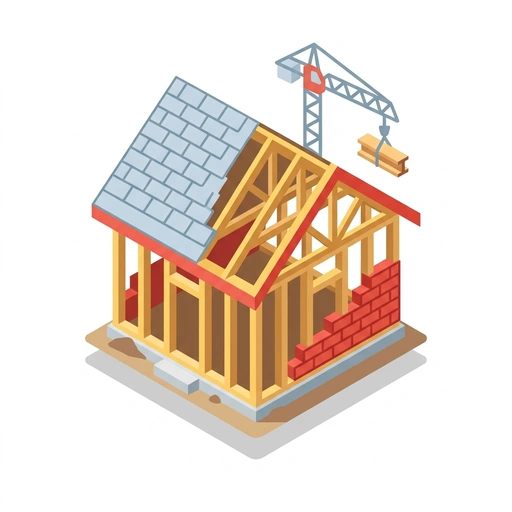
How a House Is Built
Learn how raw ground turns into a standing home. Discover how foundations, framing, weatherproofing, and mechanical systems work together to keep a house dry, warm, and standing strong.
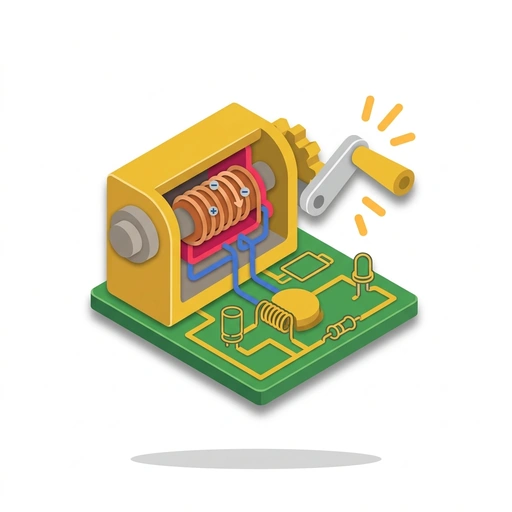
Everyday Electricity and Electronics
Demystify the invisible currents powering your home and pocket devices. Learn how to match chargers safely, navigate circuit breakers, protect your battery health, and understand how simple electricity becomes digital logic.

Everyday Home Maintenance
Take control of your living space with essential repair and upkeep skills. Learn to safely handle basic plumbing, electrical fixtures, climate systems, and structural fixes with confidence.
How Circuits Actually Work
Gain an intuitive grasp of voltage, current, and resistance by seeing how electricity actually moves through components. Learn to trace, design, and troubleshoot circuits from basic power loops to transistor-driven switches.
Hardware Control with Arduino and ESP32
Level up from blinking LEDs to responsive, power-smart microcontroller systems. Learn to handle dual-voltage circuits, write non-blocking firmware, debug digital buses, and keep projects running on battery.
Start How Your House Works today.
Download Tomo, search How Your House Works, and play your first lesson in under a minute.