
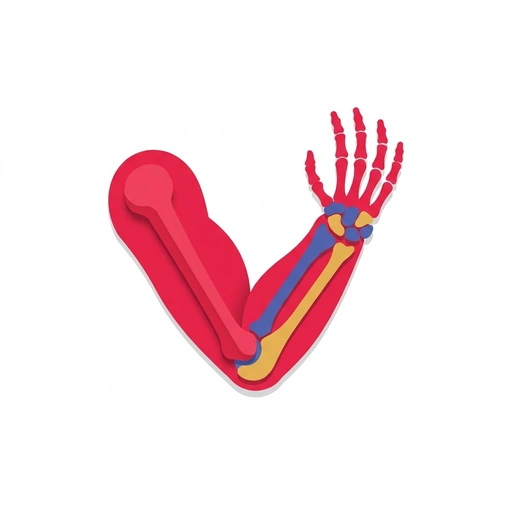
Human Anatomy: Built to Move
Discover the mechanical genius beneath your skin. Learn how your bones, muscles, lungs, and heart coordinate to move you through the world.
Like Duolingo, but for Human Anatomy: Built to Move. Tomo turns the whole topic into a game you play five minutes a day, until it actually sticks.
A short one: 12 levels across 2 sections, about 24 minutes end to end, roughly 5 days at five minutes a day. It moves through The Mechanical Frame and The Pressure Systems. It starts from scratch.
Free forever · No credit card · iPhone & Android
Key ideas in Human Anatomy: Built to Move
- Limb bones act as levers that pivot around joints acting as fulcrums
- Muscles attach close to the pivot, requiring large effort forces to lift small weights
- This mechanical setup allows the hand or foot to move much faster and sweep through a wide arc with small muscle contractions
- Ball-and-socket joints allow wide, multi-directional motion but risk dislocation
- Hinge joints lock motion to a single back-and-forth plane, providing strong structural support
- The shoulder socket is shallow for maximum reach, whereas the hip socket is deep for bearing body weight
- Bone ends are capped with smooth cartilage that absorbs shock and prevents bone grinding
- Joint cavities contain slippery synovial fluid that acts as an oil slick between moving parts
- Direct bone-on-bone contact causes severe wear, grinding, and pain
- Ligaments anchor bone directly to bone across a joint
- Ligaments act like tough, non-stretchy straps rather than elastic rubber bands
- Their job is to physically check movement and stop joints from twisting or hyperextending beyond safe limits
- Bone is living tissue that constantly absorbs and deposits mineral density
- High-impact or weight-bearing activities prompt bones to lay down denser structure where the strain occurs
- Lack of mechanical load, such as prolonged bed rest or spaceflight, causes bone mineral loss
- Muscles can only pull by contracting; they cannot actively push bones apart
You've tried the other tabs
Thirty open tabs. Four facts you actually kept.
You watched. You nodded. By Sunday it was gone.
One answer, then back to scrolling.
Eight weeks. You meant to finish. You didn't.
Tomo gives Human Anatomy: Built to Move the Duolingo treatment: levels, streaks, and quick quizzes that test what you just learned. That game loop is what the tabs above never had, so it's the one you actually finish.
Here's what playing it feels like
A real question from this course. Take your best guess.
Because your arm muscle attaches very close to your elbow joint, what does it have to do?
Get it right to open this lesson and 11 more in the app.
Where Human Anatomy: Built to Move takes you
- 1
The Mechanical Frame
- Bones and Joints: Levers You Live In
- Muscles: The Pull-Only Engine
- 2
The Pressure Systems
- The Lungs: Suction and Recoil
- The Cardiovascular Loop: One-Way Circulation
2 sections · 4 units · 12 levels. Built to play, not to enroll.
You pick the voice
Human Anatomy: Built to Move is taught in the The Professor style: clear, structured, thorough. Want a different feel? In the app you can spin up the same topic in any of Tomo's teaching styles. Same facts, totally different vibe.
More Science on Tomo
How the Human Body Fits Together
Explore the elegant architecture of your own body from the inside out. Learn how your skeleton, muscles, circulation, and vital organs coordinate to keep you upright, moving, and alive.
Your Body's Blueprint
Discover the incredible engineering of the human body, from the electrical signals in your brain to the living architecture of your bones.
Anatomy of the Human Body
Discover how your bones, muscles, and internal systems coordinate every breath and step. Understand the physical machinery that powers daily movement, circulation, and sensation.
How the Human Body Works
Discover how your body coordinates movement, fuels your cells, and keeps you alive. Learn the mechanics behind everyday sensations from your heartbeat to muscle fatigue.
Human Anatomy: Form and Function
Bridge the gap between basic body parts and true functional anatomy. Discover how bones, muscles, nerves, and organs mechanically coordinate to sustain motion, regulate pressure, and maintain life.
Bones, Muscles, and Movement
Go beyond naming parts to understand how the human frame generates power, maintains stability, and adapts to the physical world.
Start Human Anatomy: Built to Move today.
Download Tomo, search Human Anatomy: Built to Move, and play your first lesson in under a minute.