

STOTT Reformer Exam Preparation
Prepare comprehensively for the STOTT PILATES Reformer certification exam across theoretical biomechanics, repertoire execution, and practical teaching evaluation. Master the Five Basic Principles, Essential and Intermediate repertoire, postural analysis, and clinical modifications tested by examiners.
Like Duolingo, but for STOTT Reformer Exam Preparation. Tomo turns the whole topic into a game you play five minutes a day, until it actually sticks.
72 levels across 8 sections, about 144 minutes end to end, roughly 29 days at five minutes a day. It moves through The Core Exam Engine: STOTT Biomechanical Principles in Motion; Static and Dynamic Postural Analysis for Reformer Programming; Essential Reformer Repertoire: Biomechanics & Teaching Breakdown; Essential Core & Full-Body Integration Sequences; Intermediate Repertoire: Progressive Load and Choreography; Anatomical Mechanics and Movement Terminology for the Written Exam; Special Populations, Pathology Management, and Modifications; and The Practical Exam: Cueing, Programming, and Teaching Performance. It assumes you already know the basics.
Free forever · No credit card · iPhone & Android
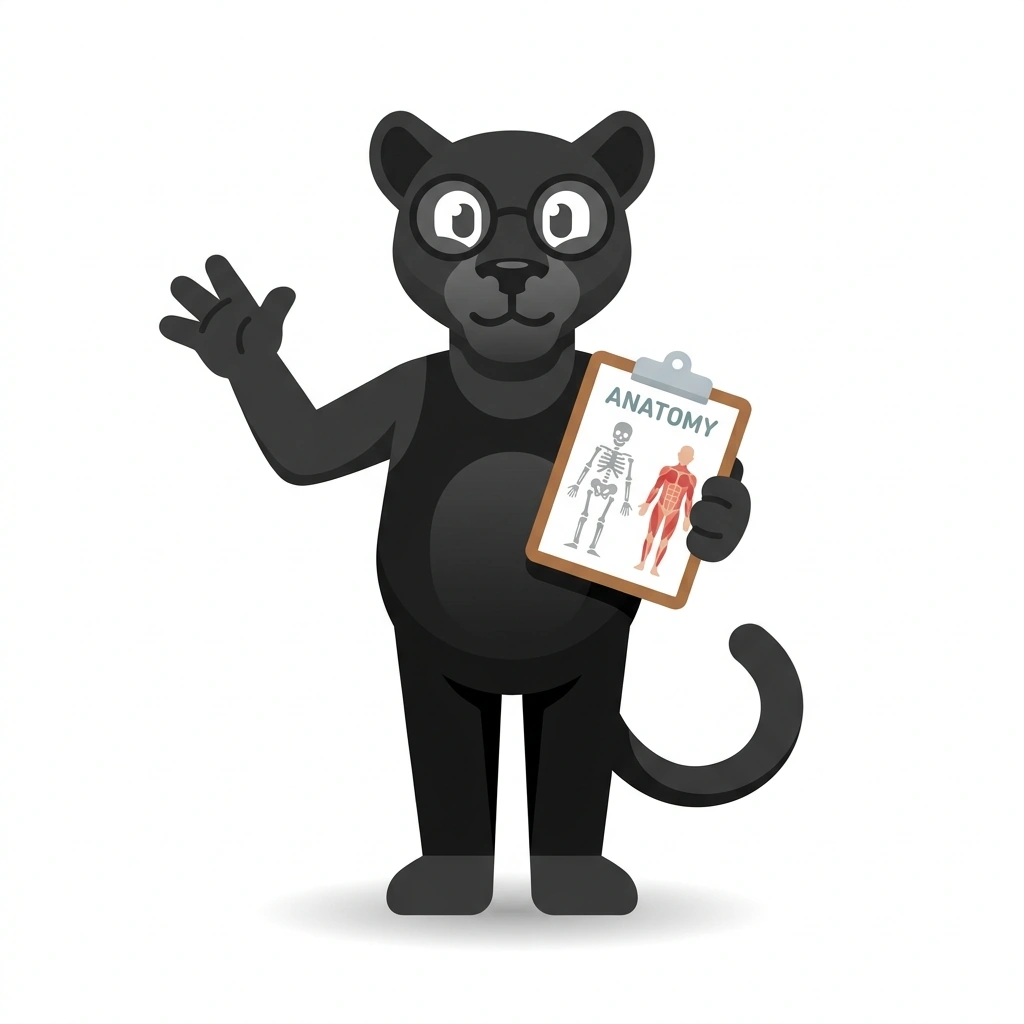
Key ideas in STOTT Reformer Exam Preparation
- STOTT examiners assess whether you observe and cue all principles continuously throughout complex movement
- Treating principles as a static checklist before moving causes point deductions on dynamic cueing rubrics
- STOTT requires lateral costal breathing into the posterior and lateral ribcage to avoid belly distension
- Lateral costal expansion facilitates deep transversus abdominis recruitment during movement on the reformer
- Exhaling recruits deep stabilizers before eccentric load increases carriage resistance
- Feet on footbar provides closed-chain support, making neutral pelvis appropriate under spring load
- Open-chain leg extension requires an imprint to engage obliques and protect the lumbar spine
- Bridging transitions from a slight posterior pelvic tilt into hip extension without hyperextending
- STOTT criteria require dynamic scapular stabilization where the scapulae glide naturally on the ribcage
- Rigidly pinning scapulae in retraction or depression restricts natural scapulohumeral rhythm
- Examiners mark deductions if instructors encourage excessive retraction or shoulder blade clamping
- Cranio-vertebral nod initiates cervical alignment before flexion to prevent suboccipital jamming
- Preserving space between chin and chest prevents sternocleidomastoid dominance during abdominal curls
- Thoracic flexion follows head nod so the head is carried by abdominal engagement, not neck strain
- In STOTT Pilates, Imprint is created by shortening the distance between ASIS and lower ribs using the obliques
- Clenching gluteus maximus or hamstrings to force the lower back flat is a major technique fault in STOTT exams
You've tried the other tabs
Thirty open tabs. Four facts you actually kept.
You watched. You nodded. By Sunday it was gone.
One answer, then back to scrolling.
Eight weeks. You meant to finish. You didn't.
Tomo gives STOTT Reformer Exam Preparation the Duolingo treatment: levels, streaks, and quick quizzes that test what you just learned. That game loop is what the tabs above never had, so it's the one you actually finish.
Here's what playing it feels like
A real question from this course. Take your best guess.
What happens on the exam rubric if you treat the Five Basic Principles only as a static checklist before an exercise begins?
Get it right to open this lesson and 71 more in the app.
Where STOTT Reformer Exam Preparation takes you
- 1
The Core Exam Engine: STOTT Biomechanical Principles in Motion
- The Five Basic Principles as an Evaluation Rubric
- Dynamic Pelvic and Lumbar Stability Under Spring Load
- Scapulohumeral Rhythm and Cervical Organization on the Carriage
- 2
Static and Dynamic Postural Analysis for Reformer Programming
- Static Plumb-Line Profiling and Postural Classifications
- Translating Posture to Reformer Setup and Spring Adjustments
- Dynamic Observation and Real-Time Compensation Spotting
- 3
Essential Reformer Repertoire: Biomechanics & Teaching Breakdown
- Footwork and Second Position: Lower Chain Mechanics
- The Hundred and Spinal Articulation Preps
- Midback and Arm Repertoire: Scapular Anchoring
- Spinal Mobility: Short Spine, Long Spine Prep, and Pelvic Lift
- 4
Essential Core & Full-Body Integration Sequences
- Stomach Massage and Short Box Series
- Long Box Series: Prone Extension & Latissimus Mechanics
- Elephant, Knee Stretches, and Running
- 5
Intermediate Repertoire: Progressive Load and Choreography
- Dynamic Flexion & Articulation: Coordination & Long Spine
- Long Stretch Series: Plank Biomechanics on the Moving Carriage
- Complex Spatial Loading: Semi-Circle and Splits Series
- Back Rowing and Front Rowing Intermediate Progressions
- 6
Anatomical Mechanics and Movement Terminology for the Written Exam
- Musculoskeletal Anatomy: Movers, Antagonists, and Stabilizers
- Planes of Motion, Joint Mechanics, and Kinetic Chains
- 7
Special Populations, Pathology Management, and Modifications
- Spinal Pathologies: Disc Herniation, Stenosis, and Spondylolisthesis
- Peripheral Joint Conditions, Osteoporosis, and Prenatal Protocols
- 8
The Practical Exam: Cueing, Programming, and Teaching Performance
- Precision Verbal and Visual Cueing Systems
- Programming a Balanced 60-Minute Exam Workout
- Examiner Rubrics, Fault Analysis, and Rapid Correction Strategies
8 sections · 24 units · 72 levels. Built to play, not to enroll.
Tomo is in ChatGPT
Tomo is also a ChatGPT plugin: the same playable courses, built and played inside your chat.
Add Tomo to ChatGPT- What to ask
- “Make me a Tomo course on black holes.” “Turn this chat into a Tomo course.”
- What you get
- Quick questions with instant feedback, hearts and stars, ready to play in about a minute.
- Where it goes
- No sign-up to start. Connect your Tomo account and your streak carries on in the app.
You pick the voice
STOTT Reformer Exam Preparation is taught in the Professor style: clear, structured, thorough. Want a different feel? In the app you can spin up the same topic in any of Tomo's teaching styles. Same facts, totally different vibe.
More Health on Tomo
STOTT Reformer: Essential to Intermediate
Prepare thoroughly for your STOTT PILATES Reformer certification exam. Master repertoire choreography, spring mechanics, muscle recruitment, joint actions, and real-time verbal and tactile corrections across Essential and Intermediate levels.
Anatomy for Pilates Movement
Bridge the gap between textbook anatomy and movement instruction. Understand joint mechanics, muscular lines of pull, and functional compensations across the classic and contemporary Pilates repertoire.
Reformer Pilates Anatomy and Alignment
Learn the essential biomechanics, cueing principles, and joint safety rules needed for Reformer Pilates. Master pelvic alignment, core activation, and exercise modifications for special populations.

Mat Pilates: Movement and Anatomy
Discover the anatomical logic and precise movements of classical mat Pilates. Learn how to activate your powerhouse, articulate your spine, and build lasting core stability from the floor up.
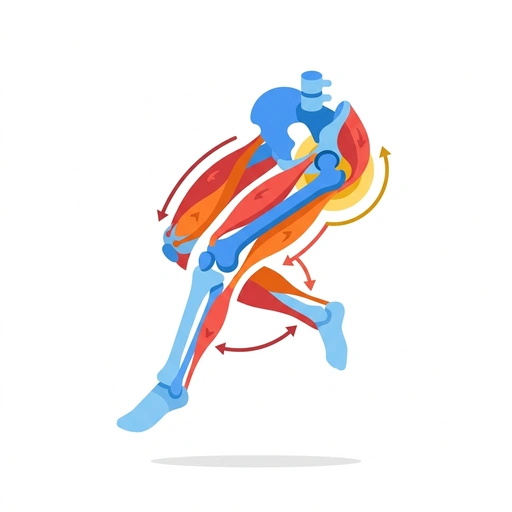
Anatomy for Pilates Professionals
Bridge the gap between textbook anatomy and the moving body. Master the musculoskeletal relationships that drive core stability, spinal articulation, and efficient movement patterns in your clients.
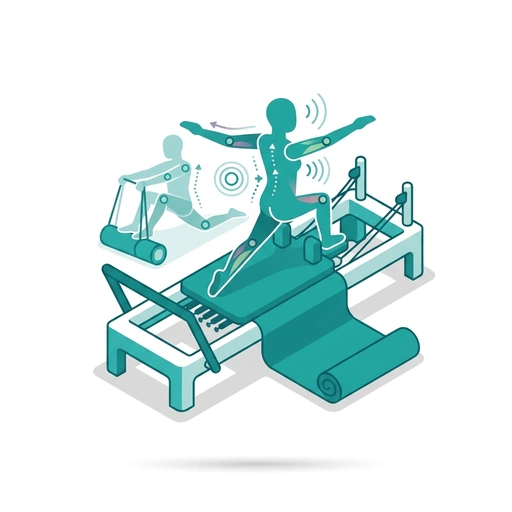
Mat and Reformer Pilates Mechanics
Examine the muscular mechanics, breathing patterns, and alignment principles behind classic mat and reformer Pilates exercises. Learn how to identify active muscle groups, stabilize joints, and adapt movements for clients of varying abilities.
Start STOTT Reformer Exam Preparation today.
Download Tomo, search STOTT Reformer Exam Preparation, and play your first lesson in under a minute.